

(4) Takachihogo-Shiibayama
The Takachihogo-Shiibayama GIAHS site is situated in the
northwest of Miyazaki Prefecture and is composed of
Takachiho Town, Hinokage Town, Gokase Town, Morotsuka Village, and Shiiba Village. The site is well known for
many locations related to Japanese mythology. The site lies
in the northern part of the Kyushu-Sanchi Mountains, whose
peaks reach 1000–1700 m a.s.l. The annual average air
temperature and precipitation are 14 °C and 2200 mm,
respectively, although these vary depending on the elevation. Brown Forest soils and Andosols dominate the
Takachihogo-Shiibayama site.
Due to the presence of the mountains, the extent of
agricultural flat land is limited; 92% of the land is forest,
while just 3% is used for agriculture (Fujikake 2017). A total
of 58% of forest land is planted forest; 72% of this planted
forest is Japanese cedar (Cryptomeria japonica), 12% is
hinoki cypress (Chamaecyparis obtusa), and 11% is
sawtooth oak (Quercus acutissima), the latter of which is
used for shiitake mushroom (Lentinula edodes) production.
Together, this planted forest and natural forest form a
“mosaic-patterned” forest, since the area of each planted
forest is small; this forest pattern is one of the characteristics
of the Takachihogo-Shiibayama site. Another characteristic
of the site is its rice terraces. As the rivers run through deep
valleys, long irrigation canals in mountainous areas are
necessary for rice terraces in the site (Takeshita 2017). Many
major canals in the mountains were constructed from the
middle of the nineteenth century to the beginning of the
twentieth century, after which the area of rice terraces
increased.
The complex agricultural and forestry system in the
Takachihogo-Shiibayama site is relatively new. Before the
establishment of the current system, the most important
agriculture was shifting cultivation.
In the 1950s, the area of shifting cultivation in the
Kyushu-Sanchi area was 2500 ha, but rapidly decreased
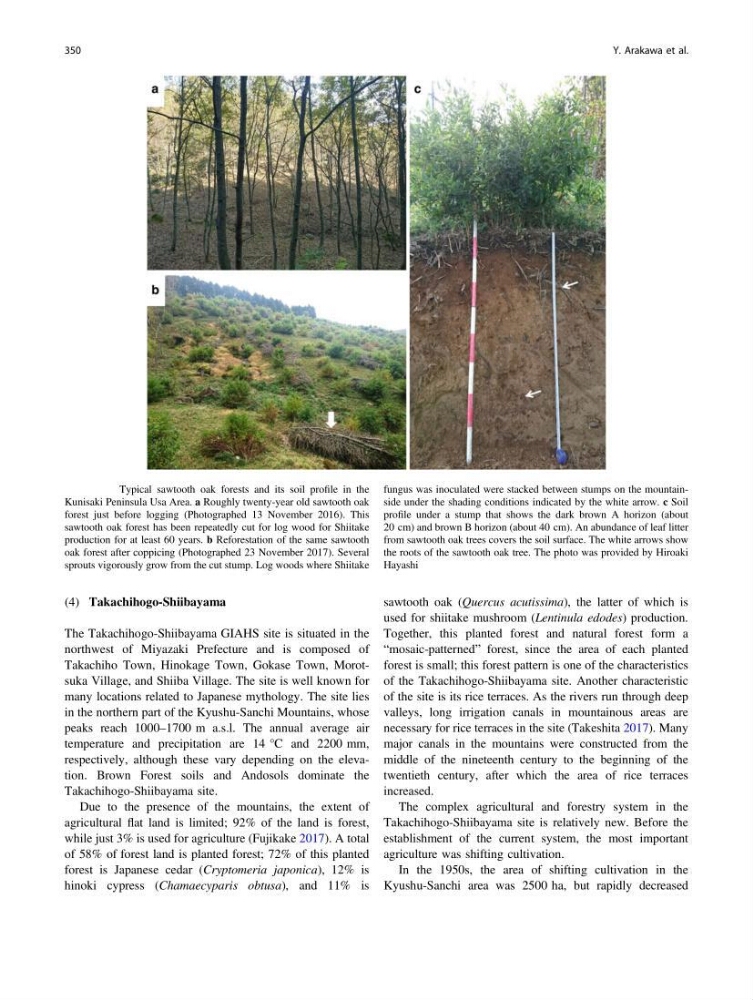
Fig. 10.14 Typical sawtooth oak forests and its soil profile in the
Kunisaki Peninsula Usa Area. a Roughly twenty-year old sawtooth oak
forest just before logging (Photographed 13 November 2016). This
sawtooth oak forest has been repeatedly cut for log wood for Shiitake
production for at least 60 years. b Reforestation of the same sawtooth
oak forest after coppicing (Photographed 23 November 2017). Several
sprouts vigorously grow from the cut stump. Log woods where Shiitake
fungus was inoculated were stacked between stumps on the mountainside under the shading conditions indicated by the white arrow. c Soil
profile under a stump that shows the dark brown A horizon (about
20 cm) and brown B horizon (about 40 cm). An abundance of leaf litter
from sawtooth oak trees covers the soil surface. The white arrows show
the roots of the sawtooth oak tree. The photo was provided by Hiroaki
Hayashi
350
Y. Arakawa et al.
The Takachihogo-Shiibayama GIAHS site is situated in the
northwest of Miyazaki Prefecture and is composed of
Takachiho Town, Hinokage Town, Gokase Town, Morotsuka Village, and Shiiba Village. The site is well known for
many locations related to Japanese mythology. The site lies
in the northern part of the Kyushu-Sanchi Mountains, whose
peaks reach 1000–1700 m a.s.l. The annual average air
temperature and precipitation are 14 °C and 2200 mm,
respectively, although these vary depending on the elevation. Brown Forest soils and Andosols dominate the
Takachihogo-Shiibayama site.
Due to the presence of the mountains, the extent of
agricultural flat land is limited; 92% of the land is forest,
while just 3% is used for agriculture (Fujikake 2017). A total
of 58% of forest land is planted forest; 72% of this planted
forest is Japanese cedar (Cryptomeria japonica), 12% is
hinoki cypress (Chamaecyparis obtusa), and 11% is
sawtooth oak (Quercus acutissima), the latter of which is
used for shiitake mushroom (Lentinula edodes) production.
Together, this planted forest and natural forest form a
“mosaic-patterned” forest, since the area of each planted
forest is small; this forest pattern is one of the characteristics
of the Takachihogo-Shiibayama site. Another characteristic
of the site is its rice terraces. As the rivers run through deep
valleys, long irrigation canals in mountainous areas are
necessary for rice terraces in the site (Takeshita 2017). Many
major canals in the mountains were constructed from the
middle of the nineteenth century to the beginning of the
twentieth century, after which the area of rice terraces
increased.
The complex agricultural and forestry system in the
Takachihogo-Shiibayama site is relatively new. Before the
establishment of the current system, the most important
agriculture was shifting cultivation.
In the 1950s, the area of shifting cultivation in the
Kyushu-Sanchi area was 2500 ha, but rapidly decreased
Fig. 10.14 Typical sawtooth oak forests and its soil profile in the
Kunisaki Peninsula Usa Area. a Roughly twenty-year old sawtooth oak
forest just before logging (Photographed 13 November 2016). This
sawtooth oak forest has been repeatedly cut for log wood for Shiitake
production for at least 60 years. b Reforestation of the same sawtooth
oak forest after coppicing (Photographed 23 November 2017). Several
sprouts vigorously grow from the cut stump. Log woods where Shiitake
fungus was inoculated were stacked between stumps on the mountainside under the shading conditions indicated by the white arrow. c Soil
profile under a stump that shows the dark brown A horizon (about
20 cm) and brown B horizon (about 40 cm). An abundance of leaf litter
from sawtooth oak trees covers the soil surface. The white arrows show
the roots of the sawtooth oak tree. The photo was provided by Hiroaki
Hayashi
350
Y. Arakawa et al.