

while on the Pacific side it is sunny in winter. Furthermore,
rainfall patterns are different on both sides.
Kyuma (1985) calculated the soil temperature regimes of
soils in various parts of Japan using the 50-cm soil temperature data of Japan’s Ministry of Agriculture, Forestry and
Fisheries (MAFF) and plotted the soil temperature regimes
on the map of Japan. Additionally, Takata et al. (2011) drew a
detailed soil temperature regime map based on the soil temperature data of two publications (Fig. 2.5) and divided the
Japanese soil temperature regime (Soil Survey Staff 2014)
into four classes, frigid, mesic, thermic and hyperthermic.
The frigid soil temperature regime is distributed in the
eastern part of Hokkaido. This region is the coldest region in
Japan and is affected by the Okhotsk Current. Podzols are
distributed even in low-elevation areas. The mesic soil
temperature regime area is mainly distributed in eastern
Japan, while the thermic soil temperature regime area is
distributed in western Japan. The soil temperature regime of
the Nansei Islands is hyperthermic.
2.1.2 The Changing Climate
The Japan Meteorological Agency reported that the annual
average temperature in Japan is predicted to increase by
4.5 °C at the end of twenty-first century and that it will rise
significantly across the country (Fig. 2.6) (Japan Meteorological Agency 2017). The global annual average temperature rise is about 3.7 °C by the end of twenty-first century;
however, the temperature rise near Japan is expected to be
larger than the world average because temperature is projected to rise more at relatively high latitudes. Temperature
is projected to rise by 4.9 °C on the Pacific Ocean side of
Northern Japan and by 3.3 °C in the Nansei Islands. The
average temperature for each season shows the same trend as
the annual average temperature. However, the temperature
rise is greater in summer than in the winter, when melting
sea ice and snowfall mitigate the temperature rise.
A rise of 4 to 5 °C in temperature leads to a change in the
climate zone; a subarctic climate turns into a temperate climate, and a temperate climate turns into a subtropical climate. The soil temperature rises with increasing air
temperature, and it is expected that the soil temperature will
also greatly affect soil formation in the future. For example,
the distribution of soils may change in the future. By
examining the relationship between past climate change and
pedogenesis, the influence of global warming on soil distribution may be clarified.
2.1.3 Past Climate
The soils of Japan have been affected not only by the current
Holocene climate but also by the Pleistocene climate during
and after the formational or depositional era of soil parent
materials. Therefore, it is very important to know the past
climate situation (paleoclimate) to understand soil-forming
processes. Given that the oldest plains of the Japanese
Islands were formed in the Quaternary/Pleistocene around
630,000 years ago, the Japanese soils on the plain were
formed sometime after this. In this section, we first describe
the outline of past global climate change, mainly after the
Middle Pleistocene (about 770,000 years ago), and then
summarize the paleoclimate of the Japanese Islands from the
last interglacial age (about 125,000 years ago) to the present
(Holocene/postglacial period) corresponding to the last glacial–interglacial cycle.
(1) Outline of global climate change since the Middle
Pleistocene
Research on past global climate change and sea-level change
originally commenced using the chronology and stratigraphy
of the regional terrestrial geology/geomorphology of glacial
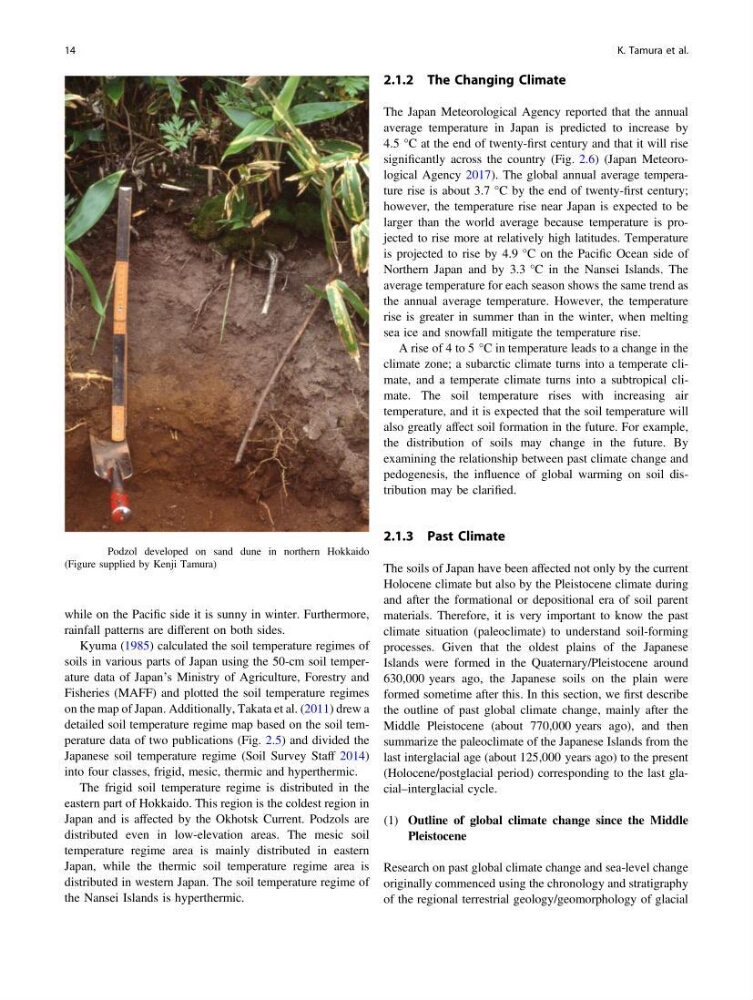
Fig. 2.1 Podzol developed on sand dune in northern Hokkaido
(Figure supplied by Kenji Tamura)
14
K. Tamura et al.
rainfall patterns are different on both sides.
Kyuma (1985) calculated the soil temperature regimes of
soils in various parts of Japan using the 50-cm soil temperature data of Japan’s Ministry of Agriculture, Forestry and
Fisheries (MAFF) and plotted the soil temperature regimes
on the map of Japan. Additionally, Takata et al. (2011) drew a
detailed soil temperature regime map based on the soil temperature data of two publications (Fig. 2.5) and divided the
Japanese soil temperature regime (Soil Survey Staff 2014)
into four classes, frigid, mesic, thermic and hyperthermic.
The frigid soil temperature regime is distributed in the
eastern part of Hokkaido. This region is the coldest region in
Japan and is affected by the Okhotsk Current. Podzols are
distributed even in low-elevation areas. The mesic soil
temperature regime area is mainly distributed in eastern
Japan, while the thermic soil temperature regime area is
distributed in western Japan. The soil temperature regime of
the Nansei Islands is hyperthermic.
2.1.2 The Changing Climate
The Japan Meteorological Agency reported that the annual
average temperature in Japan is predicted to increase by
4.5 °C at the end of twenty-first century and that it will rise
significantly across the country (Fig. 2.6) (Japan Meteorological Agency 2017). The global annual average temperature rise is about 3.7 °C by the end of twenty-first century;
however, the temperature rise near Japan is expected to be
larger than the world average because temperature is projected to rise more at relatively high latitudes. Temperature
is projected to rise by 4.9 °C on the Pacific Ocean side of
Northern Japan and by 3.3 °C in the Nansei Islands. The
average temperature for each season shows the same trend as
the annual average temperature. However, the temperature
rise is greater in summer than in the winter, when melting
sea ice and snowfall mitigate the temperature rise.
A rise of 4 to 5 °C in temperature leads to a change in the
climate zone; a subarctic climate turns into a temperate climate, and a temperate climate turns into a subtropical climate. The soil temperature rises with increasing air
temperature, and it is expected that the soil temperature will
also greatly affect soil formation in the future. For example,
the distribution of soils may change in the future. By
examining the relationship between past climate change and
pedogenesis, the influence of global warming on soil distribution may be clarified.
2.1.3 Past Climate
The soils of Japan have been affected not only by the current
Holocene climate but also by the Pleistocene climate during
and after the formational or depositional era of soil parent
materials. Therefore, it is very important to know the past
climate situation (paleoclimate) to understand soil-forming
processes. Given that the oldest plains of the Japanese
Islands were formed in the Quaternary/Pleistocene around
630,000 years ago, the Japanese soils on the plain were
formed sometime after this. In this section, we first describe
the outline of past global climate change, mainly after the
Middle Pleistocene (about 770,000 years ago), and then
summarize the paleoclimate of the Japanese Islands from the
last interglacial age (about 125,000 years ago) to the present
(Holocene/postglacial period) corresponding to the last glacial–interglacial cycle.
(1) Outline of global climate change since the Middle
Pleistocene
Research on past global climate change and sea-level change
originally commenced using the chronology and stratigraphy
of the regional terrestrial geology/geomorphology of glacial
Fig. 2.1 Podzol developed on sand dune in northern Hokkaido
(Figure supplied by Kenji Tamura)
14
K. Tamura et al.