

resources and prevent landslip, and ‘Kishu-Bincho-tan’,
wood charcoal, which is widely known for its high quality
and hardness, is made from Quercus phillyraeoides. Moreover, Japanese honey bees living in the coppices play an
important role, carrying the pollen to fruit Ume. For the bees,
Ume trees are valuable because they produce nectar from
February when flowers are still small, and a great symbiotic
relationship is constructed between them. Seventy percent of
workers in the area are connected to the Ume industry in
some way, and Ume support the lives of the citizens as a
regional main industry.”
9.2.2 Paddy Fields
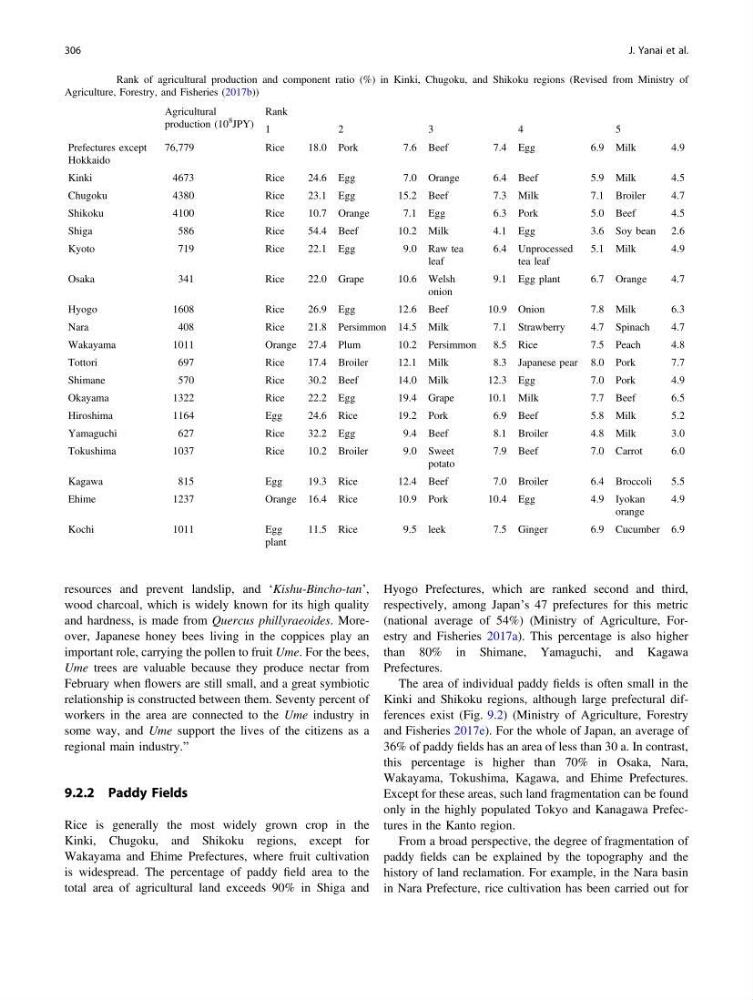
Rice is generally the most widely grown crop in the
Kinki, Chugoku, and Shikoku regions, except for
Wakayama and Ehime Prefectures, where fruit cultivation
is widespread. The percentage of paddy field area to the
total area of agricultural land exceeds 90% in Shiga and
Hyogo Prefectures, which are ranked second and third,
respectively, among Japan’s 47 prefectures for this metric
(national average of 54%) (Ministry of Agriculture, Forestry and Fisheries 2017a). This percentage is also higher
than 80% in Shimane, Yamaguchi, and Kagawa
Prefectures.
The area of individual paddy fields is often small in the
Kinki and Shikoku regions, although large prefectural differences exist (Fig. 9.2) (Ministry of Agriculture, Forestry
and Fisheries 2017e). For the whole of Japan, an average of
36% of paddy fields has an area of less than 30 a. In contrast,
this percentage is higher than 70% in Osaka, Nara,
Wakayama, Tokushima, Kagawa, and Ehime Prefectures.
Except for these areas, such land fragmentation can be found
only in the highly populated Tokyo and Kanagawa Prefectures in the Kanto region.
From a broad perspective, the degree of fragmentation of
paddy fields can be explained by the topography and the
history of land reclamation. For example, in the Nara basin
in Nara Prefecture, rice cultivation has been carried out for
Table 9.3 Rank of agricultural production and component ratio (%) in Kinki, Chugoku, and Shikoku regions (Revised from Ministry of
Agriculture, Forestry, and Fisheries (2017b))
Agricultural
production (10
8
JPY)
Rank
1
2
3
4
5
Prefectures except
Hokkaido
76,779
Rice
18.0 Pork
7.6 Beef
7.4 Egg
6.9 Milk
4.9
Kinki
4673
Rice
24.6 Egg
7.0 Orange
6.4 Beef
5.9 Milk
4.5
Chugoku
4380
Rice
23.1 Egg
15.2 Beef
7.3 Milk
7.1 Broiler
4.7
Shikoku
4100
Rice
10.7 Orange
7.1 Egg
6.3 Pork
5.0 Beef
4.5
Shiga
586
Rice
54.4 Beef
10.2 Milk
4.1 Egg
3.6 Soy bean 2.6
Kyoto
719
Rice
22.1 Egg
9.0 Raw tea
leaf
6.4 Unprocessed
tea leaf
5.1 Milk
4.9
Osaka
341
Rice
22.0 Grape
10.6 Welsh
onion
9.1 Egg plant
6.7 Orange
4.7
Hyogo
1608
Rice
26.9 Egg
12.6 Beef
10.9 Onion
7.8 Milk
6.3
Nara
408
Rice
21.8 Persimmon 14.5 Milk
7.1 Strawberry
4.7 Spinach
4.7
Wakayama
1011
Orange 27.4 Plum
10.2 Persimmon
8.5 Rice
7.5 Peach
4.8
Tottori
697
Rice
17.4 Broiler
12.1 Milk
8.3 Japanese pear 8.0 Pork
7.7
Shimane
570
Rice
30.2 Beef
14.0 Milk
12.3 Egg
7.0 Pork
4.9
Okayama
1322
Rice
22.2 Egg
19.4 Grape
10.1 Milk
7.7 Beef
6.5
Hiroshima
1164
Egg
24.6 Rice
19.2 Pork
6.9 Beef
5.8 Milk
5.2
Yamaguchi
627
Rice
32.2 Egg
9.4 Beef
8.1 Broiler
4.8 Milk
3.0
Tokushima
1037
Rice
10.2 Broiler
9.0 Sweet
potato
7.9 Beef
7.0 Carrot
6.0
Kagawa
815
Egg
19.3 Rice
12.4 Beef
7.0 Broiler
6.4 Broccoli
5.5
Ehime
1237
Orange 16.4 Rice
10.9 Pork
10.4 Egg
4.9 Iyokan
orange
4.9
Kochi
1011
Egg
plant
11.5 Rice
9.5 leek
7.5 Ginger
6.9 Cucumber 6.9
306
J. Yanai et al.
wood charcoal, which is widely known for its high quality
and hardness, is made from Quercus phillyraeoides. Moreover, Japanese honey bees living in the coppices play an
important role, carrying the pollen to fruit Ume. For the bees,
Ume trees are valuable because they produce nectar from
February when flowers are still small, and a great symbiotic
relationship is constructed between them. Seventy percent of
workers in the area are connected to the Ume industry in
some way, and Ume support the lives of the citizens as a
regional main industry.”
9.2.2 Paddy Fields
Rice is generally the most widely grown crop in the
Kinki, Chugoku, and Shikoku regions, except for
Wakayama and Ehime Prefectures, where fruit cultivation
is widespread. The percentage of paddy field area to the
total area of agricultural land exceeds 90% in Shiga and
Hyogo Prefectures, which are ranked second and third,
respectively, among Japan’s 47 prefectures for this metric
(national average of 54%) (Ministry of Agriculture, Forestry and Fisheries 2017a). This percentage is also higher
than 80% in Shimane, Yamaguchi, and Kagawa
Prefectures.
The area of individual paddy fields is often small in the
Kinki and Shikoku regions, although large prefectural differences exist (Fig. 9.2) (Ministry of Agriculture, Forestry
and Fisheries 2017e). For the whole of Japan, an average of
36% of paddy fields has an area of less than 30 a. In contrast,
this percentage is higher than 70% in Osaka, Nara,
Wakayama, Tokushima, Kagawa, and Ehime Prefectures.
Except for these areas, such land fragmentation can be found
only in the highly populated Tokyo and Kanagawa Prefectures in the Kanto region.
From a broad perspective, the degree of fragmentation of
paddy fields can be explained by the topography and the
history of land reclamation. For example, in the Nara basin
in Nara Prefecture, rice cultivation has been carried out for
Table 9.3 Rank of agricultural production and component ratio (%) in Kinki, Chugoku, and Shikoku regions (Revised from Ministry of
Agriculture, Forestry, and Fisheries (2017b))
Agricultural
production (10
8
JPY)
Rank
1
2
3
4
5
Prefectures except
Hokkaido
76,779
Rice
18.0 Pork
7.6 Beef
7.4 Egg
6.9 Milk
4.9
Kinki
4673
Rice
24.6 Egg
7.0 Orange
6.4 Beef
5.9 Milk
4.5
Chugoku
4380
Rice
23.1 Egg
15.2 Beef
7.3 Milk
7.1 Broiler
4.7
Shikoku
4100
Rice
10.7 Orange
7.1 Egg
6.3 Pork
5.0 Beef
4.5
Shiga
586
Rice
54.4 Beef
10.2 Milk
4.1 Egg
3.6 Soy bean 2.6
Kyoto
719
Rice
22.1 Egg
9.0 Raw tea
leaf
6.4 Unprocessed
tea leaf
5.1 Milk
4.9
Osaka
341
Rice
22.0 Grape
10.6 Welsh
onion
9.1 Egg plant
6.7 Orange
4.7
Hyogo
1608
Rice
26.9 Egg
12.6 Beef
10.9 Onion
7.8 Milk
6.3
Nara
408
Rice
21.8 Persimmon 14.5 Milk
7.1 Strawberry
4.7 Spinach
4.7
Wakayama
1011
Orange 27.4 Plum
10.2 Persimmon
8.5 Rice
7.5 Peach
4.8
Tottori
697
Rice
17.4 Broiler
12.1 Milk
8.3 Japanese pear 8.0 Pork
7.7
Shimane
570
Rice
30.2 Beef
14.0 Milk
12.3 Egg
7.0 Pork
4.9
Okayama
1322
Rice
22.2 Egg
19.4 Grape
10.1 Milk
7.7 Beef
6.5
Hiroshima
1164
Egg
24.6 Rice
19.2 Pork
6.9 Beef
5.8 Milk
5.2
Yamaguchi
627
Rice
32.2 Egg
9.4 Beef
8.1 Broiler
4.8 Milk
3.0
Tokushima
1037
Rice
10.2 Broiler
9.0 Sweet
potato
7.9 Beef
7.0 Carrot
6.0
Kagawa
815
Egg
19.3 Rice
12.4 Beef
7.0 Broiler
6.4 Broccoli
5.5
Ehime
1237
Orange 16.4 Rice
10.9 Pork
10.4 Egg
4.9 Iyokan
orange
4.9
Kochi
1011
Egg
plant
11.5 Rice
9.5 leek
7.5 Ginger
6.9 Cucumber 6.9
306
J. Yanai et al.