

3. Countermeasures against cadmium contamination in
paddy fields in Toyama Prefecture
So-called itai-itai disease, a mass cadmium poisoning which
occurred in the Jinzu river basin of Toyama Prefecture in
early twentieth century, was certified as a pollution disease
in 1968.
Cadmium released from the Kamioka Mine, located in
Kamioka-cho (now Hida-shi), Gifu Prefecture, flowed into
the Jinzu River, and contaminated the paddy fields of the
downstream region via agricultural water. The cadmium
subsequently accumulated in rice, and its ingestion caused
itai-itai disease.
Some parts of the Specifications and Standards of Food
and Food Additives, and so on, under the Food Sanitation
Act, were amended in 1970, and it was added that the
cadmium (Cd) concentration of rice must be less than
1 ppm. In 2010, this reference value was amended to less
than or equal to 0.4 ppm.
In 1970, the Act to Prevent Soil Contamination on
Agricultural Land was established to take measures against
the contamination of agricultural land by specified hazardous
substances (initially only cadmium, although copper
(Cu) and arsenic (As) were later added).
In response to the establishment of the Act to Prevent Soil
Contamination on Agricultural Land, a nationwide investigation of the pollution situation of agricultural fields was
conducted. The total area of field with a soil cadmium
concentration equal to or greater than the reference value
was found to be 7592 ha by the investigation from 1971 to
2015. It has been reported that restoration projects in
7055 ha of cadmium-contaminated field had been completed
by the end of the 2016 fiscal year (Ministry of the Environment 2016).
(1) The restoration of cadmium-contaminated soil using
soil dressing methods
Of the above total area of 7592 ha of cadmiumcontaminated field, the Jinzu river basin region contains
the largest contaminated area of any region, 1500.6 ha.
Here, soil restoration work was conducted by the pollution
control special land improvement projects over 33 years
from 1979 to 2011.
As countermeasures against contaminated paddy field
soil, two types of soil dressing methods were adopted: the
restoration method of embedding contaminated soil and
Table 8.1 Effect of reduced
phosphate fertilizer on rice yield
and soil phosphate fertility (2009)
Experimental plot
Treatment
Polished rice yield
Phosphate content in soil
(mg kg
−1 dry soil)
t ha
−1
Relative to
conventional
Before
cultivation
After
cultivation
Truog
Bray II
Truog
Bray II
Low P
Conventional
4.93
100
68
626
70
424
Exploited
4.85
98
51
287
L-type
4.86
99
76
262
No phosphate
4.92
100
35
262
Intermediate P
Conventional
5.05
100
118
723
85
470
Exploited
4.52
90
73
405
L-type
4.94
98
76
521
No phosphate
5.31
105
66
386
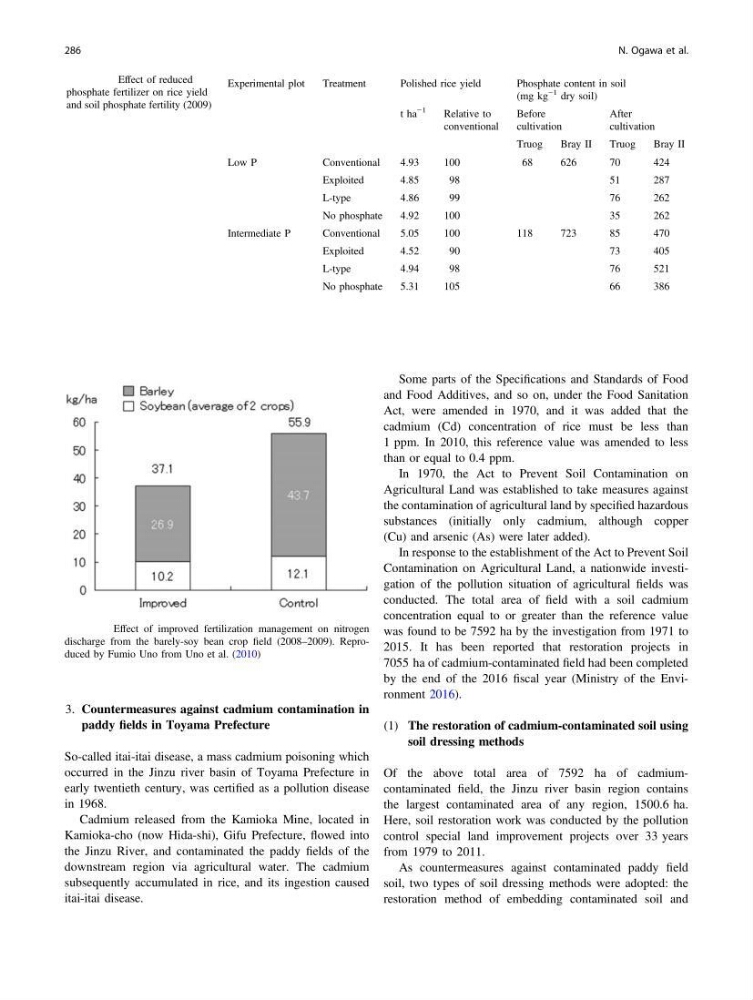
Fig. 8.13 Effect of improved fertilization management on nitrogen
discharge from the barely-soy bean crop field (2008–2009). Reproduced by Fumio Uno from Uno et al. (2010)
286
N. Ogawa et al.
paddy fields in Toyama Prefecture
So-called itai-itai disease, a mass cadmium poisoning which
occurred in the Jinzu river basin of Toyama Prefecture in
early twentieth century, was certified as a pollution disease
in 1968.
Cadmium released from the Kamioka Mine, located in
Kamioka-cho (now Hida-shi), Gifu Prefecture, flowed into
the Jinzu River, and contaminated the paddy fields of the
downstream region via agricultural water. The cadmium
subsequently accumulated in rice, and its ingestion caused
itai-itai disease.
Some parts of the Specifications and Standards of Food
and Food Additives, and so on, under the Food Sanitation
Act, were amended in 1970, and it was added that the
cadmium (Cd) concentration of rice must be less than
1 ppm. In 2010, this reference value was amended to less
than or equal to 0.4 ppm.
In 1970, the Act to Prevent Soil Contamination on
Agricultural Land was established to take measures against
the contamination of agricultural land by specified hazardous
substances (initially only cadmium, although copper
(Cu) and arsenic (As) were later added).
In response to the establishment of the Act to Prevent Soil
Contamination on Agricultural Land, a nationwide investigation of the pollution situation of agricultural fields was
conducted. The total area of field with a soil cadmium
concentration equal to or greater than the reference value
was found to be 7592 ha by the investigation from 1971 to
2015. It has been reported that restoration projects in
7055 ha of cadmium-contaminated field had been completed
by the end of the 2016 fiscal year (Ministry of the Environment 2016).
(1) The restoration of cadmium-contaminated soil using
soil dressing methods
Of the above total area of 7592 ha of cadmiumcontaminated field, the Jinzu river basin region contains
the largest contaminated area of any region, 1500.6 ha.
Here, soil restoration work was conducted by the pollution
control special land improvement projects over 33 years
from 1979 to 2011.
As countermeasures against contaminated paddy field
soil, two types of soil dressing methods were adopted: the
restoration method of embedding contaminated soil and
Table 8.1 Effect of reduced
phosphate fertilizer on rice yield
and soil phosphate fertility (2009)
Experimental plot
Treatment
Polished rice yield
Phosphate content in soil
(mg kg
−1 dry soil)
t ha
−1
Relative to
conventional
Before
cultivation
After
cultivation
Truog
Bray II
Truog
Bray II
Low P
Conventional
4.93
100
68
626
70
424
Exploited
4.85
98
51
287
L-type
4.86
99
76
262
No phosphate
4.92
100
35
262
Intermediate P
Conventional
5.05
100
118
723
85
470
Exploited
4.52
90
73
405
L-type
4.94
98
76
521
No phosphate
5.31
105
66
386
Fig. 8.13 Effect of improved fertilization management on nitrogen
discharge from the barely-soy bean crop field (2008–2009). Reproduced by Fumio Uno from Uno et al. (2010)
286
N. Ogawa et al.