

connectivity among landscape elements has been much
improved spatiotemporally by reconstructing aquatic
areas. The approaches of performing irrigation in winter
and creating catch drains are based on traditional agricultural techniques of this region.
(4) Creating biotopes utilizing fallow rice fields and abandoned coppices to maintain the biodiversity and biomass of aquatic organisms all year-round.
(5) Reducing the application of chemical fertilizer, pesticide, and fungicide to less than 50% of the conventional
application amount.
(6) The complete prohibition of herbicide application on
levees.
(7) The certification of certain farmers as “Eco-Farmers” by
Niigata Prefecture.
(8) Monitoring species diversity and the quantity of aquatic
organisms in rice paddies every year.
Creating and maintaining biotopes is sometimes too
heavy a burden for farmers, because fallow rice fields
sometimes spread in mountainous areas that are difficult to
access, and preventing this takes a lot of time and money.
Therefore, the activities of non-profit organizations and
volunteers are very important. The monitoring of aquatic
organisms is important for stakeholders in order to recognize
the effects of their farming methods and to form continuous
motivations.
The Japanese crested ibis is one of the top predators in the
food web and acts as an “umbrella species.” Attempts for the
reintroduction of the crested ibis have improved the
satoyama environment and the feeding grounds of the species. However, it has also emerged that there are lots of
ecological and/or agro-economic problems in the modern
agricultural ecosystem to be solved. Thus, the Sado model,
authorized as a GIAHS, realistically shows the direction of
eco-farming in the near future.
7.5 Topics of Interest in Suburban
Agricultural Land
7.5.1 Concerning “Kanpyo,” a Popular Sushi
Item
Few people might know of “kanpyo,” a food item which is
used for norimaki-sushi and is loved by many people.
Kanpyo is made from the immature fruits of the cucurbitaceous yugao (a white-flowered gourd, Lagenaria siceraria
(Molina) Standl. var. hispida (Thunb.) H.Hara).
The industrial crop production of kanpyo in Japan was
about 319 tons in 2014. A total of 99% of this were produced in Tochigi Prefecture, and especially in Shimotsuke
City, Mibu Town, and Kaminokawa Town, which are
located in the southern part of the prefecture.
The cucurbitaceous yugao belongs to the Cucurbitaceae
family and is indigenous to the tropical regions of North
Africa to India. Although “hyotan” (a bottle gourd) is also
made from the fruit of the cucurbitaceous yugao, it contains
large amounts of cucurbitacin and is thus inedible. On the
other hand, kanpyo has been determined to have a low
cucurbitacin content. The fruits are almost spherical in
shape, are 30 to 40 cm in diameter, and 7 to 8 kg in weight.
The roots of the cucurbitaceous yugao distribute at depths
of up to 5 cm from the soil surface under the area over which
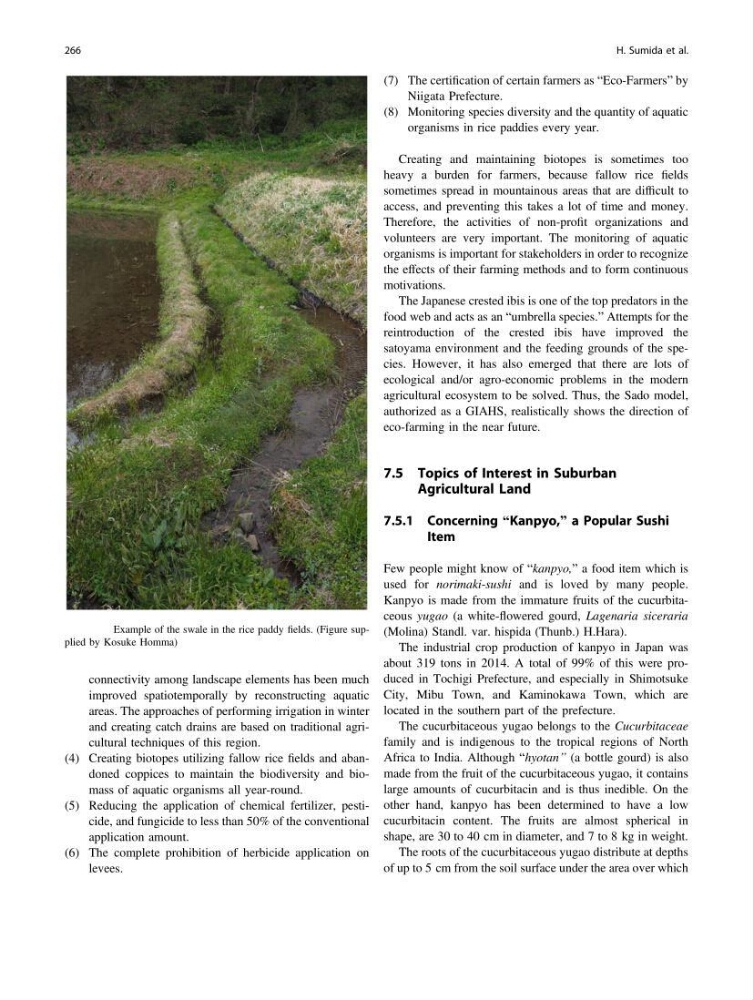
Fig. 7.18 Example of the swale in the rice paddy fields. (Figure supplied by Kosuke Homma)
266
H. Sumida et al.
improved spatiotemporally by reconstructing aquatic
areas. The approaches of performing irrigation in winter
and creating catch drains are based on traditional agricultural techniques of this region.
(4) Creating biotopes utilizing fallow rice fields and abandoned coppices to maintain the biodiversity and biomass of aquatic organisms all year-round.
(5) Reducing the application of chemical fertilizer, pesticide, and fungicide to less than 50% of the conventional
application amount.
(6) The complete prohibition of herbicide application on
levees.
(7) The certification of certain farmers as “Eco-Farmers” by
Niigata Prefecture.
(8) Monitoring species diversity and the quantity of aquatic
organisms in rice paddies every year.
Creating and maintaining biotopes is sometimes too
heavy a burden for farmers, because fallow rice fields
sometimes spread in mountainous areas that are difficult to
access, and preventing this takes a lot of time and money.
Therefore, the activities of non-profit organizations and
volunteers are very important. The monitoring of aquatic
organisms is important for stakeholders in order to recognize
the effects of their farming methods and to form continuous
motivations.
The Japanese crested ibis is one of the top predators in the
food web and acts as an “umbrella species.” Attempts for the
reintroduction of the crested ibis have improved the
satoyama environment and the feeding grounds of the species. However, it has also emerged that there are lots of
ecological and/or agro-economic problems in the modern
agricultural ecosystem to be solved. Thus, the Sado model,
authorized as a GIAHS, realistically shows the direction of
eco-farming in the near future.
7.5 Topics of Interest in Suburban
Agricultural Land
7.5.1 Concerning “Kanpyo,” a Popular Sushi
Item
Few people might know of “kanpyo,” a food item which is
used for norimaki-sushi and is loved by many people.
Kanpyo is made from the immature fruits of the cucurbitaceous yugao (a white-flowered gourd, Lagenaria siceraria
(Molina) Standl. var. hispida (Thunb.) H.Hara).
The industrial crop production of kanpyo in Japan was
about 319 tons in 2014. A total of 99% of this were produced in Tochigi Prefecture, and especially in Shimotsuke
City, Mibu Town, and Kaminokawa Town, which are
located in the southern part of the prefecture.
The cucurbitaceous yugao belongs to the Cucurbitaceae
family and is indigenous to the tropical regions of North
Africa to India. Although “hyotan” (a bottle gourd) is also
made from the fruit of the cucurbitaceous yugao, it contains
large amounts of cucurbitacin and is thus inedible. On the
other hand, kanpyo has been determined to have a low
cucurbitacin content. The fruits are almost spherical in
shape, are 30 to 40 cm in diameter, and 7 to 8 kg in weight.
The roots of the cucurbitaceous yugao distribute at depths
of up to 5 cm from the soil surface under the area over which
Fig. 7.18 Example of the swale in the rice paddy fields. (Figure supplied by Kosuke Homma)
266
H. Sumida et al.