

(47,900 ha, including orchard soil) fields. The most dominant soil group in paddy fields is Fluvic Paddy soil (40% of
paddy fields) followed by Gray Fluvic soils (19%), Wet
Andosols (16%), and Gley Fluvic soils (10%). In the upland
fields, Allophanic Andosols are predominant (38%), followed by Regosolic Andosols (35%), Brown Fluvic soils
(7%), and Brown Forest soils (5%) (Statistical Yearbook of
the Ministry of Agriculture 2009). Figure 7.11 shows the
actual conditions of soil in Gunma Prefecture based on the
results of a survey from the first round (1979) to the fourth
round (1994–1998) of the “Soil Environmental Monitoring
Project”, which was carried out in four regions of the prefecture (north, central, western, and eastern).
(a) Paddy soil
The depth of the plow layer is small in the eastern part of
Gunma Prefecture where Gley Fluvic soils are dominant.
However, a significant change in depth is not observed in
most years. Soil base saturation tended to slightly decrease
throughout the region, and in 60% of paddy fields, soil pH is
below 6.0. There is no remarkable trend in the content of
plant-available phosphate, although about 30% of paddy
fields contain relatively high amounts (≧0.3 g kg
−1
). Soil
total nitrogen and plant-available nitrogen are almost the
same over the region and throughout the year.
(b) Upland soil
The depth of the plow layer tends to be shallow as a whole.
In the western and eastern parts of Gunma Prefecture, soil
base saturation and soil pH tended to decrease. The level of
plant-available phosphate in the soil tended to increase,
particularly in the northern area (≧1 g kg
−1 ).
In Konjac field, the plow layer depth and base saturation
decreased. However, the plant-available phosphate content
of the soil is extremely high, leading to an increase in the
average plant-available phosphate content in the northern
upland soil.
(c) Orchard soil
Significant change in soil pH has not been observed in recent
years. On the other hand, plant-available phosphate content
tended to increase, and 80% of soils exhibit a relatively high
available phosphorous content (≧0.3 g kg
−1 ). The lime saturation depends on the location: it tended to increase in the
northern part of Gunma Prefecture but decreased in the
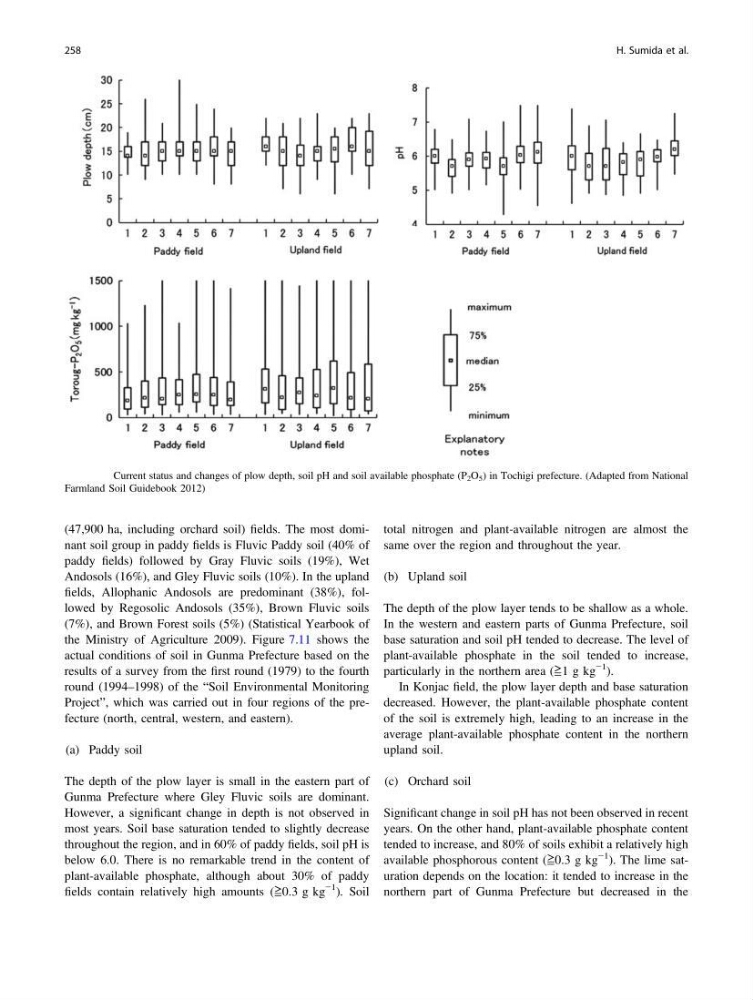
Fig. 7.10 Current status and changes of plow depth, soil pH and soil available phosphate (P 2 O 5 ) in Tochigi prefecture. (Adapted from National
Farmland Soil Guidebook 2012)
258
H. Sumida et al.
paddy fields) followed by Gray Fluvic soils (19%), Wet
Andosols (16%), and Gley Fluvic soils (10%). In the upland
fields, Allophanic Andosols are predominant (38%), followed by Regosolic Andosols (35%), Brown Fluvic soils
(7%), and Brown Forest soils (5%) (Statistical Yearbook of
the Ministry of Agriculture 2009). Figure 7.11 shows the
actual conditions of soil in Gunma Prefecture based on the
results of a survey from the first round (1979) to the fourth
round (1994–1998) of the “Soil Environmental Monitoring
Project”, which was carried out in four regions of the prefecture (north, central, western, and eastern).
(a) Paddy soil
The depth of the plow layer is small in the eastern part of
Gunma Prefecture where Gley Fluvic soils are dominant.
However, a significant change in depth is not observed in
most years. Soil base saturation tended to slightly decrease
throughout the region, and in 60% of paddy fields, soil pH is
below 6.0. There is no remarkable trend in the content of
plant-available phosphate, although about 30% of paddy
fields contain relatively high amounts (≧0.3 g kg
−1
). Soil
total nitrogen and plant-available nitrogen are almost the
same over the region and throughout the year.
(b) Upland soil
The depth of the plow layer tends to be shallow as a whole.
In the western and eastern parts of Gunma Prefecture, soil
base saturation and soil pH tended to decrease. The level of
plant-available phosphate in the soil tended to increase,
particularly in the northern area (≧1 g kg
−1 ).
In Konjac field, the plow layer depth and base saturation
decreased. However, the plant-available phosphate content
of the soil is extremely high, leading to an increase in the
average plant-available phosphate content in the northern
upland soil.
(c) Orchard soil
Significant change in soil pH has not been observed in recent
years. On the other hand, plant-available phosphate content
tended to increase, and 80% of soils exhibit a relatively high
available phosphorous content (≧0.3 g kg
−1 ). The lime saturation depends on the location: it tended to increase in the
northern part of Gunma Prefecture but decreased in the
Fig. 7.10 Current status and changes of plow depth, soil pH and soil available phosphate (P 2 O 5 ) in Tochigi prefecture. (Adapted from National
Farmland Soil Guidebook 2012)
258
H. Sumida et al.