

Table 6.2 summarizes the effect of the nutrient deprivation and the application of fertilizer on different yield components. Compared with the yield components for the NPK
ratio at Niida, the NPK ratio at Ogata developed an almost
equal number of ears, but the number of unhulled grains per
ear, ripening rate, and thousand-kernel weight were all
slightly higher at Ogata. While the deprivation of nitrogen
and phosphate resulted in a decrease in the number of ears in
both fields, the impact was less significant at Ogata than at
Niida. At Niida, the impact of potassium deprivation was
reflected in the number of spikelets per ear and the ripening
rate. In contrast, potassium deprivation did not have any
noticeable effect on the yield component at Ogata. Both the
number of ears and the number of spikelets per ear increased
with fertilizer application at Niida. In contrast, at Ogata, the
number of spikelets per ear increased, although the number
of ears did not increase, with fertilizer application.
These results indicate that, compared with general Gray
Fluvic soil, the Gley soil paddies at Ogata supply more
nitrogen and potassium from the soil. While the harvest level
was generally high, the degree to which the increase of
harvest yield was attributable to fertilizer application
remains unclear. Fertilizer application at Ogata contributed
more to the number of spikelets per ear than to the number of
ears, suggesting that nitrogen fertilization was more effective
in the latter stages of growth.
(3) Cultivation management for developing soil
structures
In paddy–upland rotations of meadow heavy clay soil, the
Gley layer thins every year during the upland period.
However, when the crop field was reconverted to a rice
paddy, the Gley layer thickened by 10 cm per year during
puddling cultivation. Three years after the rice paddy
reconversion, the second layer immediately below the surface soil had significantly thinned and the soil structure had
degraded into a wall-shaped structure. Therefore, although
the paddy was reverted into a crop field, the second layer
remained thin, and consequently, the soil structure did not
develop.
Crops that are sensitive to excessively wet soil conditions, such as soybeans, require transplantations through
non-tillage and non-puddling techniques to avoid moisture
damage in the first year of crop field conversion. In
non-tillage and non-puddling cultivation, the soil structure
and acidity of the underlying soil layer that is developed
through paddy–upland rotations could be maintained.
Moreover, the improved drainage results in increased soil
pulverization at the surface, which contributes to increases in
soybean production.
Therefore, in meadow heavy clay soil, techniques to
promote crop field conversion by cultivation management
for the development of soil structures and the maintenance of
oxidized soil during paddy rice cultivation are required.
In the initial stage after land reclamation, it was aimed to
achieve large-scale farming using large machinery on the
Ogata reclamation land area; however, this was significantly
impeded by the physical properties of the soft, heavy clay
soil. Recently, improved drainage and soil drying have stabilized the plow layer immediately beneath the surface soil,
making the soil-bearing capacity less problematic. Furthermore, techniques have been developed to increase the productivity of paddy rice and other crops, through fertilizer
application methods to increase the availability of fertilizer
nitrogen and green manure cultivation aimed at improving
the physical properties and nitrogen fertility of the soil.
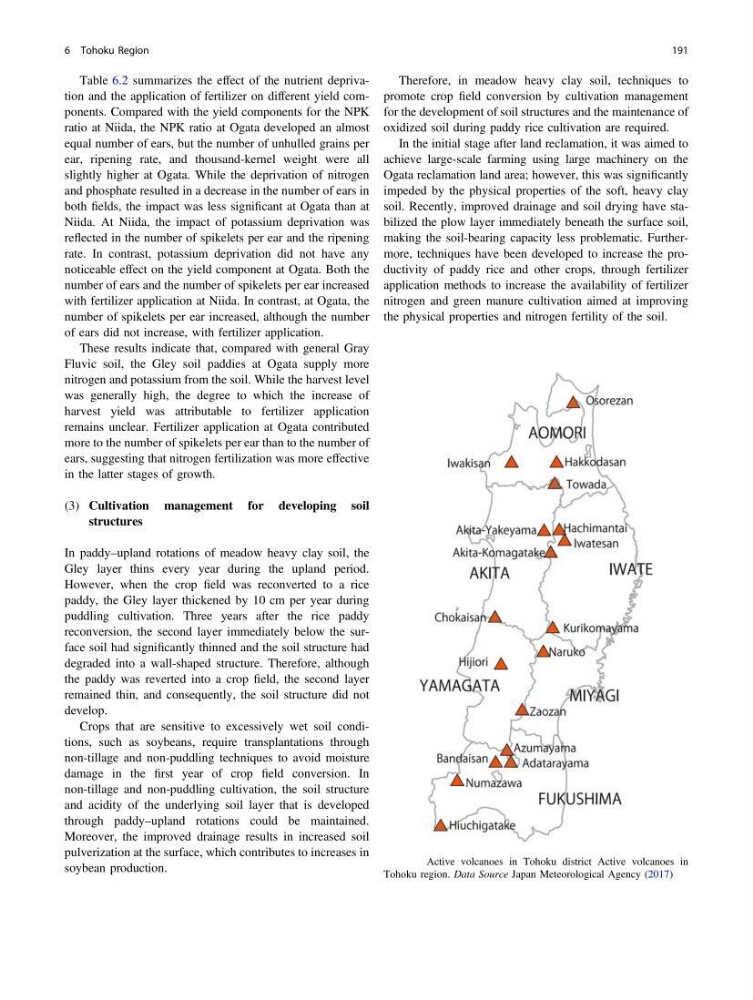
Fig. 6.2 Active volcanoes in Tohoku district Active volcanoes in
Tohoku region. Data Source Japan Meteorological Agency (2017)
6 Tohoku Region
191
ratio at Niida, the NPK ratio at Ogata developed an almost
equal number of ears, but the number of unhulled grains per
ear, ripening rate, and thousand-kernel weight were all
slightly higher at Ogata. While the deprivation of nitrogen
and phosphate resulted in a decrease in the number of ears in
both fields, the impact was less significant at Ogata than at
Niida. At Niida, the impact of potassium deprivation was
reflected in the number of spikelets per ear and the ripening
rate. In contrast, potassium deprivation did not have any
noticeable effect on the yield component at Ogata. Both the
number of ears and the number of spikelets per ear increased
with fertilizer application at Niida. In contrast, at Ogata, the
number of spikelets per ear increased, although the number
of ears did not increase, with fertilizer application.
These results indicate that, compared with general Gray
Fluvic soil, the Gley soil paddies at Ogata supply more
nitrogen and potassium from the soil. While the harvest level
was generally high, the degree to which the increase of
harvest yield was attributable to fertilizer application
remains unclear. Fertilizer application at Ogata contributed
more to the number of spikelets per ear than to the number of
ears, suggesting that nitrogen fertilization was more effective
in the latter stages of growth.
(3) Cultivation management for developing soil
structures
In paddy–upland rotations of meadow heavy clay soil, the
Gley layer thins every year during the upland period.
However, when the crop field was reconverted to a rice
paddy, the Gley layer thickened by 10 cm per year during
puddling cultivation. Three years after the rice paddy
reconversion, the second layer immediately below the surface soil had significantly thinned and the soil structure had
degraded into a wall-shaped structure. Therefore, although
the paddy was reverted into a crop field, the second layer
remained thin, and consequently, the soil structure did not
develop.
Crops that are sensitive to excessively wet soil conditions, such as soybeans, require transplantations through
non-tillage and non-puddling techniques to avoid moisture
damage in the first year of crop field conversion. In
non-tillage and non-puddling cultivation, the soil structure
and acidity of the underlying soil layer that is developed
through paddy–upland rotations could be maintained.
Moreover, the improved drainage results in increased soil
pulverization at the surface, which contributes to increases in
soybean production.
Therefore, in meadow heavy clay soil, techniques to
promote crop field conversion by cultivation management
for the development of soil structures and the maintenance of
oxidized soil during paddy rice cultivation are required.
In the initial stage after land reclamation, it was aimed to
achieve large-scale farming using large machinery on the
Ogata reclamation land area; however, this was significantly
impeded by the physical properties of the soft, heavy clay
soil. Recently, improved drainage and soil drying have stabilized the plow layer immediately beneath the surface soil,
making the soil-bearing capacity less problematic. Furthermore, techniques have been developed to increase the productivity of paddy rice and other crops, through fertilizer
application methods to increase the availability of fertilizer
nitrogen and green manure cultivation aimed at improving
the physical properties and nitrogen fertility of the soil.
Fig. 6.2 Active volcanoes in Tohoku district Active volcanoes in
Tohoku region. Data Source Japan Meteorological Agency (2017)
6 Tohoku Region
191