

growing strong and healthy crops that can adapt to pests,
disease, and numerous environmental pressures.
(2) Status of soil calcium content in Hokkaido
In Japan, acidic soils are widespread due to high rainfall
leaching base cations including potassium (K), magnesium
(Mg), and Ca. The application of liming materials, including
calcium carbonate (limestone) and calcium magnesium carbonate (dolomite), has been widely practiced in order to
increase soil pH. However, these materials have extremely
low solubilities and supply little Ca to plants. For potato
production, high pH has been considered as the cause of
common scab, and the application of liming materials has
been avoided (Mizuno 2001). A regional survey of 170
potato-growing farms in the Tokachi area (n = 90; primarily
Andosols) and Kamikawa area (n = 80; primarily brown
forest soils and pseudogley soils) showed that the mean Ca
saturation, the fraction of exchangeable soil Ca to CEC, was
33%. The Hokkaido Fertilizer Recommendations 2015
advises that growers apply inputs to maintain the Ca saturation at above 40%; however, about 80% and 70% of the
surveyed farms in the Tokachi and Kamikawa areas,
respectively, had Ca saturations below this threshold
(Fig. 5.22). This shows that the supply of Ca to crops from
soils is not sufficient in these areas.
(3) Calcium fertilization in the USA
Research carried out by the University of Wisconsin–
Madison has shown that the incidence of black bruise,
internal brown spots, and hollow heart can be suppressed
when the tuber Ca concentration exceeds 250 mg kg
−1 by
the application of water soluble calcium salt (calcium nitrate
or calcium chloride) on top of ridges during the tuber
bulking period. Our survey of 170 farms in Hokkaido found
that the mean tuber Ca concentration was 122 mg kg
−1 , and
that no locations exceeded 250 mg kg
−1 .
(4) Calcium fertilization in Hokkaido
The type of soil and the method of ridging need to be
considered when determining the method of Ca fertilization
in potato cropping systems in Japan. The soils of Japan have
high organic matter content, and the side-dressing of calcium
nitrate therefore results in excess nitrogen and causes a lower
yield and specific gravity. The early ridging method that is
widely practiced in Hokkaido and the mulching method that
is practiced in Honshu make the application of
Ca-containing fertilizer on top of the ridges challenging.
A collaborative research project between Calbee Potato
Inc. and the Obihiro University of Agriculture and Veterinary Medicine has been carrying out the application of
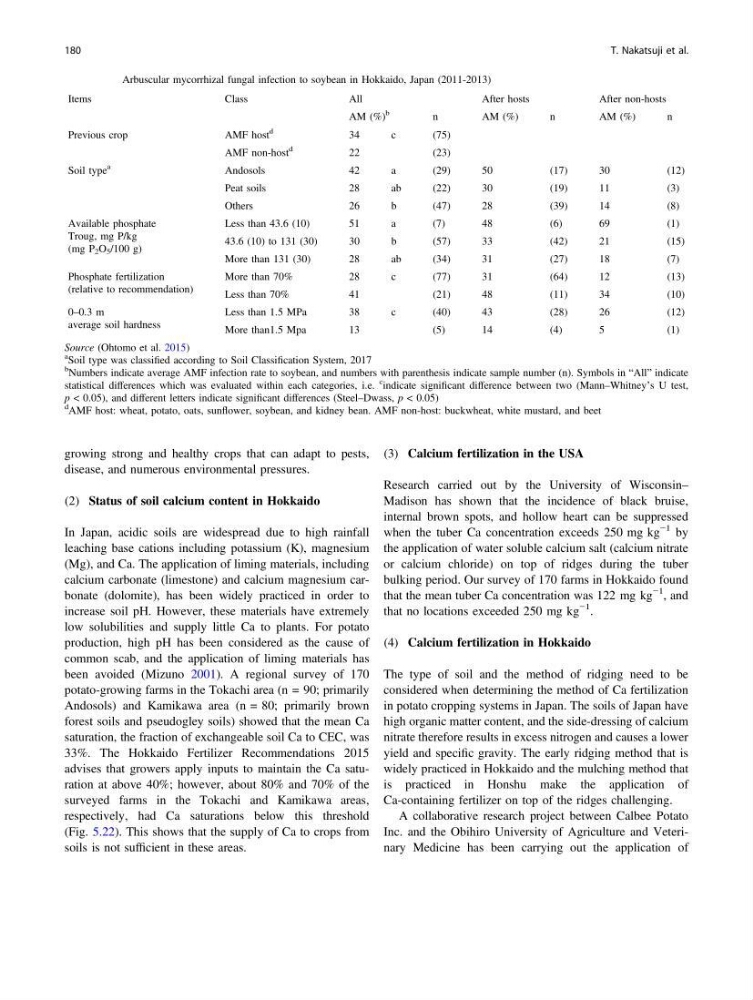
Table 5.22 Arbuscular mycorrhizal fungal infection to soybean in Hokkaido, Japan (2011-2013)
Items
Class
All
After hosts
After non-hosts
AM (%)
b
n
AM (%)
n
AM (%)
n
Previous crop
AMF host
d
34
c
(75)
AMF non-host
d
22
(23)
Soil type
a
Andosols
42
a
(29)
50
(17)
30
(12)
Peat soils
28
ab
(22)
30
(19)
11
(3)
Others
26
b
(47)
28
(39)
14
(8)
Available phosphate
Troug, mg P/kg
(mg P 2 O 5 /100 g)
Less than 43.6 (10)
51
a
(7)
48
(6)
69
(1)
43.6 (10) to 131 (30)
30
b
(57)
33
(42)
21
(15)
More than 131 (30)
28
ab
(34)
31
(27)
18
(7)
Phosphate fertilization
(relative to recommendation)
More than 70%
28
c
(77)
31
(64)
12
(13)
Less than 70%
41
(21)
48
(11)
34
(10)
0–0.3 m
average soil hardness
Less than 1.5 MPa
38
c
(40)
43
(28)
26
(12)
More than1.5 Mpa
13
(5)
14
(4)
5
(1)
Source (Ohtomo et al. 2015)
a Soil type was classified according to Soil Classification System, 2017
b
Numbers indicate average AMF infection rate to soybean, and numbers with parenthesis indicate sample number (n). Symbols in “All” indicate
statistical differences which was evaluated within each categories, i.e.
c indicate significant difference between two (Mann–Whitney’s U test,
p < 0.05), and different letters indicate significant differences (Steel–Dwass, p < 0.05)
d
AMF host: wheat, potato, oats, sunflower, soybean, and kidney bean. AMF non-host: buckwheat, white mustard, and beet
180
T. Nakatsuji et al.
disease, and numerous environmental pressures.
(2) Status of soil calcium content in Hokkaido
In Japan, acidic soils are widespread due to high rainfall
leaching base cations including potassium (K), magnesium
(Mg), and Ca. The application of liming materials, including
calcium carbonate (limestone) and calcium magnesium carbonate (dolomite), has been widely practiced in order to
increase soil pH. However, these materials have extremely
low solubilities and supply little Ca to plants. For potato
production, high pH has been considered as the cause of
common scab, and the application of liming materials has
been avoided (Mizuno 2001). A regional survey of 170
potato-growing farms in the Tokachi area (n = 90; primarily
Andosols) and Kamikawa area (n = 80; primarily brown
forest soils and pseudogley soils) showed that the mean Ca
saturation, the fraction of exchangeable soil Ca to CEC, was
33%. The Hokkaido Fertilizer Recommendations 2015
advises that growers apply inputs to maintain the Ca saturation at above 40%; however, about 80% and 70% of the
surveyed farms in the Tokachi and Kamikawa areas,
respectively, had Ca saturations below this threshold
(Fig. 5.22). This shows that the supply of Ca to crops from
soils is not sufficient in these areas.
(3) Calcium fertilization in the USA
Research carried out by the University of Wisconsin–
Madison has shown that the incidence of black bruise,
internal brown spots, and hollow heart can be suppressed
when the tuber Ca concentration exceeds 250 mg kg
−1 by
the application of water soluble calcium salt (calcium nitrate
or calcium chloride) on top of ridges during the tuber
bulking period. Our survey of 170 farms in Hokkaido found
that the mean tuber Ca concentration was 122 mg kg
−1 , and
that no locations exceeded 250 mg kg
−1 .
(4) Calcium fertilization in Hokkaido
The type of soil and the method of ridging need to be
considered when determining the method of Ca fertilization
in potato cropping systems in Japan. The soils of Japan have
high organic matter content, and the side-dressing of calcium
nitrate therefore results in excess nitrogen and causes a lower
yield and specific gravity. The early ridging method that is
widely practiced in Hokkaido and the mulching method that
is practiced in Honshu make the application of
Ca-containing fertilizer on top of the ridges challenging.
A collaborative research project between Calbee Potato
Inc. and the Obihiro University of Agriculture and Veterinary Medicine has been carrying out the application of
Table 5.22 Arbuscular mycorrhizal fungal infection to soybean in Hokkaido, Japan (2011-2013)
Items
Class
All
After hosts
After non-hosts
AM (%)
b
n
AM (%)
n
AM (%)
n
Previous crop
AMF host
d
34
c
(75)
AMF non-host
d
22
(23)
Soil type
a
Andosols
42
a
(29)
50
(17)
30
(12)
Peat soils
28
ab
(22)
30
(19)
11
(3)
Others
26
b
(47)
28
(39)
14
(8)
Available phosphate
Troug, mg P/kg
(mg P 2 O 5 /100 g)
Less than 43.6 (10)
51
a
(7)
48
(6)
69
(1)
43.6 (10) to 131 (30)
30
b
(57)
33
(42)
21
(15)
More than 131 (30)
28
ab
(34)
31
(27)
18
(7)
Phosphate fertilization
(relative to recommendation)
More than 70%
28
c
(77)
31
(64)
12
(13)
Less than 70%
41
(21)
48
(11)
34
(10)
0–0.3 m
average soil hardness
Less than 1.5 MPa
38
c
(40)
43
(28)
26
(12)
More than1.5 Mpa
13
(5)
14
(4)
5
(1)
Source (Ohtomo et al. 2015)
a Soil type was classified according to Soil Classification System, 2017
b
Numbers indicate average AMF infection rate to soybean, and numbers with parenthesis indicate sample number (n). Symbols in “All” indicate
statistical differences which was evaluated within each categories, i.e.
c indicate significant difference between two (Mann–Whitney’s U test,
p < 0.05), and different letters indicate significant differences (Steel–Dwass, p < 0.05)
d
AMF host: wheat, potato, oats, sunflower, soybean, and kidney bean. AMF non-host: buckwheat, white mustard, and beet
180
T. Nakatsuji et al.