

and environmental impact. When nutrient supply is lacking,
the yield/quality improves as the nutrient supply increases,
the yield/quality is maintained at a high level in the proper
range, and the yield/quality decreases and the environmental
impact increases in the excess range. These relationships
tend to be clear, especially for nitrogen supply. From the
viewpoint of crop yield, it is desirable to have nutrient
supply of a “slightly excess range” that can stably obtain
high yields. However, from the viewpoint of environmental
impact, quality improvement, and production cost reduction,
the “standard amount of fertilizer” aims to supply nutrients
within the “proper range”.
The “soil diagnostic criteria” indicate the criteria for the
soil chemistry and physical properties which are desirable
for crops to achieve good growth and yield. The “crop nutrition diagnostic criteria” indicate a measure of the nutrient
content in the plant body when the crop grows normally;
physiological disorders such as nutrient deficiency or excess
are expected when conditions greatly deviate from the
diagnostic criteria. The “soil diagnostic criteria” and “crop
nutrition diagnostic criteria” are measured via the method
described in “analytical method for soil and crop nutrition
diagnosis 2012” (Hokkaido Research Organization 2012).
For the sustainable production of crops, it is important to
keep the soil in good condition. For each crop, we have
specified the amount of manure application and fertilizer
reduction necessary to maintain soil fertility. For example,
10 Mg ha
−1 of manure for rice plants and 20 Mg ha
−1 of
manure for open field vegetables are applied per year, and
the amount of fertilizer (nitrogen, phosphate, potassium, etc.)
is reduced according to the type of manure and the application period.
(2) Standard fertilizer application procedure
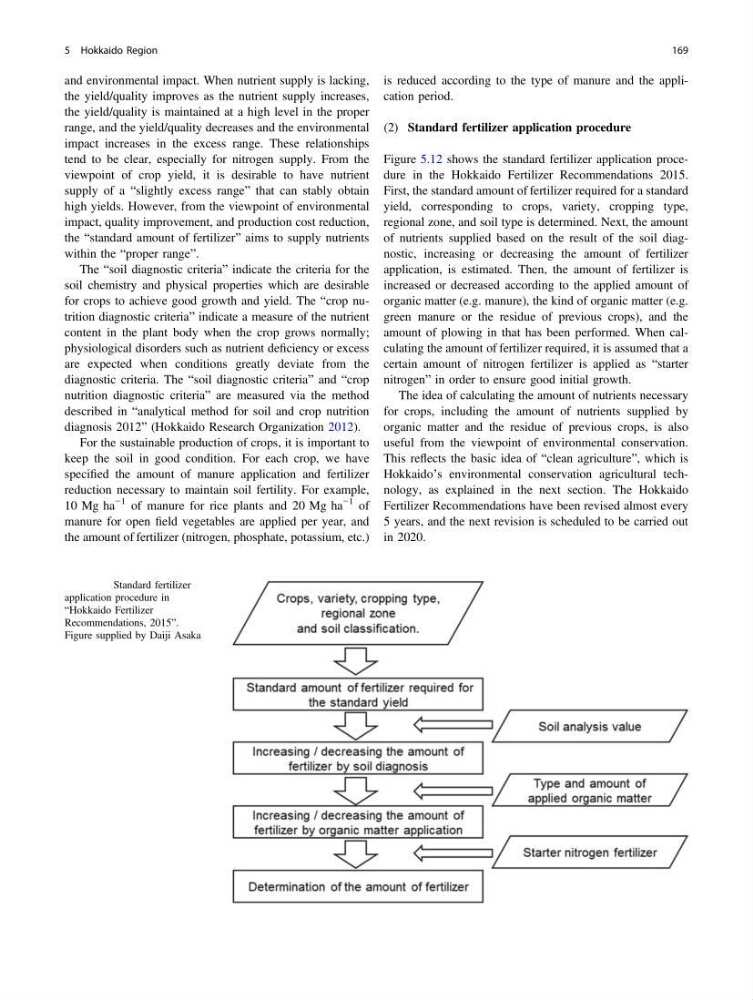
Figure 5.12 shows the standard fertilizer application procedure in the Hokkaido Fertilizer Recommendations 2015.
First, the standard amount of fertilizer required for a standard
yield, corresponding to crops, variety, cropping type,
regional zone, and soil type is determined. Next, the amount
of nutrients supplied based on the result of the soil diagnostic, increasing or decreasing the amount of fertilizer
application, is estimated. Then, the amount of fertilizer is
increased or decreased according to the applied amount of
organic matter (e.g. manure), the kind of organic matter (e.g.
green manure or the residue of previous crops), and the
amount of plowing in that has been performed. When calculating the amount of fertilizer required, it is assumed that a
certain amount of nitrogen fertilizer is applied as “starter
nitrogen” in order to ensure good initial growth.
The idea of calculating the amount of nutrients necessary
for crops, including the amount of nutrients supplied by
organic matter and the residue of previous crops, is also
useful from the viewpoint of environmental conservation.
This reflects the basic idea of “clean agriculture”, which is
Hokkaido’s environmental conservation agricultural technology, as explained in the next section. The Hokkaido
Fertilizer Recommendations have been revised almost every
5 years, and the next revision is scheduled to be carried out
in 2020.
Fig. 5.12 Standard fertilizer
application procedure in
“Hokkaido Fertilizer
Recommendations, 2015”.
Figure supplied by Daiji Asaka
5 Hokkaido Region
169
the yield/quality improves as the nutrient supply increases,
the yield/quality is maintained at a high level in the proper
range, and the yield/quality decreases and the environmental
impact increases in the excess range. These relationships
tend to be clear, especially for nitrogen supply. From the
viewpoint of crop yield, it is desirable to have nutrient
supply of a “slightly excess range” that can stably obtain
high yields. However, from the viewpoint of environmental
impact, quality improvement, and production cost reduction,
the “standard amount of fertilizer” aims to supply nutrients
within the “proper range”.
The “soil diagnostic criteria” indicate the criteria for the
soil chemistry and physical properties which are desirable
for crops to achieve good growth and yield. The “crop nutrition diagnostic criteria” indicate a measure of the nutrient
content in the plant body when the crop grows normally;
physiological disorders such as nutrient deficiency or excess
are expected when conditions greatly deviate from the
diagnostic criteria. The “soil diagnostic criteria” and “crop
nutrition diagnostic criteria” are measured via the method
described in “analytical method for soil and crop nutrition
diagnosis 2012” (Hokkaido Research Organization 2012).
For the sustainable production of crops, it is important to
keep the soil in good condition. For each crop, we have
specified the amount of manure application and fertilizer
reduction necessary to maintain soil fertility. For example,
10 Mg ha
−1 of manure for rice plants and 20 Mg ha
−1 of
manure for open field vegetables are applied per year, and
the amount of fertilizer (nitrogen, phosphate, potassium, etc.)
is reduced according to the type of manure and the application period.
(2) Standard fertilizer application procedure
Figure 5.12 shows the standard fertilizer application procedure in the Hokkaido Fertilizer Recommendations 2015.
First, the standard amount of fertilizer required for a standard
yield, corresponding to crops, variety, cropping type,
regional zone, and soil type is determined. Next, the amount
of nutrients supplied based on the result of the soil diagnostic, increasing or decreasing the amount of fertilizer
application, is estimated. Then, the amount of fertilizer is
increased or decreased according to the applied amount of
organic matter (e.g. manure), the kind of organic matter (e.g.
green manure or the residue of previous crops), and the
amount of plowing in that has been performed. When calculating the amount of fertilizer required, it is assumed that a
certain amount of nitrogen fertilizer is applied as “starter
nitrogen” in order to ensure good initial growth.
The idea of calculating the amount of nutrients necessary
for crops, including the amount of nutrients supplied by
organic matter and the residue of previous crops, is also
useful from the viewpoint of environmental conservation.
This reflects the basic idea of “clean agriculture”, which is
Hokkaido’s environmental conservation agricultural technology, as explained in the next section. The Hokkaido
Fertilizer Recommendations have been revised almost every
5 years, and the next revision is scheduled to be carried out
in 2020.
Fig. 5.12 Standard fertilizer
application procedure in
“Hokkaido Fertilizer
Recommendations, 2015”.
Figure supplied by Daiji Asaka
5 Hokkaido Region
169