

5.8 Environmentally Friendly Agriculture
(Clean Agriculture)
5.8.1 Fertilizer Recommendations
(1) Outline of the Hokkaido Fertilizer Recommendations
Appropriate fertilizer management is important for crop
production. Fertilizer management in Hokkaido is implemented based on the “Hokkaido Fertilizer Recommendations” published by the Agricultural Department of the
Hokkaido Government. The Hokkaido Fertilizer Recommendations aim to communicate a standard of fertilizer
application to farmers, agricultural improvement extension
centers, agricultural cooperative staff, and so on. The recommendations give the standard amount of fertilizer (fertilization standard) by area and soil type for major crops and
also detail the application of fertilizer based on soil diagnosis
and crop nutrition diagnosis. These recommendations were
initially published in 1957 as the “Hokkaido Fertilization
Standard” and have since been revised almost every 7 years.
The “Hokkaido Fertilizer Recommendations” were published in 2002, integrating with the separately published
“Soil and Plant Diagnosis Criteria” and “Fertilizations based
on Soil Diagnosis.” Revisions were made to the recommendations in 2010–2015, which included the addition of
new research results. Currently, the “Hokkaido Fertilizer
Recommendations 2015” (Hokkaido Government Agricultural Department 2015) are used. The number of target crops
has increased from 10 in 1957 to 73 at present.
The Hokkaido Fertilizer Recommendations 2015 define
standard fertilizer application rates for nitrogen, phosphate,
potassium, and other elements, corresponding to the reference yield set for each region (and soil), and classification
for targeted crops (item, cropping type) has been performed.
An appropriate fertilizer application amount is calculated by
increasing or decreasing the amount of fertilizer based on
soil diagnosis and crop nutrition diagnosis and increasing or
decreasing the amount of fertilizer depending on the kind
and the application amount of organic matter such as compost and manure.
The Hokkaido Fertilizer Recommendations 2015 comprehensively judge the natural conditions, such as weather
conditions and topography, of each region of Hokkaido, and
divide Hokkaido into 18 regions. Additionally, soil types are
classified into four types, namely lowland soil, volcanic ash
soil, terrace soil, and peat soil, according to sedimentary
pattern and geological base material.
The “standard yield” is set at a yield level that is
achievable through proper cultivation control under the
standard weather and soil conditions and is set from the past
statistical yield.
The “standard amount of fertilizer (fertilization standard)”
is the amount of fertilizer (nitrogen, phosphate, potassium,
etc.) necessary to secure the standard yield. For soil conditions, nitrogen has a moderate fecundity level, and phosphate, potassium, and so on are within the range of the soil
diagnostic reference value.
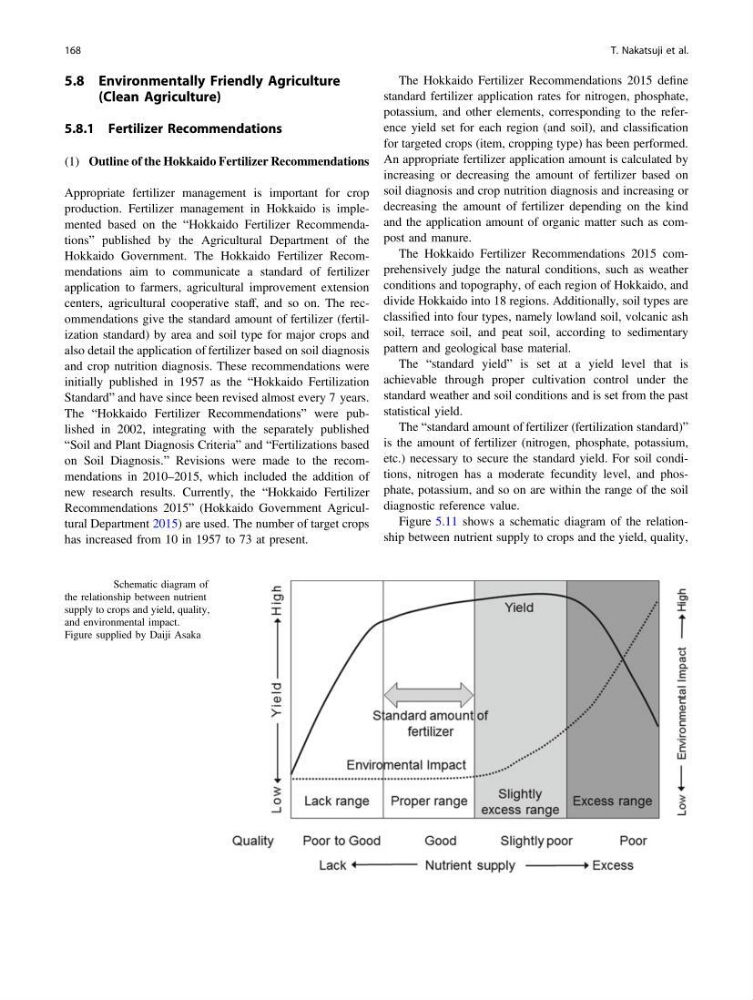
Figure 5.11 shows a schematic diagram of the relationship between nutrient supply to crops and the yield, quality,
Fig. 5.11 Schematic diagram of
the relationship between nutrient
supply to crops and yield, quality,
and environmental impact.
Figure supplied by Daiji Asaka
168
T. Nakatsuji et al.
(Clean Agriculture)
5.8.1 Fertilizer Recommendations
(1) Outline of the Hokkaido Fertilizer Recommendations
Appropriate fertilizer management is important for crop
production. Fertilizer management in Hokkaido is implemented based on the “Hokkaido Fertilizer Recommendations” published by the Agricultural Department of the
Hokkaido Government. The Hokkaido Fertilizer Recommendations aim to communicate a standard of fertilizer
application to farmers, agricultural improvement extension
centers, agricultural cooperative staff, and so on. The recommendations give the standard amount of fertilizer (fertilization standard) by area and soil type for major crops and
also detail the application of fertilizer based on soil diagnosis
and crop nutrition diagnosis. These recommendations were
initially published in 1957 as the “Hokkaido Fertilization
Standard” and have since been revised almost every 7 years.
The “Hokkaido Fertilizer Recommendations” were published in 2002, integrating with the separately published
“Soil and Plant Diagnosis Criteria” and “Fertilizations based
on Soil Diagnosis.” Revisions were made to the recommendations in 2010–2015, which included the addition of
new research results. Currently, the “Hokkaido Fertilizer
Recommendations 2015” (Hokkaido Government Agricultural Department 2015) are used. The number of target crops
has increased from 10 in 1957 to 73 at present.
The Hokkaido Fertilizer Recommendations 2015 define
standard fertilizer application rates for nitrogen, phosphate,
potassium, and other elements, corresponding to the reference yield set for each region (and soil), and classification
for targeted crops (item, cropping type) has been performed.
An appropriate fertilizer application amount is calculated by
increasing or decreasing the amount of fertilizer based on
soil diagnosis and crop nutrition diagnosis and increasing or
decreasing the amount of fertilizer depending on the kind
and the application amount of organic matter such as compost and manure.
The Hokkaido Fertilizer Recommendations 2015 comprehensively judge the natural conditions, such as weather
conditions and topography, of each region of Hokkaido, and
divide Hokkaido into 18 regions. Additionally, soil types are
classified into four types, namely lowland soil, volcanic ash
soil, terrace soil, and peat soil, according to sedimentary
pattern and geological base material.
The “standard yield” is set at a yield level that is
achievable through proper cultivation control under the
standard weather and soil conditions and is set from the past
statistical yield.
The “standard amount of fertilizer (fertilization standard)”
is the amount of fertilizer (nitrogen, phosphate, potassium,
etc.) necessary to secure the standard yield. For soil conditions, nitrogen has a moderate fecundity level, and phosphate, potassium, and so on are within the range of the soil
diagnostic reference value.
Figure 5.11 shows a schematic diagram of the relationship between nutrient supply to crops and the yield, quality,
Fig. 5.11 Schematic diagram of
the relationship between nutrient
supply to crops and yield, quality,
and environmental impact.
Figure supplied by Daiji Asaka
168
T. Nakatsuji et al.