

4.6 Red-Yellow Soils
In Japan, red- and yellow-colored soils are widely distributed in the subtropical to warm temperate zone and are
designated as Red-Yellow soils. These soils are closely
related to Red-Yellow Podzolic soils as defined in the former
USDA soil classification system; however, they have no
characteristics of podzolization. Red- and yellow-colored
soils are distributed adjacent to each other and share many
similarities in physicochemical properties other than soil
color. Therefore, both red- and yellow-colored soils were
defined as “Red-Yellow soils” in Japan (Kanno 1961).
Here, “red” and “yellow” are defined following The Fifth
Committee for Soil Classification and Nomenclature (2017),
as follows: according to the Munsell color notation, a red
color refers to one that is redder than hue 5YR, and that has
value >3 and chroma ! 3, but excluding value/chroma 4/3
and 4/4, while a yellow color refers to one that is more yellow
than hue 5 YR (not including 5 YR), and that has a value ! 3
and chroma ! 6, except value/chroma 3/6 and 4/6.
4.6.1 Genesis and Characteristics
(1) Morphological and mineralogical properties of
Red-Yellow soils
Generally, the O horizon of Red-Yellow soils consists of an
Oi horizon with fresh deciduous litter layer only. The A
horizon is usually thin (less than 10 cm). The soil color of
the A horizon is dark brown or reddish-brown, and its
organic matter content is very low. The soil structure of the
A horizon is strongly developed and has a granular structure.
Below the A horizon is the B horizon, which is thick (several
tens of centimeters) and has a brightly reddish-brown,
orange, or yellow soil color. The organic matter content of
the B horizon is much lower than that of the A horizon. The
soil structure of the B horizon is subangular-blocky and
relatively well-developed, and a clay film is often observed
on the surface of the structure. Usually, the activity ratio of
free iron oxide (Feo/Fed) is 0.4 or less, and the crystallinity
ratio ([Fed-Feo]/Fet) is 0.5 or more (Nagatsuka 1975). The
form of iron oxide is mainly hematite (Hm) or goethite (Gt),
although yellow-colored soils sometimes contain lepidocrocite. The clay content of the B horizon is generally
higher than that of the A horizon. This difference may be
caused by: (1) an illuvial accumulation of clay; (2) the
predominant pedogenetic formation of clay in the B horizon;
(3) the destruction of clay in the A horizon; (4) the selective
surface erosion of clay; (5) biological activity; or (6) a
combination of two or more of processes (1)–(5) (IUSS
Working Group WRB 2014). Clay minerals mainly consist
of kaolin minerals and hydroxyl-interlayered vermiculite
(HIV). In the lower horizon, iron mottles called “Tora-han”
(tiger pattern) are sometimes present, and highly weathered
gravels such as saprolites are often observed.
Schwertmann (1985) summarized the factors that predispose iron ions in soil to form Hm or Gt. When the rate of
iron ion release from the parent materials is high, with the
parent material having a high iron content, low organic
matter contents, and slightly acidic to slightly alkaline conditions, ferrihydrite (Feh), which is a precursor of Hm, is
more likely to be generated. Feh tends to dehydrate to Hm as
the soil temperature increases and the soil moisture content
decreases. On the other hand, Gt can be more produced
under the such condition as the rate of iron ion release from
the parent materials is low, with the parent material having a
low iron content, relatively high organic matter contents, and
strongly acidic conditions. It is important to note that Hm
cannot be directly generated from Maejima et al. (2000)
investigated the mineralogical composition of several redand yellow-colored soils using differential X-ray diffraction
analysis (DXRD) and revealed that the presence of Hm was
associated with Gt in the red-colored soils, but detected no
Hm in the yellow-colored soils.
(2) Genesis of paleo-Red soils and the age of Red-Yellow
soils
There are two theories regarding the genesis of Red soils.
One is the “zonal Red soil theory,” whereby Red soil is
considered to have formed under present climatic conditions.
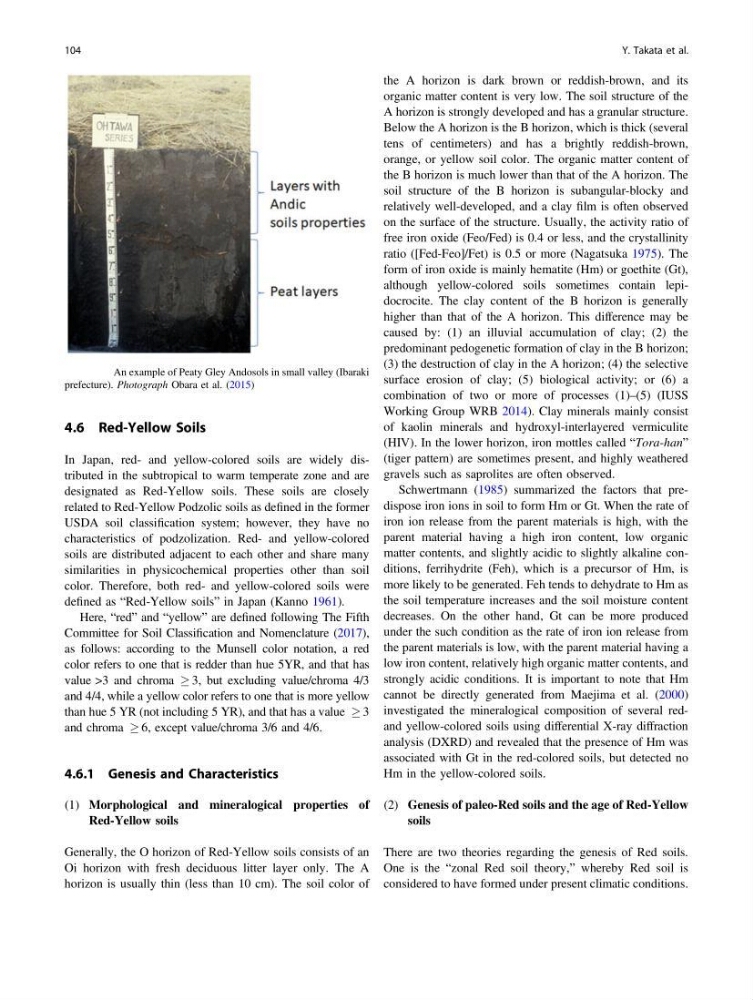
Fig. 4.35 An example of Peaty Gley Andosols in small valley (Ibaraki
prefecture). Photograph Obara et al. (2015)
104
Y. Takata et al.
In Japan, red- and yellow-colored soils are widely distributed in the subtropical to warm temperate zone and are
designated as Red-Yellow soils. These soils are closely
related to Red-Yellow Podzolic soils as defined in the former
USDA soil classification system; however, they have no
characteristics of podzolization. Red- and yellow-colored
soils are distributed adjacent to each other and share many
similarities in physicochemical properties other than soil
color. Therefore, both red- and yellow-colored soils were
defined as “Red-Yellow soils” in Japan (Kanno 1961).
Here, “red” and “yellow” are defined following The Fifth
Committee for Soil Classification and Nomenclature (2017),
as follows: according to the Munsell color notation, a red
color refers to one that is redder than hue 5YR, and that has
value >3 and chroma ! 3, but excluding value/chroma 4/3
and 4/4, while a yellow color refers to one that is more yellow
than hue 5 YR (not including 5 YR), and that has a value ! 3
and chroma ! 6, except value/chroma 3/6 and 4/6.
4.6.1 Genesis and Characteristics
(1) Morphological and mineralogical properties of
Red-Yellow soils
Generally, the O horizon of Red-Yellow soils consists of an
Oi horizon with fresh deciduous litter layer only. The A
horizon is usually thin (less than 10 cm). The soil color of
the A horizon is dark brown or reddish-brown, and its
organic matter content is very low. The soil structure of the
A horizon is strongly developed and has a granular structure.
Below the A horizon is the B horizon, which is thick (several
tens of centimeters) and has a brightly reddish-brown,
orange, or yellow soil color. The organic matter content of
the B horizon is much lower than that of the A horizon. The
soil structure of the B horizon is subangular-blocky and
relatively well-developed, and a clay film is often observed
on the surface of the structure. Usually, the activity ratio of
free iron oxide (Feo/Fed) is 0.4 or less, and the crystallinity
ratio ([Fed-Feo]/Fet) is 0.5 or more (Nagatsuka 1975). The
form of iron oxide is mainly hematite (Hm) or goethite (Gt),
although yellow-colored soils sometimes contain lepidocrocite. The clay content of the B horizon is generally
higher than that of the A horizon. This difference may be
caused by: (1) an illuvial accumulation of clay; (2) the
predominant pedogenetic formation of clay in the B horizon;
(3) the destruction of clay in the A horizon; (4) the selective
surface erosion of clay; (5) biological activity; or (6) a
combination of two or more of processes (1)–(5) (IUSS
Working Group WRB 2014). Clay minerals mainly consist
of kaolin minerals and hydroxyl-interlayered vermiculite
(HIV). In the lower horizon, iron mottles called “Tora-han”
(tiger pattern) are sometimes present, and highly weathered
gravels such as saprolites are often observed.
Schwertmann (1985) summarized the factors that predispose iron ions in soil to form Hm or Gt. When the rate of
iron ion release from the parent materials is high, with the
parent material having a high iron content, low organic
matter contents, and slightly acidic to slightly alkaline conditions, ferrihydrite (Feh), which is a precursor of Hm, is
more likely to be generated. Feh tends to dehydrate to Hm as
the soil temperature increases and the soil moisture content
decreases. On the other hand, Gt can be more produced
under the such condition as the rate of iron ion release from
the parent materials is low, with the parent material having a
low iron content, relatively high organic matter contents, and
strongly acidic conditions. It is important to note that Hm
cannot be directly generated from Maejima et al. (2000)
investigated the mineralogical composition of several redand yellow-colored soils using differential X-ray diffraction
analysis (DXRD) and revealed that the presence of Hm was
associated with Gt in the red-colored soils, but detected no
Hm in the yellow-colored soils.
(2) Genesis of paleo-Red soils and the age of Red-Yellow
soils
There are two theories regarding the genesis of Red soils.
One is the “zonal Red soil theory,” whereby Red soil is
considered to have formed under present climatic conditions.
Fig. 4.35 An example of Peaty Gley Andosols in small valley (Ibaraki
prefecture). Photograph Obara et al. (2015)
104
Y. Takata et al.