

28
• The network of people as well as organizations that will carry out the HIA
• Voluntary agencies and non-governmental organizations
Community engagement and stakeholder interactions are important in assessing
health impacts (Dannenberg 2016; Haigh et al. 2015) even though stepwise process,
and evidence-based approach is essential in HIAs (Dannenberg 2016).
The theory and practice of a health impact assessment process are pictorially
represented in Fig. 2.7. Even though in theory the approach seems to be nice, its
practice is not fool-proof. Public participation is diluted by project proponent by
providing a rosy picture.
Sample of a HIA outline is provided in Box 2.1. The outline is only an illustration. It is neither final nor comprehensive. The content of the HIA can be modified
depending on the project outline and geological location.
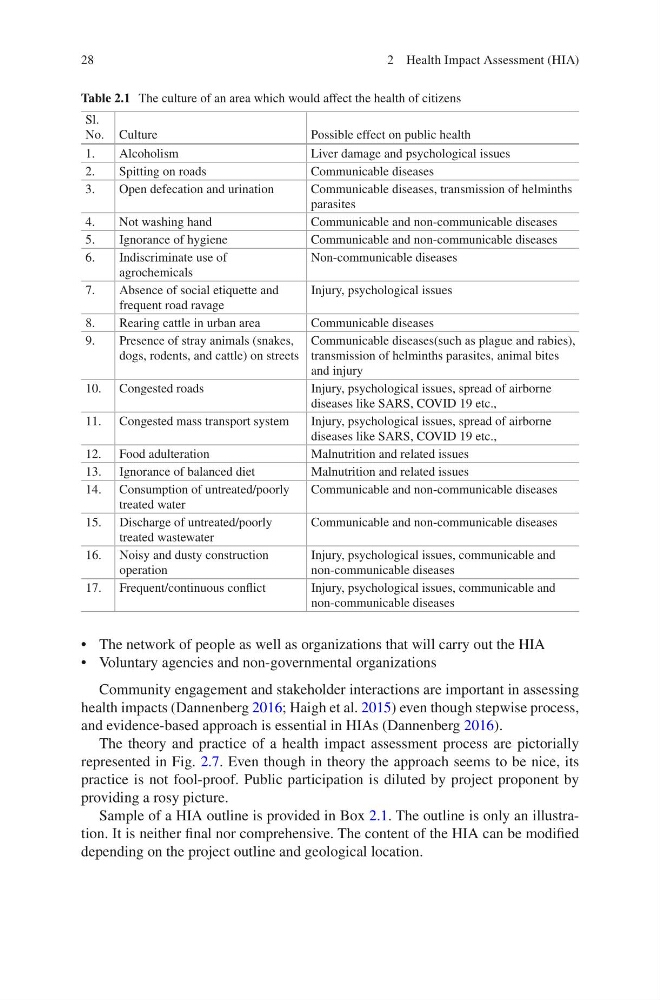
Table 2.1 The culture of an area which would affect the health of citizens
Sl.
No. Culture
Possible effect on public health
1.
Alcoholism
Liver damage and psychological issues
2.
Spitting on roads
Communicable diseases
3.
Open defecation and urination
Communicable diseases, transmission of helminths
parasites
4.
Not washing hand
Communicable and non-communicable diseases
5.
Ignorance of hygiene
Communicable and non-communicable diseases
6.
Indiscriminate use of
agrochemicals
Non-communicable diseases
7.
Absence of social etiquette and
frequent road ravage
Injury, psychological issues
8.
Rearing cattle in urban area
Communicable diseases
9.
Presence of stray animals (snakes,
dogs, rodents, and cattle) on streets
Communicable diseases(such as plague and rabies),
transmission of helminths parasites, animal bites
and injury
10. Congested roads
Injury, psychological issues, spread of airborne
diseases like SARS, COVID 19 etc.,
11. Congested mass transport system
Injury, psychological issues, spread of airborne
diseases like SARS, COVID 19 etc.,
12. Food adulteration
Malnutrition and related issues
13. Ignorance of balanced diet
Malnutrition and related issues
14. Consumption of untreated/poorly
treated water
Communicable and non-communicable diseases
15. Discharge of untreated/poorly
treated wastewater
Communicable and non-communicable diseases
16. Noisy and dusty construction
operation
Injury, psychological issues, communicable and
non-communicable diseases
17. Frequent/continuous conflict
Injury, psychological issues, communicable and
non-communicable diseases
2 Health Impact Assessment (HIA)
• The network of people as well as organizations that will carry out the HIA
• Voluntary agencies and non-governmental organizations
Community engagement and stakeholder interactions are important in assessing
health impacts (Dannenberg 2016; Haigh et al. 2015) even though stepwise process,
and evidence-based approach is essential in HIAs (Dannenberg 2016).
The theory and practice of a health impact assessment process are pictorially
represented in Fig. 2.7. Even though in theory the approach seems to be nice, its
practice is not fool-proof. Public participation is diluted by project proponent by
providing a rosy picture.
Sample of a HIA outline is provided in Box 2.1. The outline is only an illustration. It is neither final nor comprehensive. The content of the HIA can be modified
depending on the project outline and geological location.
Table 2.1 The culture of an area which would affect the health of citizens
Sl.
No. Culture
Possible effect on public health
1.
Alcoholism
Liver damage and psychological issues
2.
Spitting on roads
Communicable diseases
3.
Open defecation and urination
Communicable diseases, transmission of helminths
parasites
4.
Not washing hand
Communicable and non-communicable diseases
5.
Ignorance of hygiene
Communicable and non-communicable diseases
6.
Indiscriminate use of
agrochemicals
Non-communicable diseases
7.
Absence of social etiquette and
frequent road ravage
Injury, psychological issues
8.
Rearing cattle in urban area
Communicable diseases
9.
Presence of stray animals (snakes,
dogs, rodents, and cattle) on streets
Communicable diseases(such as plague and rabies),
transmission of helminths parasites, animal bites
and injury
10. Congested roads
Injury, psychological issues, spread of airborne
diseases like SARS, COVID 19 etc.,
11. Congested mass transport system
Injury, psychological issues, spread of airborne
diseases like SARS, COVID 19 etc.,
12. Food adulteration
Malnutrition and related issues
13. Ignorance of balanced diet
Malnutrition and related issues
14. Consumption of untreated/poorly
treated water
Communicable and non-communicable diseases
15. Discharge of untreated/poorly
treated wastewater
Communicable and non-communicable diseases
16. Noisy and dusty construction
operation
Injury, psychological issues, communicable and
non-communicable diseases
17. Frequent/continuous conflict
Injury, psychological issues, communicable and
non-communicable diseases
2 Health Impact Assessment (HIA)