

247
In shallow lakes, widespread cover of submerged macrophytes is imperative for
maintaining beside stabilizing clear water conditions (Jeppesen et al. 1998), and the
complete biomanipulation success might depend on the nutrient loading internal
sources as well as the activities of fish recolonization, macrophyte abundance and
nutrient concentrations (Peretyatko et al. 2012; Søndergaard et al. 2007; Gulati et al.
2008). If a biomanipulation carried out for the first time is not positive in the long
term, a second biomanipulation requires less effort (Jeppesen et al. 2012).
12.4 Restoring Contaminated Land Sites
Introduction of new chemicals has caused significant soil contamination across the
world. Table 12.3 lists some of the sources and known impact on the health due to
chemicals.
Soil pollution/contamination can occur due to, but not restricted to, the following:
1. Settlement of air pollutants
2. Oil/chemical spillage
3. Use of agro chemicals
4. Solid waste disposal
5. Water pollution
6. Open defecation
7. Construction activity and
8. Mining
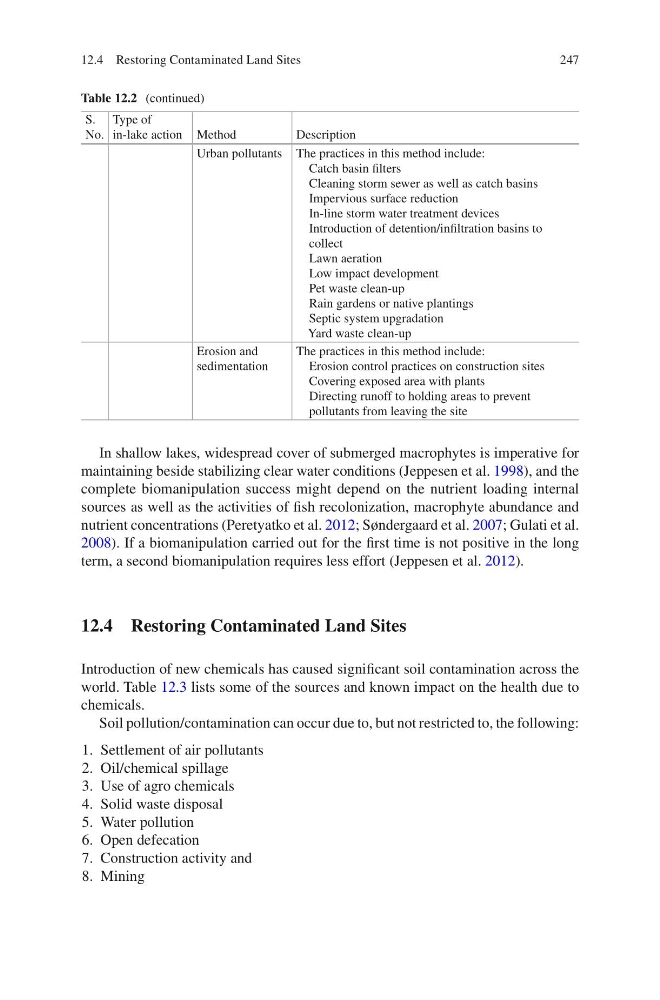
Table 12.2 (continued)
S.
No.
Type of
in-lake action Method
Description
Urban pollutants The practices in this method include:
Catch basin filters
Cleaning storm sewer as well as catch basins
Impervious surface reduction
In-line storm water treatment devices
Introduction of detention/infiltration basins to
collect
Lawn aeration
Low impact development
Pet waste clean-up
Rain gardens or native plantings
Septic system upgradation
Yard waste clean-up
Erosion and
sedimentation
The practices in this method include:
Erosion control practices on construction sites
Covering exposed area with plants
Directing runoff to holding areas to prevent
pollutants from leaving the site
12.4 Restoring Contaminated Land Sites
In shallow lakes, widespread cover of submerged macrophytes is imperative for
maintaining beside stabilizing clear water conditions (Jeppesen et al. 1998), and the
complete biomanipulation success might depend on the nutrient loading internal
sources as well as the activities of fish recolonization, macrophyte abundance and
nutrient concentrations (Peretyatko et al. 2012; Søndergaard et al. 2007; Gulati et al.
2008). If a biomanipulation carried out for the first time is not positive in the long
term, a second biomanipulation requires less effort (Jeppesen et al. 2012).
12.4 Restoring Contaminated Land Sites
Introduction of new chemicals has caused significant soil contamination across the
world. Table 12.3 lists some of the sources and known impact on the health due to
chemicals.
Soil pollution/contamination can occur due to, but not restricted to, the following:
1. Settlement of air pollutants
2. Oil/chemical spillage
3. Use of agro chemicals
4. Solid waste disposal
5. Water pollution
6. Open defecation
7. Construction activity and
8. Mining
Table 12.2 (continued)
S.
No.
Type of
in-lake action Method
Description
Urban pollutants The practices in this method include:
Catch basin filters
Cleaning storm sewer as well as catch basins
Impervious surface reduction
In-line storm water treatment devices
Introduction of detention/infiltration basins to
collect
Lawn aeration
Low impact development
Pet waste clean-up
Rain gardens or native plantings
Septic system upgradation
Yard waste clean-up
Erosion and
sedimentation
The practices in this method include:
Erosion control practices on construction sites
Covering exposed area with plants
Directing runoff to holding areas to prevent
pollutants from leaving the site
12.4 Restoring Contaminated Land Sites