

245
nutrient loading from external sources is critical to get permanent effects (Jeppesen
et al. 1990a; Moss et al. 1996; Benndorf et al. 2002; Mehner et al. 2002). In shallow lakes, total phosphate concentrations less than 0.05 mg/l have been suggested
as a pre-requirement for biomanipulation (Jeppesen et al. 2000) and adequate
number of fish has to be removed, based on phosphate concentrations (Jeppesen
and Sammalkorpi 2002).
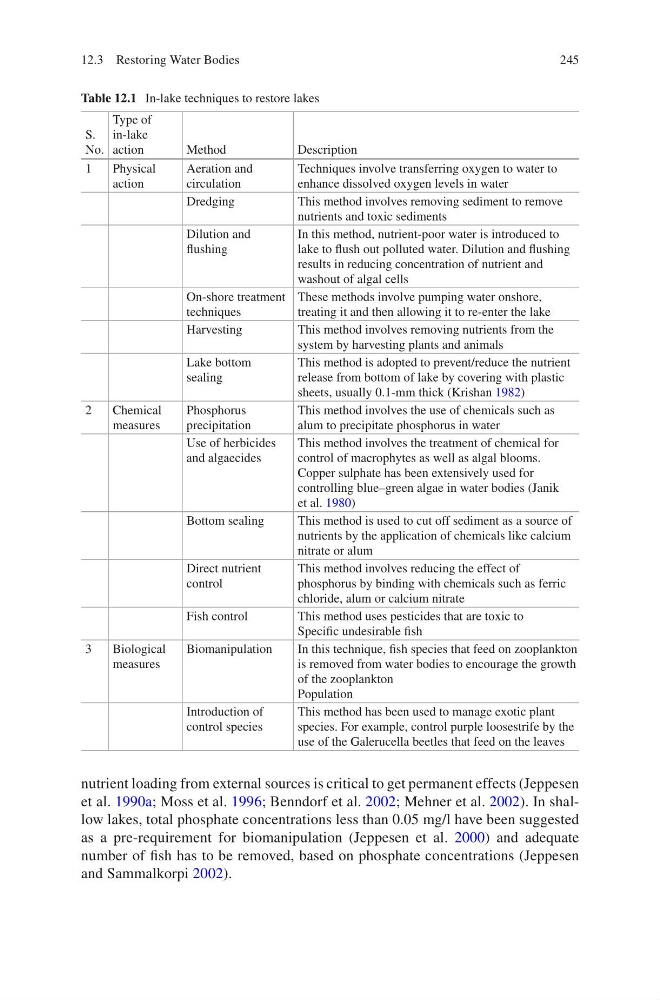
Table 12.1 In-lake techniques to restore lakes
S.
No.
Type of
in-lake
action
Method
Description
1
Physical
action
Aeration and
circulation
Techniques involve transferring oxygen to water to
enhance dissolved oxygen levels in water
Dredging
This method involves removing sediment to remove
nutrients and toxic sediments
Dilution and
flushing
In this method, nutrient-poor water is introduced to
lake to flush out polluted water. Dilution and flushing
results in reducing concentration of nutrient and
washout of algal cells
On-shore treatment
techniques
These methods involve pumping water onshore,
treating it and then allowing it to re-enter the lake
Harvesting
This method involves removing nutrients from the
system by harvesting plants and animals
Lake bottom
sealing
This method is adopted to prevent/reduce the nutrient
release from bottom of lake by covering with plastic
sheets, usually 0.1-mm thick (Krishan 1982)
2
Chemical
measures
Phosphorus
precipitation
This method involves the use of chemicals such as
alum to precipitate phosphorus in water
Use of herbicides
and algaecides
This method involves the treatment of chemical for
control of macrophytes as well as algal blooms.
Copper sulphate has been extensively used for
controlling blue–green algae in water bodies (Janik
et al. 1980)
Bottom sealing
This method is used to cut off sediment as a source of
nutrients by the application of chemicals like calcium
nitrate or alum
Direct nutrient
control
This method involves reducing the effect of
phosphorus by binding with chemicals such as ferric
chloride, alum or calcium nitrate
Fish control
This method uses pesticides that are toxic to
Specific undesirable fish
3
Biological
measures
Biomanipulation
In this technique, fish species that feed on zooplankton
is removed from water bodies to encourage the growth
of the zooplankton
Population
Introduction of
control species
This method has been used to manage exotic plant
species. For example, control purple loosestrife by the
use of the Galerucella beetles that feed on the leaves
12.3 Restoring Water Bodies
nutrient loading from external sources is critical to get permanent effects (Jeppesen
et al. 1990a; Moss et al. 1996; Benndorf et al. 2002; Mehner et al. 2002). In shallow lakes, total phosphate concentrations less than 0.05 mg/l have been suggested
as a pre-requirement for biomanipulation (Jeppesen et al. 2000) and adequate
number of fish has to be removed, based on phosphate concentrations (Jeppesen
and Sammalkorpi 2002).
Table 12.1 In-lake techniques to restore lakes
S.
No.
Type of
in-lake
action
Method
Description
1
Physical
action
Aeration and
circulation
Techniques involve transferring oxygen to water to
enhance dissolved oxygen levels in water
Dredging
This method involves removing sediment to remove
nutrients and toxic sediments
Dilution and
flushing
In this method, nutrient-poor water is introduced to
lake to flush out polluted water. Dilution and flushing
results in reducing concentration of nutrient and
washout of algal cells
On-shore treatment
techniques
These methods involve pumping water onshore,
treating it and then allowing it to re-enter the lake
Harvesting
This method involves removing nutrients from the
system by harvesting plants and animals
Lake bottom
sealing
This method is adopted to prevent/reduce the nutrient
release from bottom of lake by covering with plastic
sheets, usually 0.1-mm thick (Krishan 1982)
2
Chemical
measures
Phosphorus
precipitation
This method involves the use of chemicals such as
alum to precipitate phosphorus in water
Use of herbicides
and algaecides
This method involves the treatment of chemical for
control of macrophytes as well as algal blooms.
Copper sulphate has been extensively used for
controlling blue–green algae in water bodies (Janik
et al. 1980)
Bottom sealing
This method is used to cut off sediment as a source of
nutrients by the application of chemicals like calcium
nitrate or alum
Direct nutrient
control
This method involves reducing the effect of
phosphorus by binding with chemicals such as ferric
chloride, alum or calcium nitrate
Fish control
This method uses pesticides that are toxic to
Specific undesirable fish
3
Biological
measures
Biomanipulation
In this technique, fish species that feed on zooplankton
is removed from water bodies to encourage the growth
of the zooplankton
Population
Introduction of
control species
This method has been used to manage exotic plant
species. For example, control purple loosestrife by the
use of the Galerucella beetles that feed on the leaves
12.3 Restoring Water Bodies