

165
ing sites, due to contractor mafia that has weakened the efforts towards effective
solid waste management. Such mafia and corruption would lead to burden on the
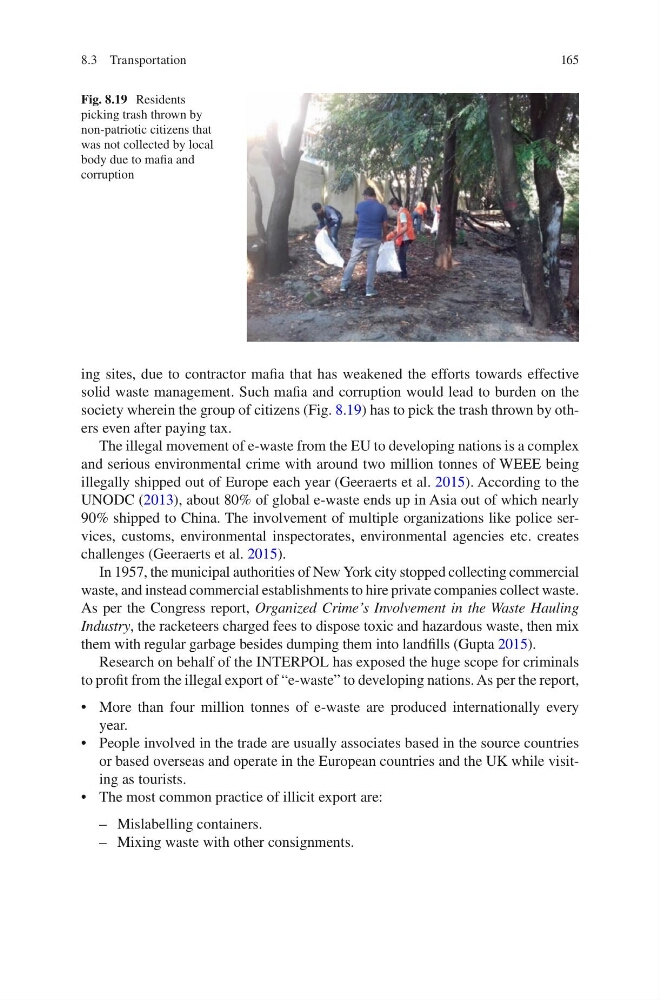
society wherein the group of citizens (Fig. 8.19) has to pick the trash thrown by others even after paying tax.
The illegal movement of e-waste from the EU to developing nations is a complex
and serious environmental crime with around two million tonnes of WEEE being
illegally shipped out of Europe each year (Geeraerts et al. 2015). According to the
UNODC (2013), about 80% of global e-waste ends up in Asia out of which nearly
90% shipped to China. The involvement of multiple organizations like police services, customs, environmental inspectorates, environmental agencies etc. creates
challenges (Geeraerts et al. 2015).
In 1957, the municipal authorities of New York city stopped collecting commercial
waste, and instead commercial establishments to hire private companies collect waste.
As per the Congress report, Organized Crime’s Involvement in the Waste Hauling
Industry, the racketeers charged fees to dispose toxic and hazardous waste, then mix
them with regular garbage besides dumping them into landfills (Gupta 2015).
Research on behalf of the INTERPOL has exposed the huge scope for criminals
to profit from the illegal export of “e-waste” to developing nations. As per the report,
• More than four million tonnes of e-waste are produced internationally every
year.
• People involved in the trade are usually associates based in the source countries
or based overseas and operate in the European countries and the UK while visiting as tourists.
• The most common practice of illicit export are:
– Mislabelling containers.
– Mixing waste with other consignments.
Fig. 8.19 Residents
picking trash thrown by
non-patriotic citizens that
was not collected by local
body due to mafia and
corruption
8.3 Transportation
ing sites, due to contractor mafia that has weakened the efforts towards effective
solid waste management. Such mafia and corruption would lead to burden on the
society wherein the group of citizens (Fig. 8.19) has to pick the trash thrown by others even after paying tax.
The illegal movement of e-waste from the EU to developing nations is a complex
and serious environmental crime with around two million tonnes of WEEE being
illegally shipped out of Europe each year (Geeraerts et al. 2015). According to the
UNODC (2013), about 80% of global e-waste ends up in Asia out of which nearly
90% shipped to China. The involvement of multiple organizations like police services, customs, environmental inspectorates, environmental agencies etc. creates
challenges (Geeraerts et al. 2015).
In 1957, the municipal authorities of New York city stopped collecting commercial
waste, and instead commercial establishments to hire private companies collect waste.
As per the Congress report, Organized Crime’s Involvement in the Waste Hauling
Industry, the racketeers charged fees to dispose toxic and hazardous waste, then mix
them with regular garbage besides dumping them into landfills (Gupta 2015).
Research on behalf of the INTERPOL has exposed the huge scope for criminals
to profit from the illegal export of “e-waste” to developing nations. As per the report,
• More than four million tonnes of e-waste are produced internationally every
year.
• People involved in the trade are usually associates based in the source countries
or based overseas and operate in the European countries and the UK while visiting as tourists.
• The most common practice of illicit export are:
– Mislabelling containers.
– Mixing waste with other consignments.
Fig. 8.19 Residents
picking trash thrown by
non-patriotic citizens that
was not collected by local
body due to mafia and
corruption
8.3 Transportation