

124
5.2.2.26 Aerobic Sludge Digestion
Digestion is done to convert organic sludge to make it inert before disposal. Aerobic
sludge digestion is a process carried out in the presence of oxygen that reduces the
solid concentration of the sludge.
5.2.2.27 Anaerobic Sludge Digestion
Anaerobic sludge digestion is done in the absence of air. The process produces mixture of carbon dioxide, methane and traces of other gases that can be used as fuel.
5.2.2.28 Disinfection
Disinfection is carried out prior to discharge or reuse of wastewater. The process is
already explained in Sect. 5.2.1.5.
5.3 Administrative Control
Potable drinking water is necessary to public health; there were many case reports
documenting a short of serious water quality or piped water in low-income and
minority communities (VanDerslice 2011). Rural water supplies have conventionally been less prioritized by urban ones (Omarova et al. 2019).
Administrative control of water treatment is done as a responsibility of government to supply water in many parts of the world, whereas it is privatized and controlled by enforcing law in some other parts of the world.
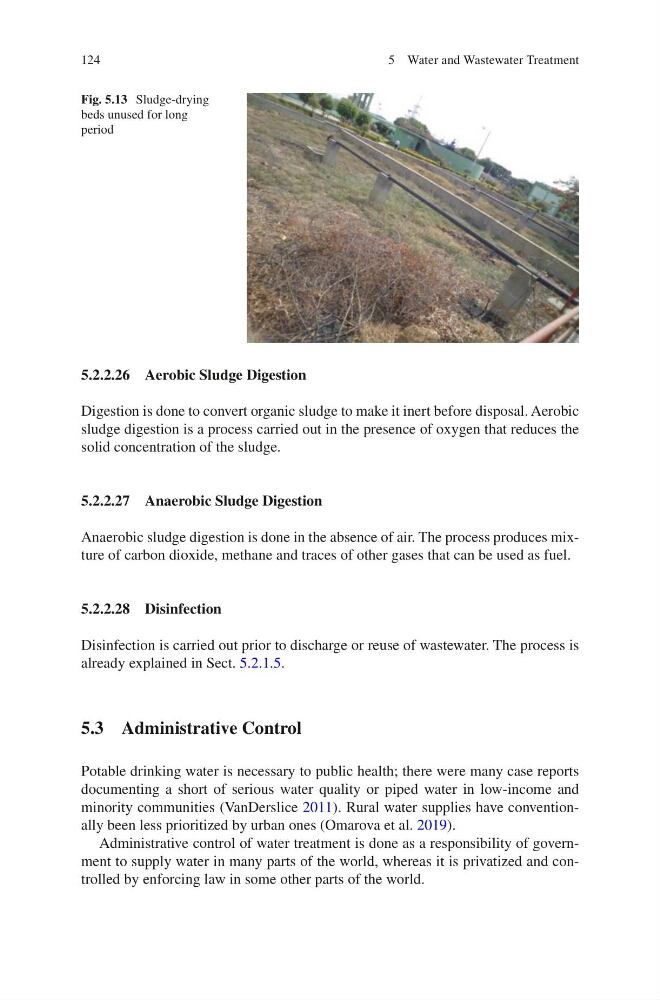
Fig. 5.13 Sludge-drying
beds unused for long
period
5 Water and Wastewater Treatment
5.2.2.26 Aerobic Sludge Digestion
Digestion is done to convert organic sludge to make it inert before disposal. Aerobic
sludge digestion is a process carried out in the presence of oxygen that reduces the
solid concentration of the sludge.
5.2.2.27 Anaerobic Sludge Digestion
Anaerobic sludge digestion is done in the absence of air. The process produces mixture of carbon dioxide, methane and traces of other gases that can be used as fuel.
5.2.2.28 Disinfection
Disinfection is carried out prior to discharge or reuse of wastewater. The process is
already explained in Sect. 5.2.1.5.
5.3 Administrative Control
Potable drinking water is necessary to public health; there were many case reports
documenting a short of serious water quality or piped water in low-income and
minority communities (VanDerslice 2011). Rural water supplies have conventionally been less prioritized by urban ones (Omarova et al. 2019).
Administrative control of water treatment is done as a responsibility of government to supply water in many parts of the world, whereas it is privatized and controlled by enforcing law in some other parts of the world.
Fig. 5.13 Sludge-drying
beds unused for long
period
5 Water and Wastewater Treatment