

113
The following sections briefly explains common treatment methods adopted in
Wastewater Treatment Plants (WWTP).
5.2.2.1 Septic Tank
A septic tank is a tank usually built underground that treats sewage by settling and
anaerobic processes. The overflow of the tank is usually discharged by subsurface
method like soak pit or soak trench.
Septic tanks are used to treat sewage generated by small populations like individual residences, officers, schools, etc. They are designed to hold sewage under
anaerobic conditions at low velocities, with hydraulic detention period (Box 5.1) of
at least of 36 hours during which settleable solids are settled and decompose at the
bottom of the tank. These tanks require a minimum attention, and the removal of
sludge and scum accumulations once in 3–5 years.
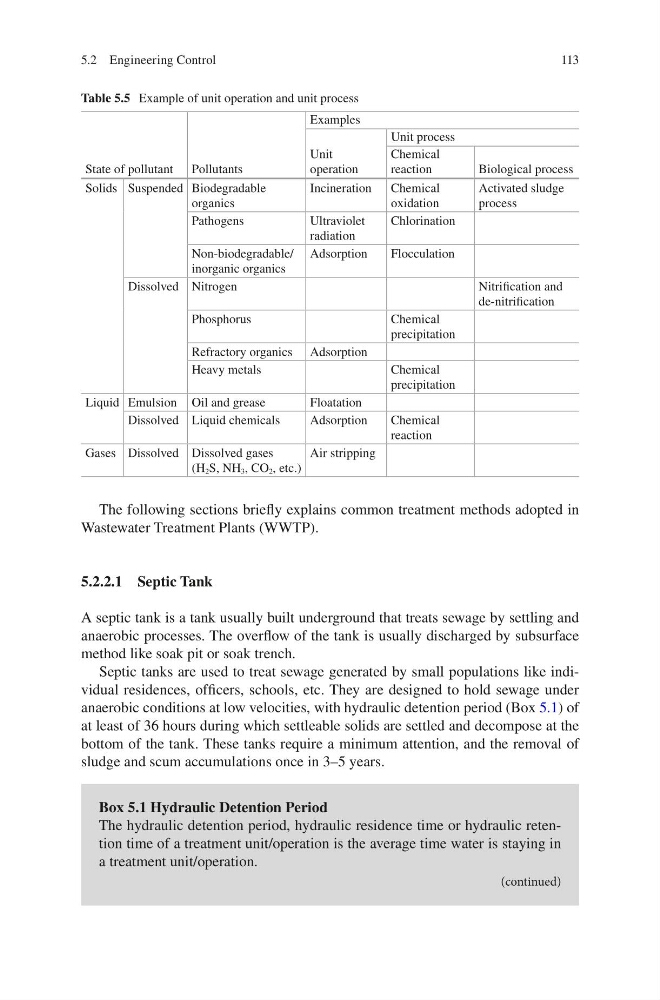
Table 5.5 Example of unit operation and unit process
State of pollutant Pollutants
Examples
Unit
operation
Unit process
Chemical
reaction
Biological process
Solids Suspended Biodegradable
organics
Incineration
Chemical
oxidation
Activated sludge
process
Pathogens
Ultraviolet
radiation
Chlorination
Non-biodegradable/
inorganic organics
Adsorption
Flocculation
Dissolved Nitrogen
Nitrification and
de-nitrification
Phosphorus
Chemical
precipitation
Refractory organics Adsorption
Heavy metals
Chemical
precipitation
Liquid Emulsion Oil and grease
Floatation
Dissolved Liquid chemicals
Adsorption
Chemical
reaction
Gases Dissolved Dissolved gases
(H 2 S, NH 3 , CO 2 , etc.)
Air stripping
Box 5.1 Hydraulic Detention Period
The hydraulic detention period, hydraulic residence time or hydraulic retention time of a treatment unit/operation is the average time water is staying in
a treatment unit/operation.
(continued)
5.2 Engineering Control
The following sections briefly explains common treatment methods adopted in
Wastewater Treatment Plants (WWTP).
5.2.2.1 Septic Tank
A septic tank is a tank usually built underground that treats sewage by settling and
anaerobic processes. The overflow of the tank is usually discharged by subsurface
method like soak pit or soak trench.
Septic tanks are used to treat sewage generated by small populations like individual residences, officers, schools, etc. They are designed to hold sewage under
anaerobic conditions at low velocities, with hydraulic detention period (Box 5.1) of
at least of 36 hours during which settleable solids are settled and decompose at the
bottom of the tank. These tanks require a minimum attention, and the removal of
sludge and scum accumulations once in 3–5 years.
Table 5.5 Example of unit operation and unit process
State of pollutant Pollutants
Examples
Unit
operation
Unit process
Chemical
reaction
Biological process
Solids Suspended Biodegradable
organics
Incineration
Chemical
oxidation
Activated sludge
process
Pathogens
Ultraviolet
radiation
Chlorination
Non-biodegradable/
inorganic organics
Adsorption
Flocculation
Dissolved Nitrogen
Nitrification and
de-nitrification
Phosphorus
Chemical
precipitation
Refractory organics Adsorption
Heavy metals
Chemical
precipitation
Liquid Emulsion Oil and grease
Floatation
Dissolved Liquid chemicals
Adsorption
Chemical
reaction
Gases Dissolved Dissolved gases
(H 2 S, NH 3 , CO 2 , etc.)
Air stripping
Box 5.1 Hydraulic Detention Period
The hydraulic detention period, hydraulic residence time or hydraulic retention time of a treatment unit/operation is the average time water is staying in
a treatment unit/operation.
(continued)
5.2 Engineering Control