

234
C. S. Goh and S. H. J. T. Lee
(b)
26%
13%
19%
30%
0.0
0.2
0.4
0.6
0.8
1.0
1.2
1.4
1.6
West
Kalimantan
Central
Kalimantan
South
Kalimantan
East (and North)
Kalimantan
million ha
Smallholders (2017)
Large-scale (2017)
(a)
2.5
3.0
3.5
4.0
4.5
2011 2012 2013 2014 2015 2016 2017
Yield (tCPO/ha)
Year
West
Kalimantan
Central
Kalimantan
South
Kalimantan
East (and
North)
Kalimantan
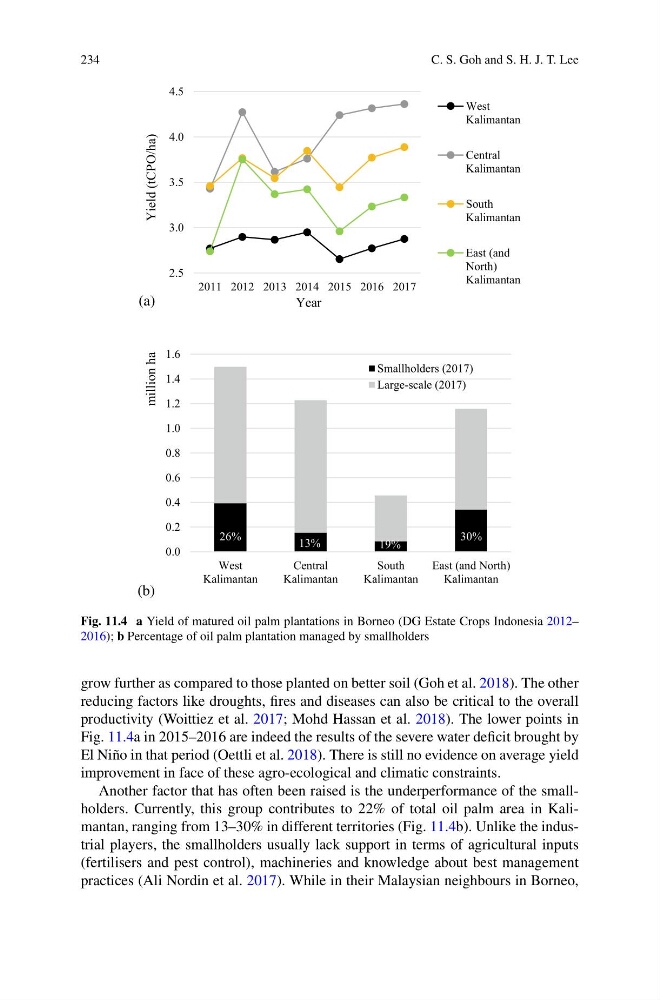
Fig. 11.4 a Yield of matured oil palm plantations in Borneo (DG Estate Crops Indonesia 2012–
2016); b Percentage of oil palm plantation managed by smallholders
grow further as compared to those planted on better soil (Goh et al. 2018). The other
reducing factors like droughts, fires and diseases can also be critical to the overall
productivity (Woittiez et al. 2017; Mohd Hassan et al. 2018). The lower points in
Fig. 11.4a in 2015–2016 are indeed the results of the severe water deficit brought by
El Niño in that period (Oettli et al. 2018). There is still no evidence on average yield
improvement in face of these agro-ecological and climatic constraints.
Another factor that has often been raised is the underperformance of the smallholders. Currently, this group contributes to 22% of total oil palm area in Kalimantan, ranging from 13–30% in different territories (Fig. 11.4b). Unlike the industrial players, the smallholders usually lack support in terms of agricultural inputs
(fertilisers and pest control), machineries and knowledge about best management
practices (Ali Nordin et al. 2017). While in their Malaysian neighbours in Borneo,
C. S. Goh and S. H. J. T. Lee
(b)
26%
13%
19%
30%
0.0
0.2
0.4
0.6
0.8
1.0
1.2
1.4
1.6
West
Kalimantan
Central
Kalimantan
South
Kalimantan
East (and North)
Kalimantan
million ha
Smallholders (2017)
Large-scale (2017)
(a)
2.5
3.0
3.5
4.0
4.5
2011 2012 2013 2014 2015 2016 2017
Yield (tCPO/ha)
Year
West
Kalimantan
Central
Kalimantan
South
Kalimantan
East (and
North)
Kalimantan
Fig. 11.4 a Yield of matured oil palm plantations in Borneo (DG Estate Crops Indonesia 2012–
2016); b Percentage of oil palm plantation managed by smallholders
grow further as compared to those planted on better soil (Goh et al. 2018). The other
reducing factors like droughts, fires and diseases can also be critical to the overall
productivity (Woittiez et al. 2017; Mohd Hassan et al. 2018). The lower points in
Fig. 11.4a in 2015–2016 are indeed the results of the severe water deficit brought by
El Niño in that period (Oettli et al. 2018). There is still no evidence on average yield
improvement in face of these agro-ecological and climatic constraints.
Another factor that has often been raised is the underperformance of the smallholders. Currently, this group contributes to 22% of total oil palm area in Kalimantan, ranging from 13–30% in different territories (Fig. 11.4b). Unlike the industrial players, the smallholders usually lack support in terms of agricultural inputs
(fertilisers and pest control), machineries and knowledge about best management
practices (Ali Nordin et al. 2017). While in their Malaysian neighbours in Borneo,