

13 CoNCLUSIoN: CoMPARING HoUSEHoLD ENERGY …
143
energy mix anD materiaL arrangements
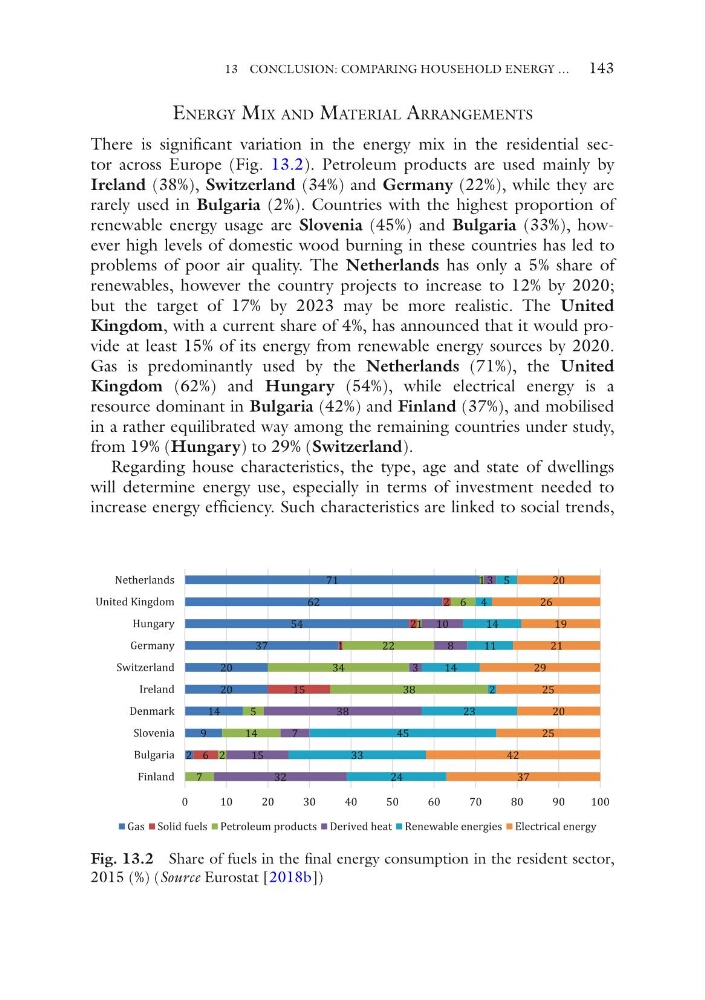
There is significant variation in the energy mix in the residential sector across Europe (Fig. 13.2). Petroleum products are used mainly by
Ireland (38%), Switzerland (34%) and Germany (22%), while they are
rarely used in Bulgaria (2%). Countries with the highest proportion of
renewable energy usage are Slovenia (45%) and Bulgaria (33%), however high levels of domestic wood burning in these countries has led to
problems of poor air quality. The Netherlands has only a 5% share of
renewables, however the country projects to increase to 12% by 2020;
but the target of 17% by 2023 may be more realistic. The United
Kingdom, with a current share of 4%, has announced that it would provide at least 15% of its energy from renewable energy sources by 2020.
Gas is predominantly used by the Netherlands (71%), the United
Kingdom (62%) and Hungary (54%), while electrical energy is a
resource dominant in Bulgaria (42%) and Finland (37%), and mobilised
in a rather equilibrated way among the remaining countries under study,
from 19% (Hungary) to 29% (Switzerland).
Regarding house characteristics, the type, age and state of dwellings
will determine energy use, especially in terms of investment needed to
increase energy efficiency. Such characteristics are linked to social trends,
Fig. 13.2 Share of fuels in the final energy consumption in the resident sector,
2015 (%) (Source Eurostat [2018b])
143
energy mix anD materiaL arrangements
There is significant variation in the energy mix in the residential sector across Europe (Fig. 13.2). Petroleum products are used mainly by
Ireland (38%), Switzerland (34%) and Germany (22%), while they are
rarely used in Bulgaria (2%). Countries with the highest proportion of
renewable energy usage are Slovenia (45%) and Bulgaria (33%), however high levels of domestic wood burning in these countries has led to
problems of poor air quality. The Netherlands has only a 5% share of
renewables, however the country projects to increase to 12% by 2020;
but the target of 17% by 2023 may be more realistic. The United
Kingdom, with a current share of 4%, has announced that it would provide at least 15% of its energy from renewable energy sources by 2020.
Gas is predominantly used by the Netherlands (71%), the United
Kingdom (62%) and Hungary (54%), while electrical energy is a
resource dominant in Bulgaria (42%) and Finland (37%), and mobilised
in a rather equilibrated way among the remaining countries under study,
from 19% (Hungary) to 29% (Switzerland).
Regarding house characteristics, the type, age and state of dwellings
will determine energy use, especially in terms of investment needed to
increase energy efficiency. Such characteristics are linked to social trends,
Fig. 13.2 Share of fuels in the final energy consumption in the resident sector,
2015 (%) (Source Eurostat [2018b])