

delivered high returns and provided employment
in key shareholder municipalities. Despite new
legislation introduced in 2004 promoting
renewables, RWE held firm and planned to
increase its lignite generation capacity. Hence,
RWE kept a centralised organisational structure
that could better focus on managing these concentrated, large-scale assets.
• Motive: In 2004, renewable capacity in Germany was noteworthy, but seemed unlikely to
displace the extremely low-cost baseload
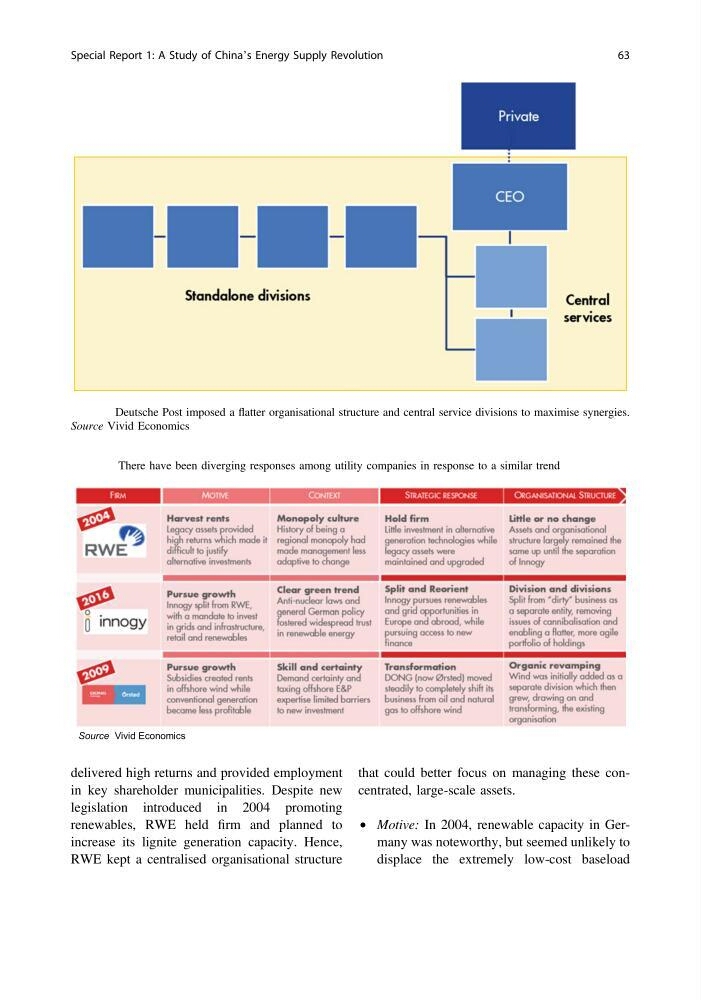
Fig. 13 Deutsche Post imposed a flatter organisational structure and central service divisions to maximise synergies.
Source Vivid Economics
Table 2 There have been diverging responses among utility companies in response to a similar trend
Source Vivid Economics
Special Report 1: A Study of China’s Energy Supply Revolution
63
in key shareholder municipalities. Despite new
legislation introduced in 2004 promoting
renewables, RWE held firm and planned to
increase its lignite generation capacity. Hence,
RWE kept a centralised organisational structure
that could better focus on managing these concentrated, large-scale assets.
• Motive: In 2004, renewable capacity in Germany was noteworthy, but seemed unlikely to
displace the extremely low-cost baseload
Fig. 13 Deutsche Post imposed a flatter organisational structure and central service divisions to maximise synergies.
Source Vivid Economics
Table 2 There have been diverging responses among utility companies in response to a similar trend
Source Vivid Economics
Special Report 1: A Study of China’s Energy Supply Revolution
63