

Combined with the fast-growing EV sector,
this shift presents major challenges to traditionally oil-led energy cooperation and governance.
As Fig. 26 illustrates, transition to EVs is likely
to displace at least 2% of current oil demand
within 10 years, and more than 14% by 2040.
EV transition and the associated displacement of
oil demand may occur faster than currently
anticipated, amplifying the shift of energy governance away from oil-led cooperation. Further
technological innovation would be required to
displace oil from aviation and maritime, as well
as petrochemicals. As global oil demand peaks
(potentially as soon as 2020), plateaus and
declines, the focus on oil-led energy cooperation
and governance may start to shift elsewhere.
At the same time, with control over accessible
conventional oil resources largely in the hands of
national oil companies (NOCs) and their governments, independent oil companies (IOCs) are
struggling to find viable business models or
public acceptance for exploration and production
projects in more geologically or politically
challenging areas, such as deep water or the
Arctic. This is reflected in 2017 planned expenditure, with falls of 7% and 15% for European
and US IOCs respectively, while NOCs plan to
increase spending by 9%. Further, after falling
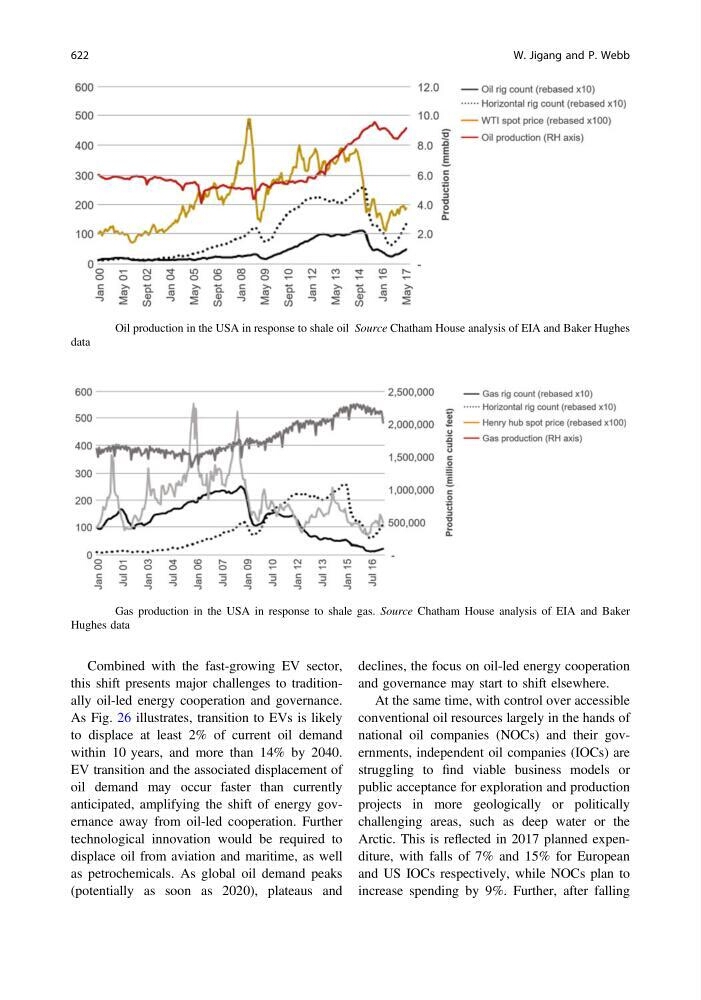
Fig. 24 Oil production in the USA in response to shale oil Source Chatham House analysis of EIA and Baker Hughes
data
Fig. 25 Gas production in the USA in response to shale gas. Source Chatham House analysis of EIA and Baker
Hughes data
622
W. Jigang and P. Webb