

Administration (NEA) issued an order in August
2016 that requires provinces to start pilot incremental power distribution deregulation programmes and carry out 100 incremental power
distribution pilot projects across the country as
soon as possible. The order also requires incremental power distribution to be deregulated
through mixed ownership. The NDRC and the
NEA defined 105 projects, including the Yanqing Smart Power Distribution Network, as the
first batch of pilot incremental power distribution
reform projects in November 2016.
Market trading. Monthly and annual bidding
in Guangdong power markets made great progress. Up to September 2016, 43,960 GWh
(RMB 0.033/kWh cheaper on average) had been
traded directly in Guangdong, exceeding the
planned annual target of 4,200 billion kWh.
A total of 15,980 GWh (RMB 0.073/kWh
cheaper on average) was traded through
monthly bidding, exceeding the annual target of
14 billion kWh.
Up to the end of 2016, Guangdong had
conducted seven monthly centralised bidding
rounds, trading 15,980 GWh in total. The
number of power sales companies increased
from 13 to 154. The electricity sold by power
sales companies accounted for 70% of the total.
The discount granted by the power producers
dropped from a high point of RMB 0.148/kWh
in April to RMB 0.037/kWh in September
(Table 16).
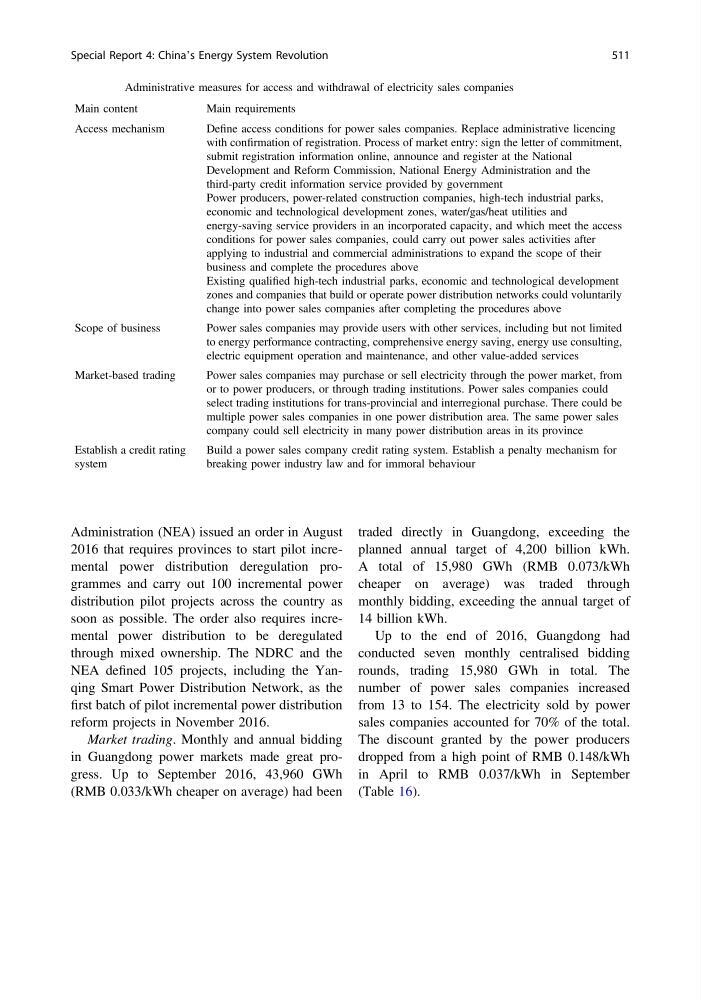
Table 14 Administrative measures for access and withdrawal of electricity sales companies
Main content
Main requirements
Access mechanism
Define access conditions for power sales companies. Replace administrative licencing
with confirmation of registration. Process of market entry: sign the letter of commitment,
submit registration information online, announce and register at the National
Development and Reform Commission, National Energy Administration and the
third-party credit information service provided by government
Power producers, power-related construction companies, high-tech industrial parks,
economic and technological development zones, water/gas/heat utilities and
energy-saving service providers in an incorporated capacity, and which meet the access
conditions for power sales companies, could carry out power sales activities after
applying to industrial and commercial administrations to expand the scope of their
business and complete the procedures above
Existing qualified high-tech industrial parks, economic and technological development
zones and companies that build or operate power distribution networks could voluntarily
change into power sales companies after completing the procedures above
Scope of business
Power sales companies may provide users with other services, including but not limited
to energy performance contracting, comprehensive energy saving, energy use consulting,
electric equipment operation and maintenance, and other value-added services
Market-based trading
Power sales companies may purchase or sell electricity through the power market, from
or to power producers, or through trading institutions. Power sales companies could
select trading institutions for trans-provincial and interregional purchase. There could be
multiple power sales companies in one power distribution area. The same power sales
company could sell electricity in many power distribution areas in its province
Establish a credit rating
system
Build a power sales company credit rating system. Establish a penalty mechanism for
breaking power industry law and for immoral behaviour
Special Report 4: China’s Energy System Revolution
511
2016 that requires provinces to start pilot incremental power distribution deregulation programmes and carry out 100 incremental power
distribution pilot projects across the country as
soon as possible. The order also requires incremental power distribution to be deregulated
through mixed ownership. The NDRC and the
NEA defined 105 projects, including the Yanqing Smart Power Distribution Network, as the
first batch of pilot incremental power distribution
reform projects in November 2016.
Market trading. Monthly and annual bidding
in Guangdong power markets made great progress. Up to September 2016, 43,960 GWh
(RMB 0.033/kWh cheaper on average) had been
traded directly in Guangdong, exceeding the
planned annual target of 4,200 billion kWh.
A total of 15,980 GWh (RMB 0.073/kWh
cheaper on average) was traded through
monthly bidding, exceeding the annual target of
14 billion kWh.
Up to the end of 2016, Guangdong had
conducted seven monthly centralised bidding
rounds, trading 15,980 GWh in total. The
number of power sales companies increased
from 13 to 154. The electricity sold by power
sales companies accounted for 70% of the total.
The discount granted by the power producers
dropped from a high point of RMB 0.148/kWh
in April to RMB 0.037/kWh in September
(Table 16).
Table 14 Administrative measures for access and withdrawal of electricity sales companies
Main content
Main requirements
Access mechanism
Define access conditions for power sales companies. Replace administrative licencing
with confirmation of registration. Process of market entry: sign the letter of commitment,
submit registration information online, announce and register at the National
Development and Reform Commission, National Energy Administration and the
third-party credit information service provided by government
Power producers, power-related construction companies, high-tech industrial parks,
economic and technological development zones, water/gas/heat utilities and
energy-saving service providers in an incorporated capacity, and which meet the access
conditions for power sales companies, could carry out power sales activities after
applying to industrial and commercial administrations to expand the scope of their
business and complete the procedures above
Existing qualified high-tech industrial parks, economic and technological development
zones and companies that build or operate power distribution networks could voluntarily
change into power sales companies after completing the procedures above
Scope of business
Power sales companies may provide users with other services, including but not limited
to energy performance contracting, comprehensive energy saving, energy use consulting,
electric equipment operation and maintenance, and other value-added services
Market-based trading
Power sales companies may purchase or sell electricity through the power market, from
or to power producers, or through trading institutions. Power sales companies could
select trading institutions for trans-provincial and interregional purchase. There could be
multiple power sales companies in one power distribution area. The same power sales
company could sell electricity in many power distribution areas in its province
Establish a credit rating
system
Build a power sales company credit rating system. Establish a penalty mechanism for
breaking power industry law and for immoral behaviour
Special Report 4: China’s Energy System Revolution
511