

Reform Commission extended the transmission
and distribution tariff reform pilot to all provincial power grids except Tibet. Cost supervision
and review were completed in January 2017.
Power sales reform. The first power sales
company—Shenzhen Shendianneng Electricity
Co., Ltd.—was founded in March 2015. After
the Administrative Measures for Access and
Withdrawal of Electricity Sales Companies was
released in October 2016, existing companies
could carry out electricity sales activities after
applying to expand their business activities and
completing the access procedures. The number of
power sales companies increased sharply
3.5-fold in three months. The National Enterprise
Credit Information Publicity System shows that
there were 5,410 power sales companies in China
at the end of 2016.
Reform of trading institutions. Up to the end
of 2016, two national power trading institutions,
the Beijing Power Exchange and the Guangzhou
Power Exchange, had been founded, and 32
provincial power exchanges (except Hainan and
Tibet) established, covering almost the whole
country.
Reform of incremental power distribution.
The National Development and Reform Commission (NDRC) and the National Energy
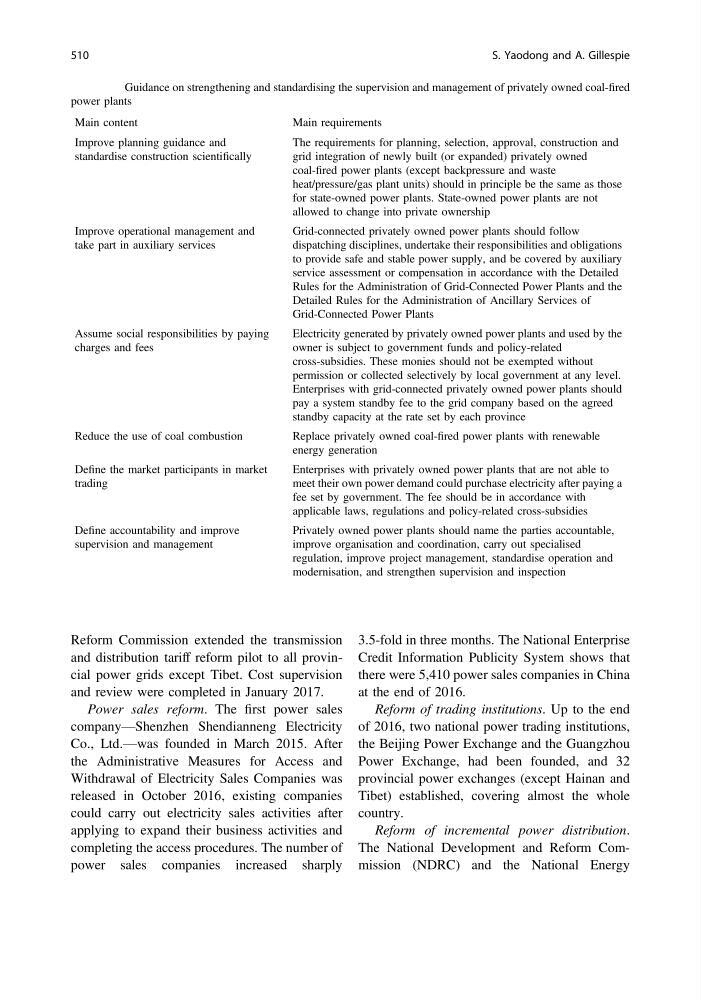
Table 13 Guidance on strengthening and standardising the supervision and management of privately owned coal-fired
power plants
Main content
Main requirements
Improve planning guidance and
standardise construction scientifically
The requirements for planning, selection, approval, construction and
grid integration of newly built (or expanded) privately owned
coal-fired power plants (except backpressure and waste
heat/pressure/gas plant units) should in principle be the same as those
for state-owned power plants. State-owned power plants are not
allowed to change into private ownership
Improve operational management and
take part in auxiliary services
Grid-connected privately owned power plants should follow
dispatching disciplines, undertake their responsibilities and obligations
to provide safe and stable power supply, and be covered by auxiliary
service assessment or compensation in accordance with the Detailed
Rules for the Administration of Grid-Connected Power Plants and the
Detailed Rules for the Administration of Ancillary Services of
Grid-Connected Power Plants
Assume social responsibilities by paying
charges and fees
Electricity generated by privately owned power plants and used by the
owner is subject to government funds and policy-related
cross-subsidies. These monies should not be exempted without
permission or collected selectively by local government at any level.
Enterprises with grid-connected privately owned power plants should
pay a system standby fee to the grid company based on the agreed
standby capacity at the rate set by each province
Reduce the use of coal combustion
Replace privately owned coal-fired power plants with renewable
energy generation
Define the market participants in market
trading
Enterprises with privately owned power plants that are not able to
meet their own power demand could purchase electricity after paying a
fee set by government. The fee should be in accordance with
applicable laws, regulations and policy-related cross-subsidies
Define accountability and improve
supervision and management
Privately owned power plants should name the parties accountable,
improve organisation and coordination, carry out specialised
regulation, improve project management, standardise operation and
modernisation, and strengthen supervision and inspection
510
S. Yaodong and A. Gillespie
and distribution tariff reform pilot to all provincial power grids except Tibet. Cost supervision
and review were completed in January 2017.
Power sales reform. The first power sales
company—Shenzhen Shendianneng Electricity
Co., Ltd.—was founded in March 2015. After
the Administrative Measures for Access and
Withdrawal of Electricity Sales Companies was
released in October 2016, existing companies
could carry out electricity sales activities after
applying to expand their business activities and
completing the access procedures. The number of
power sales companies increased sharply
3.5-fold in three months. The National Enterprise
Credit Information Publicity System shows that
there were 5,410 power sales companies in China
at the end of 2016.
Reform of trading institutions. Up to the end
of 2016, two national power trading institutions,
the Beijing Power Exchange and the Guangzhou
Power Exchange, had been founded, and 32
provincial power exchanges (except Hainan and
Tibet) established, covering almost the whole
country.
Reform of incremental power distribution.
The National Development and Reform Commission (NDRC) and the National Energy
Table 13 Guidance on strengthening and standardising the supervision and management of privately owned coal-fired
power plants
Main content
Main requirements
Improve planning guidance and
standardise construction scientifically
The requirements for planning, selection, approval, construction and
grid integration of newly built (or expanded) privately owned
coal-fired power plants (except backpressure and waste
heat/pressure/gas plant units) should in principle be the same as those
for state-owned power plants. State-owned power plants are not
allowed to change into private ownership
Improve operational management and
take part in auxiliary services
Grid-connected privately owned power plants should follow
dispatching disciplines, undertake their responsibilities and obligations
to provide safe and stable power supply, and be covered by auxiliary
service assessment or compensation in accordance with the Detailed
Rules for the Administration of Grid-Connected Power Plants and the
Detailed Rules for the Administration of Ancillary Services of
Grid-Connected Power Plants
Assume social responsibilities by paying
charges and fees
Electricity generated by privately owned power plants and used by the
owner is subject to government funds and policy-related
cross-subsidies. These monies should not be exempted without
permission or collected selectively by local government at any level.
Enterprises with grid-connected privately owned power plants should
pay a system standby fee to the grid company based on the agreed
standby capacity at the rate set by each province
Reduce the use of coal combustion
Replace privately owned coal-fired power plants with renewable
energy generation
Define the market participants in market
trading
Enterprises with privately owned power plants that are not able to
meet their own power demand could purchase electricity after paying a
fee set by government. The fee should be in accordance with
applicable laws, regulations and policy-related cross-subsidies
Define accountability and improve
supervision and management
Privately owned power plants should name the parties accountable,
improve organisation and coordination, carry out specialised
regulation, improve project management, standardise operation and
modernisation, and strengthen supervision and inspection
510
S. Yaodong and A. Gillespie