

Ningxia, Yunnan and Guizhou) in 2015. Included in the pilot transmission and distribution
tariff reform of April 2016 were the provincial
power grids of Beijing, Tianjin, southern Hebei,
northern Hebei, Shanxi, Shaanxi, Jiangxi,
Hunan, Sichuan, Chongqing, Guangdong and
Guangxi; the provincial power grids covered by
the national power system comprehensive reform
pilots; and the power grids of north China. In
August 2016, the National Development and
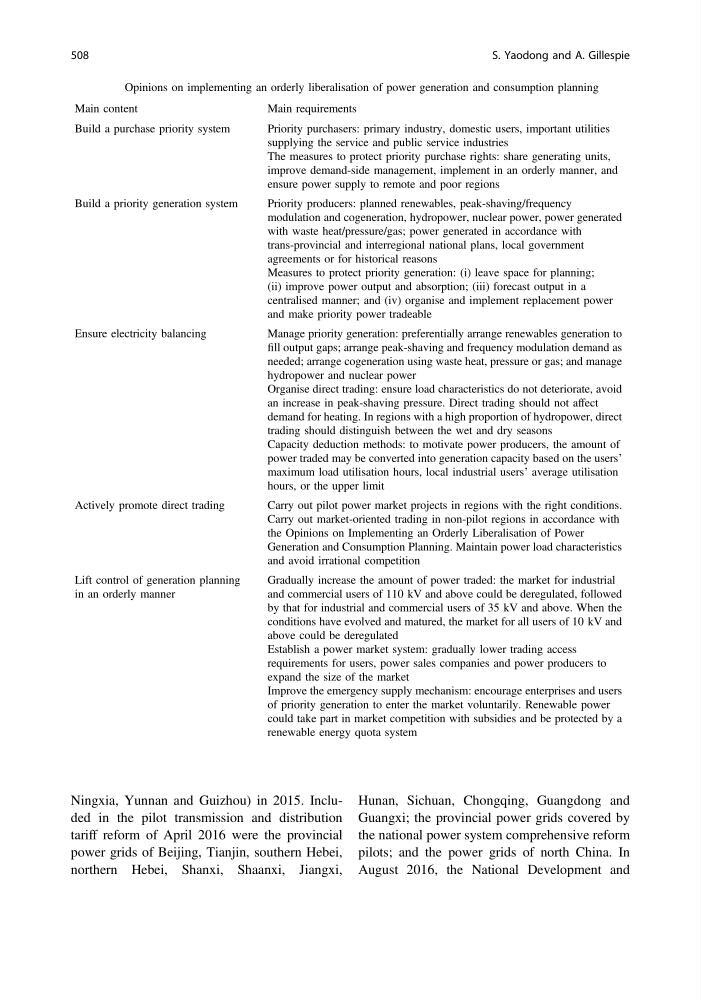
Table 11 Opinions on implementing an orderly liberalisation of power generation and consumption planning
Main content
Main requirements
Build a purchase priority system
Priority purchasers: primary industry, domestic users, important utilities
supplying the service and public service industries
The measures to protect priority purchase rights: share generating units,
improve demand-side management, implement in an orderly manner, and
ensure power supply to remote and poor regions
Build a priority generation system
Priority producers: planned renewables, peak-shaving/frequency
modulation and cogeneration, hydropower, nuclear power, power generated
with waste heat/pressure/gas; power generated in accordance with
trans-provincial and interregional national plans, local government
agreements or for historical reasons
Measures to protect priority generation: (i) leave space for planning;
(ii) improve power output and absorption; (iii) forecast output in a
centralised manner; and (iv) organise and implement replacement power
and make priority power tradeable
Ensure electricity balancing
Manage priority generation: preferentially arrange renewables generation to
fill output gaps; arrange peak-shaving and frequency modulation demand as
needed; arrange cogeneration using waste heat, pressure or gas; and manage
hydropower and nuclear power
Organise direct trading: ensure load characteristics do not deteriorate, avoid
an increase in peak-shaving pressure. Direct trading should not affect
demand for heating. In regions with a high proportion of hydropower, direct
trading should distinguish between the wet and dry seasons
Capacity deduction methods: to motivate power producers, the amount of
power traded may be converted into generation capacity based on the users’
maximum load utilisation hours, local industrial users’ average utilisation
hours, or the upper limit
Actively promote direct trading
Carry out pilot power market projects in regions with the right conditions.
Carry out market-oriented trading in non-pilot regions in accordance with
the Opinions on Implementing an Orderly Liberalisation of Power
Generation and Consumption Planning. Maintain power load characteristics
and avoid irrational competition
Lift control of generation planning
in an orderly manner
Gradually increase the amount of power traded: the market for industrial
and commercial users of 110 kV and above could be deregulated, followed
by that for industrial and commercial users of 35 kV and above. When the
conditions have evolved and matured, the market for all users of 10 kV and
above could be deregulated
Establish a power market system: gradually lower trading access
requirements for users, power sales companies and power producers to
expand the size of the market
Improve the emergency supply mechanism: encourage enterprises and users
of priority generation to enter the market voluntarily. Renewable power
could take part in market competition with subsidies and be protected by a
renewable energy quota system
508
S. Yaodong and A. Gillespie
tariff reform of April 2016 were the provincial
power grids of Beijing, Tianjin, southern Hebei,
northern Hebei, Shanxi, Shaanxi, Jiangxi,
Hunan, Sichuan, Chongqing, Guangdong and
Guangxi; the provincial power grids covered by
the national power system comprehensive reform
pilots; and the power grids of north China. In
August 2016, the National Development and
Table 11 Opinions on implementing an orderly liberalisation of power generation and consumption planning
Main content
Main requirements
Build a purchase priority system
Priority purchasers: primary industry, domestic users, important utilities
supplying the service and public service industries
The measures to protect priority purchase rights: share generating units,
improve demand-side management, implement in an orderly manner, and
ensure power supply to remote and poor regions
Build a priority generation system
Priority producers: planned renewables, peak-shaving/frequency
modulation and cogeneration, hydropower, nuclear power, power generated
with waste heat/pressure/gas; power generated in accordance with
trans-provincial and interregional national plans, local government
agreements or for historical reasons
Measures to protect priority generation: (i) leave space for planning;
(ii) improve power output and absorption; (iii) forecast output in a
centralised manner; and (iv) organise and implement replacement power
and make priority power tradeable
Ensure electricity balancing
Manage priority generation: preferentially arrange renewables generation to
fill output gaps; arrange peak-shaving and frequency modulation demand as
needed; arrange cogeneration using waste heat, pressure or gas; and manage
hydropower and nuclear power
Organise direct trading: ensure load characteristics do not deteriorate, avoid
an increase in peak-shaving pressure. Direct trading should not affect
demand for heating. In regions with a high proportion of hydropower, direct
trading should distinguish between the wet and dry seasons
Capacity deduction methods: to motivate power producers, the amount of
power traded may be converted into generation capacity based on the users’
maximum load utilisation hours, local industrial users’ average utilisation
hours, or the upper limit
Actively promote direct trading
Carry out pilot power market projects in regions with the right conditions.
Carry out market-oriented trading in non-pilot regions in accordance with
the Opinions on Implementing an Orderly Liberalisation of Power
Generation and Consumption Planning. Maintain power load characteristics
and avoid irrational competition
Lift control of generation planning
in an orderly manner
Gradually increase the amount of power traded: the market for industrial
and commercial users of 110 kV and above could be deregulated, followed
by that for industrial and commercial users of 35 kV and above. When the
conditions have evolved and matured, the market for all users of 10 kV and
above could be deregulated
Establish a power market system: gradually lower trading access
requirements for users, power sales companies and power producers to
expand the size of the market
Improve the emergency supply mechanism: encourage enterprises and users
of priority generation to enter the market voluntarily. Renewable power
could take part in market competition with subsidies and be protected by a
renewable energy quota system
508
S. Yaodong and A. Gillespie