

energy transition is the shift from fossil fuels to a
sustainable, clean and low-carbon energy system.
In developed economies, the share of low-carbon
energy in the supply system is increasing. In
1974, Japan issued a new energy development
plan to raise investment in developing and using
solar, geothermal and hydrogen energy and
synthetic natural gas, and identified the development of solar energy as a national strategy. In
2004, Japan introduced its strategic vision of
developing new energy technologies, including
solar and wind, into a pillar industry valued at
JPY 3 trillion. This would include reducing oil
use from 50% to 40% of its total energy consumption and increasing the share of new energy
to 20%. In recent years, European and American
countries have adopted a goal-oriented and systematic approach to achieving an energy transition by 2050. For example, as mentioned in the
EU Energy Roadmap 2050, the share of renewables in total energy consumption will be more
than 55% in 2050. A study by the U.S. Department of Energy said that renewables can meet
80% of power demand by 2050.
Clean energy is becoming a megatrend in
global energy development. As the world’s largest energy consumer, China is already targeting
an energy revolution. In energy technology, the
Action Plan for Innovation in the Energy Technology Revolution (2016–30) and the 13th
Five-Year Plan (2016–20) for Energy Technology Innovation have defined 15 innovation
pathways for China’s energy technologies in the
medium-to-long term. According to the Strategy
of Energy Production and Consumption Revolution (2016–30), by 2020, the year before the
100th anniversary of the Chinese Communist
Party, China will fundamentally change its model
of extensive growth in energy consumption.
Total energy consumption will be held within a 5
Btce limit and the share of coal consumption will
be decreased. The share of non-fossil energy will
be 15%, and energy consumption per unit of
GDP will be 15% lower than in 2015. By 2030,
the share of non-fossil energy and natural gas in
total energy consumption will be around 20%
and 15% respectively. Increases in energy
demand will be met mainly by clean energy.
1.4 A Sound Legal System Will Secure
the Energy Market
and Guide the Energy
Revolution
Energy in developed economies is based on a
relatively mature market system. A sound legal
system across the entire energy value chain gives
developed economies a head start in energy
development. For instance, Japan introduced a
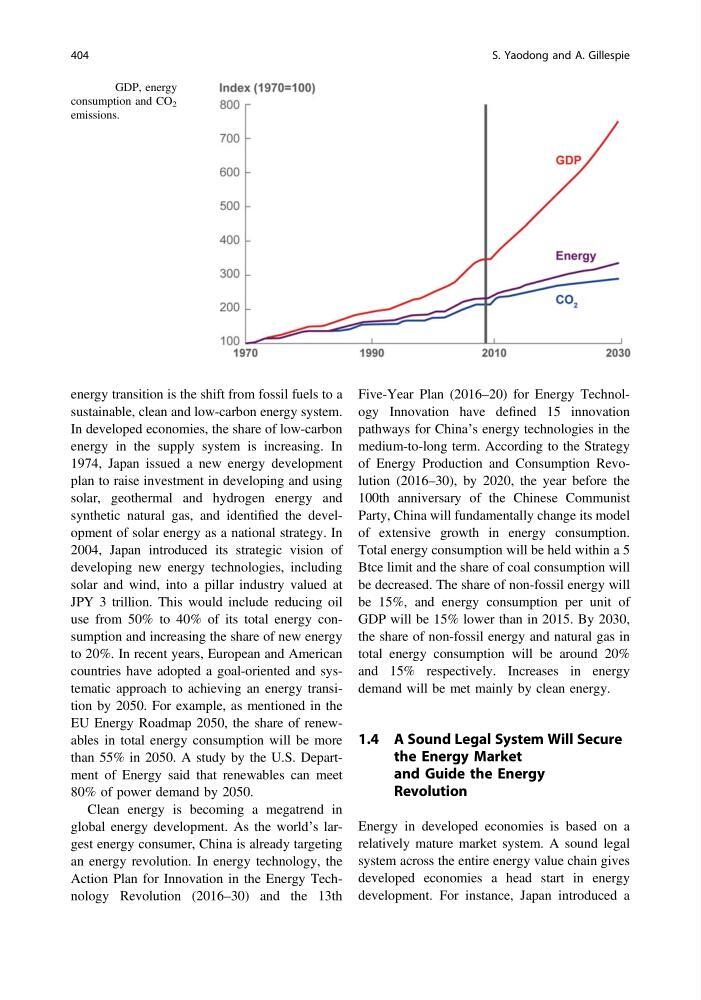
Fig. 12 GDP, energy
consumption and CO 2
emissions.
404
S. Yaodong and A. Gillespie
sustainable, clean and low-carbon energy system.
In developed economies, the share of low-carbon
energy in the supply system is increasing. In
1974, Japan issued a new energy development
plan to raise investment in developing and using
solar, geothermal and hydrogen energy and
synthetic natural gas, and identified the development of solar energy as a national strategy. In
2004, Japan introduced its strategic vision of
developing new energy technologies, including
solar and wind, into a pillar industry valued at
JPY 3 trillion. This would include reducing oil
use from 50% to 40% of its total energy consumption and increasing the share of new energy
to 20%. In recent years, European and American
countries have adopted a goal-oriented and systematic approach to achieving an energy transition by 2050. For example, as mentioned in the
EU Energy Roadmap 2050, the share of renewables in total energy consumption will be more
than 55% in 2050. A study by the U.S. Department of Energy said that renewables can meet
80% of power demand by 2050.
Clean energy is becoming a megatrend in
global energy development. As the world’s largest energy consumer, China is already targeting
an energy revolution. In energy technology, the
Action Plan for Innovation in the Energy Technology Revolution (2016–30) and the 13th
Five-Year Plan (2016–20) for Energy Technology Innovation have defined 15 innovation
pathways for China’s energy technologies in the
medium-to-long term. According to the Strategy
of Energy Production and Consumption Revolution (2016–30), by 2020, the year before the
100th anniversary of the Chinese Communist
Party, China will fundamentally change its model
of extensive growth in energy consumption.
Total energy consumption will be held within a 5
Btce limit and the share of coal consumption will
be decreased. The share of non-fossil energy will
be 15%, and energy consumption per unit of
GDP will be 15% lower than in 2015. By 2030,
the share of non-fossil energy and natural gas in
total energy consumption will be around 20%
and 15% respectively. Increases in energy
demand will be met mainly by clean energy.
1.4 A Sound Legal System Will Secure
the Energy Market
and Guide the Energy
Revolution
Energy in developed economies is based on a
relatively mature market system. A sound legal
system across the entire energy value chain gives
developed economies a head start in energy
development. For instance, Japan introduced a
Fig. 12 GDP, energy
consumption and CO 2
emissions.
404
S. Yaodong and A. Gillespie