

result of oil price fluctuations, the discovery of
new oil and gas reserves, the emergence of new
energy carrier networks and the development of
new technologies like nuclear power. However,
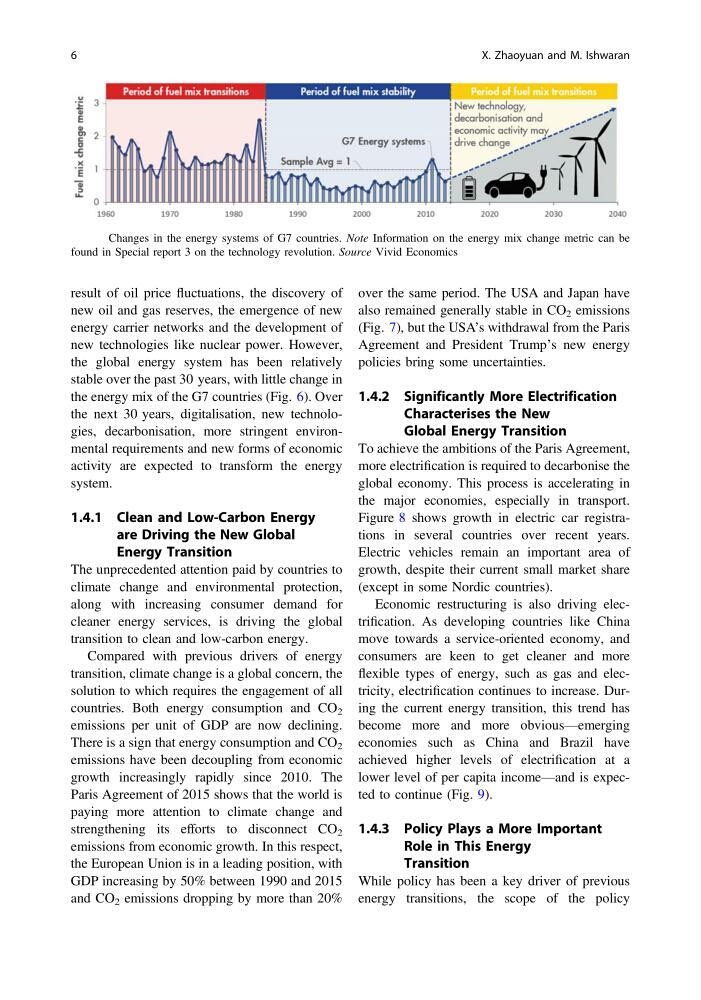
the global energy system has been relatively
stable over the past 30 years, with little change in
the energy mix of the G7 countries (Fig. 6). Over
the next 30 years, digitalisation, new technologies, decarbonisation, more stringent environmental requirements and new forms of economic
activity are expected to transform the energy
system.
1.4.1 Clean and Low-Carbon Energy
are Driving the New Global
Energy Transition
The unprecedented attention paid by countries to
climate change and environmental protection,
along with increasing consumer demand for
cleaner energy services, is driving the global
transition to clean and low-carbon energy.
Compared with previous drivers of energy
transition, climate change is a global concern, the
solution to which requires the engagement of all
countries. Both energy consumption and CO 2
emissions per unit of GDP are now declining.
There is a sign that energy consumption and CO 2
emissions have been decoupling from economic
growth increasingly rapidly since 2010. The
Paris Agreement of 2015 shows that the world is
paying more attention to climate change and
strengthening its efforts to disconnect CO 2
emissions from economic growth. In this respect,
the European Union is in a leading position, with
GDP increasing by 50% between 1990 and 2015
and CO 2 emissions dropping by more than 20%
over the same period. The USA and Japan have
also remained generally stable in CO 2 emissions
(Fig. 7), but the USA’s withdrawal from the Paris
Agreement and President Trump’s new energy
policies bring some uncertainties.
1.4.2 Significantly More Electrification
Characterises the New
Global Energy Transition
To achieve the ambitions of the Paris Agreement,
more electrification is required to decarbonise the
global economy. This process is accelerating in
the major economies, especially in transport.
Figure 8 shows growth in electric car registrations in several countries over recent years.
Electric vehicles remain an important area of
growth, despite their current small market share
(except in some Nordic countries).
Economic restructuring is also driving electrification. As developing countries like China
move towards a service-oriented economy, and
consumers are keen to get cleaner and more
flexible types of energy, such as gas and electricity, electrification continues to increase. During the current energy transition, this trend has
become more and more obvious—emerging
economies such as China and Brazil have
achieved higher levels of electrification at a
lower level of per capita income—and is expected to continue (Fig. 9).
1.4.3 Policy Plays a More Important
Role in This Energy
Transition
While policy has been a key driver of previous
energy transitions, the scope of the policy
Fig. 6 Changes in the energy systems of G7 countries. Note Information on the energy mix change metric can be
found in Special report 3 on the technology revolution. Source Vivid Economics
6
X. Zhaoyuan and M. Ishwaran
new oil and gas reserves, the emergence of new
energy carrier networks and the development of
new technologies like nuclear power. However,
the global energy system has been relatively
stable over the past 30 years, with little change in
the energy mix of the G7 countries (Fig. 6). Over
the next 30 years, digitalisation, new technologies, decarbonisation, more stringent environmental requirements and new forms of economic
activity are expected to transform the energy
system.
1.4.1 Clean and Low-Carbon Energy
are Driving the New Global
Energy Transition
The unprecedented attention paid by countries to
climate change and environmental protection,
along with increasing consumer demand for
cleaner energy services, is driving the global
transition to clean and low-carbon energy.
Compared with previous drivers of energy
transition, climate change is a global concern, the
solution to which requires the engagement of all
countries. Both energy consumption and CO 2
emissions per unit of GDP are now declining.
There is a sign that energy consumption and CO 2
emissions have been decoupling from economic
growth increasingly rapidly since 2010. The
Paris Agreement of 2015 shows that the world is
paying more attention to climate change and
strengthening its efforts to disconnect CO 2
emissions from economic growth. In this respect,
the European Union is in a leading position, with
GDP increasing by 50% between 1990 and 2015
and CO 2 emissions dropping by more than 20%
over the same period. The USA and Japan have
also remained generally stable in CO 2 emissions
(Fig. 7), but the USA’s withdrawal from the Paris
Agreement and President Trump’s new energy
policies bring some uncertainties.
1.4.2 Significantly More Electrification
Characterises the New
Global Energy Transition
To achieve the ambitions of the Paris Agreement,
more electrification is required to decarbonise the
global economy. This process is accelerating in
the major economies, especially in transport.
Figure 8 shows growth in electric car registrations in several countries over recent years.
Electric vehicles remain an important area of
growth, despite their current small market share
(except in some Nordic countries).
Economic restructuring is also driving electrification. As developing countries like China
move towards a service-oriented economy, and
consumers are keen to get cleaner and more
flexible types of energy, such as gas and electricity, electrification continues to increase. During the current energy transition, this trend has
become more and more obvious—emerging
economies such as China and Brazil have
achieved higher levels of electrification at a
lower level of per capita income—and is expected to continue (Fig. 9).
1.4.3 Policy Plays a More Important
Role in This Energy
Transition
While policy has been a key driver of previous
energy transitions, the scope of the policy
Fig. 6 Changes in the energy systems of G7 countries. Note Information on the energy mix change metric can be
found in Special report 3 on the technology revolution. Source Vivid Economics
6
X. Zhaoyuan and M. Ishwaran