

mathematics), the USA currently has 50 industries that contribute nearly a quarter of its total
employment opportunities (direct and indirect)
and 17% of its GDP. They also account for 90%
of R&D investment in the private sector, 85% of
US patents, and 60% of the country’s exports.
4
Among the 50 industries, power and oil and gas
refining rank second and third respectively in
terms of industry scale, with their combined
gross added value (GVA) accounting for 16.1%
of the total of all 50 industries. This shows that
every energy technology revolution triggers the
emergence of important energy sectors that hold
long-term development potential.
Based on the above, this study argues that
energy technology revolutions generally appear
in a concentrated manner within a short timeframe. They generate long-term and significant
impacts, including industrial revolution and
important new energy sectors.
2 Energy Technology Innovation
and Development
Technology readiness is a necessary but insufficient condition for an energy revolution. Technologies that achieve high levels of deployment
benefit from a supporting set of factors, in addition to their technological development. These
support factors consist of demand for the services
the technology provides, such as clean or secure
energy; supply of the input the technology
requires, such as the components of the technology or primary fuels; and markets that
incentivise the deployment of the new technology, such as a newly liberalised market that
favours a new lower-cost technology. If the
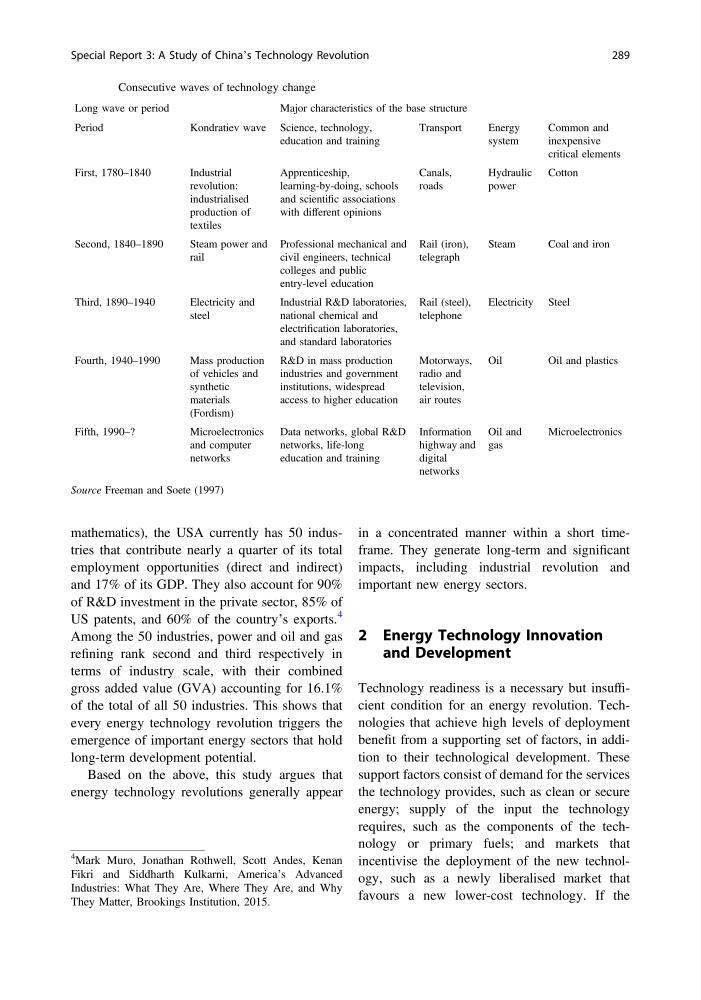
Table 1 Consecutive waves of technology change
Long wave or period
Major characteristics of the base structure
Period
Kondratiev wave Science, technology,
education and training
Transport
Energy
system
Common and
inexpensive
critical elements
First, 1780–1840
Industrial
revolution:
industrialised
production of
textiles
Apprenticeship,
learning-by-doing, schools
and scientific associations
with different opinions
Canals,
roads
Hydraulic
power
Cotton
Second, 1840–1890
Steam power and
rail
Professional mechanical and
civil engineers, technical
colleges and public
entry-level education
Rail (iron),
telegraph
Steam
Coal and iron
Third, 1890–1940
Electricity and
steel
Industrial R&D laboratories,
national chemical and
electrification laboratories,
and standard laboratories
Rail (steel),
telephone
Electricity Steel
Fourth, 1940–1990
Mass production
of vehicles and
synthetic
materials
(Fordism)
R&D in mass production
industries and government
institutions, widespread
access to higher education
Motorways,
radio and
television,
air routes
Oil
Oil and plastics
Fifth, 1990–?
Microelectronics
and computer
networks
Data networks, global R&D
networks, life-long
education and training
Information
highway and
digital
networks
Oil and
gas
Microelectronics
Source Freeman and Soete (1997)
4
Mark Muro, Jonathan Rothwell, Scott Andes, Kenan
Fikri and Siddharth Kulkarni, America’s Advanced
Industries: What They Are, Where They Are, and Why
They Matter, Brookings Institution, 2015.
Special Report 3: A Study of China’s Technology Revolution
289
employment opportunities (direct and indirect)
and 17% of its GDP. They also account for 90%
of R&D investment in the private sector, 85% of
US patents, and 60% of the country’s exports.
4
Among the 50 industries, power and oil and gas
refining rank second and third respectively in
terms of industry scale, with their combined
gross added value (GVA) accounting for 16.1%
of the total of all 50 industries. This shows that
every energy technology revolution triggers the
emergence of important energy sectors that hold
long-term development potential.
Based on the above, this study argues that
energy technology revolutions generally appear
in a concentrated manner within a short timeframe. They generate long-term and significant
impacts, including industrial revolution and
important new energy sectors.
2 Energy Technology Innovation
and Development
Technology readiness is a necessary but insufficient condition for an energy revolution. Technologies that achieve high levels of deployment
benefit from a supporting set of factors, in addition to their technological development. These
support factors consist of demand for the services
the technology provides, such as clean or secure
energy; supply of the input the technology
requires, such as the components of the technology or primary fuels; and markets that
incentivise the deployment of the new technology, such as a newly liberalised market that
favours a new lower-cost technology. If the
Table 1 Consecutive waves of technology change
Long wave or period
Major characteristics of the base structure
Period
Kondratiev wave Science, technology,
education and training
Transport
Energy
system
Common and
inexpensive
critical elements
First, 1780–1840
Industrial
revolution:
industrialised
production of
textiles
Apprenticeship,
learning-by-doing, schools
and scientific associations
with different opinions
Canals,
roads
Hydraulic
power
Cotton
Second, 1840–1890
Steam power and
rail
Professional mechanical and
civil engineers, technical
colleges and public
entry-level education
Rail (iron),
telegraph
Steam
Coal and iron
Third, 1890–1940
Electricity and
steel
Industrial R&D laboratories,
national chemical and
electrification laboratories,
and standard laboratories
Rail (steel),
telephone
Electricity Steel
Fourth, 1940–1990
Mass production
of vehicles and
synthetic
materials
(Fordism)
R&D in mass production
industries and government
institutions, widespread
access to higher education
Motorways,
radio and
television,
air routes
Oil
Oil and plastics
Fifth, 1990–?
Microelectronics
and computer
networks
Data networks, global R&D
networks, life-long
education and training
Information
highway and
digital
networks
Oil and
gas
Microelectronics
Source Freeman and Soete (1997)
4
Mark Muro, Jonathan Rothwell, Scott Andes, Kenan
Fikri and Siddharth Kulkarni, America’s Advanced
Industries: What They Are, Where They Are, and Why
They Matter, Brookings Institution, 2015.
Special Report 3: A Study of China’s Technology Revolution
289