

3.3 Policy Factors Affecting Energy
Prices
3.3.1 Renewable Energy Policy
Although China has made significant progress in
non-fossil energy over the past decade, renewable energy is still not cost-competitive because
the current pricing mechanism does not include
the external costs of fossil energy use (resource
depletion and environmental impact). In order to
support the development of renewable energy,
China has adopted several policy measures over
the past decade. The Renewable Energy Law,
introduced in 2005, has laid the foundation for
the rapid development of renewable energy in
China. Similarly, the renewable energy
feed-in-tariff has improved the price competitiveness of renewable energy and increased the
deployment of renewable energy technologies.
As shown in Fig. 35, renewable energy consumption has increased rapidly since 2005. By
2015, the consumption of wind and solar power
was 185.1 terrawatt-hours (TWh) and 39.2 TWh
respectively, and the proportion of non-fossil
energy in China’s total energy demand system
reached about 12%.
Under the current renewable energy policy
mechanism, demand for renewable energy by
consumers and for renewable energy subsidies by
generators is growing. The subsidy deficit has
now become a major obstacle to the sustainable
development of renewable energy in China. To
solve this problem, the government has
announced several cuts in renewable energy
feed-in tariffs (Table 3). At the same time, China
has raised the feed-in tariff surcharge level successively from RMB 0.002/kWh in 2006 to RMB
0.019/kWh in 2016 (Table 4). Nevertheless,
renewable energy subsidies are still far from
meeting real needs. By the end of 2016, the
cumulative gap in renewable energy subsidies
was close to RMB 60 billion, and the sustainability of the original renewable energy subsidy
policy faced challenges. Therefore, China’s current and future renewable energy subsidy policies
will undergo important transformations: (i) subsidies will be further reduced until their cancellation, while the transformation of the subsidy
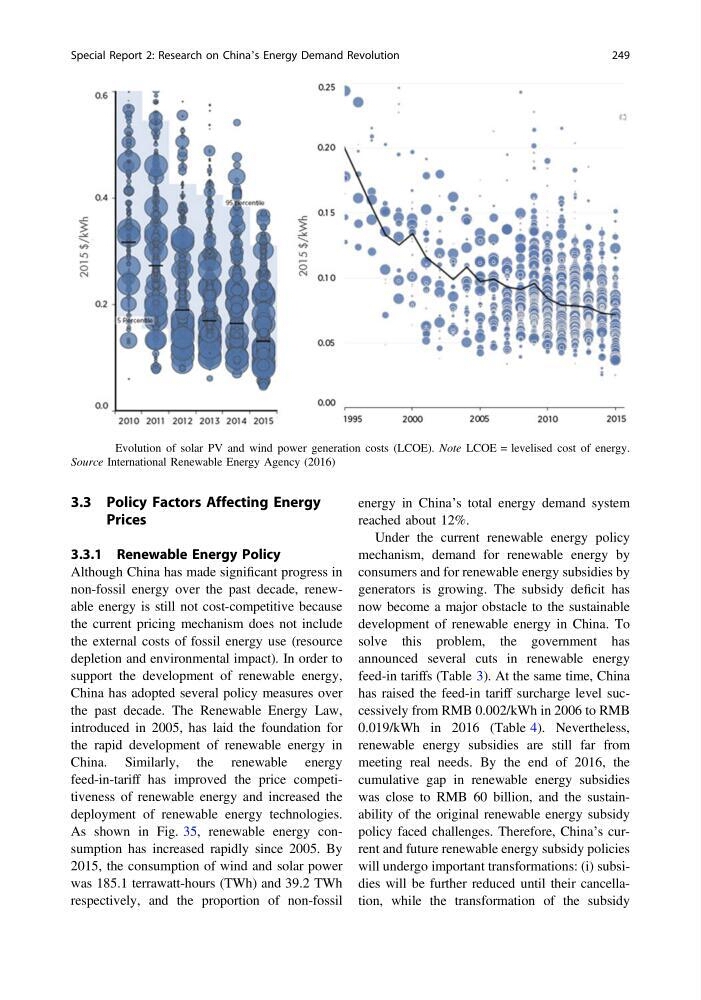
Fig. 34 Evolution of solar PV and wind power generation costs (LCOE). Note LCOE = levelised cost of energy.
Source International Renewable Energy Agency (2016)
Special Report 2: Research on China’s Energy Demand Revolution
249
Prices
3.3.1 Renewable Energy Policy
Although China has made significant progress in
non-fossil energy over the past decade, renewable energy is still not cost-competitive because
the current pricing mechanism does not include
the external costs of fossil energy use (resource
depletion and environmental impact). In order to
support the development of renewable energy,
China has adopted several policy measures over
the past decade. The Renewable Energy Law,
introduced in 2005, has laid the foundation for
the rapid development of renewable energy in
China. Similarly, the renewable energy
feed-in-tariff has improved the price competitiveness of renewable energy and increased the
deployment of renewable energy technologies.
As shown in Fig. 35, renewable energy consumption has increased rapidly since 2005. By
2015, the consumption of wind and solar power
was 185.1 terrawatt-hours (TWh) and 39.2 TWh
respectively, and the proportion of non-fossil
energy in China’s total energy demand system
reached about 12%.
Under the current renewable energy policy
mechanism, demand for renewable energy by
consumers and for renewable energy subsidies by
generators is growing. The subsidy deficit has
now become a major obstacle to the sustainable
development of renewable energy in China. To
solve this problem, the government has
announced several cuts in renewable energy
feed-in tariffs (Table 3). At the same time, China
has raised the feed-in tariff surcharge level successively from RMB 0.002/kWh in 2006 to RMB
0.019/kWh in 2016 (Table 4). Nevertheless,
renewable energy subsidies are still far from
meeting real needs. By the end of 2016, the
cumulative gap in renewable energy subsidies
was close to RMB 60 billion, and the sustainability of the original renewable energy subsidy
policy faced challenges. Therefore, China’s current and future renewable energy subsidy policies
will undergo important transformations: (i) subsidies will be further reduced until their cancellation, while the transformation of the subsidy
Fig. 34 Evolution of solar PV and wind power generation costs (LCOE). Note LCOE = levelised cost of energy.
Source International Renewable Energy Agency (2016)
Special Report 2: Research on China’s Energy Demand Revolution
249