

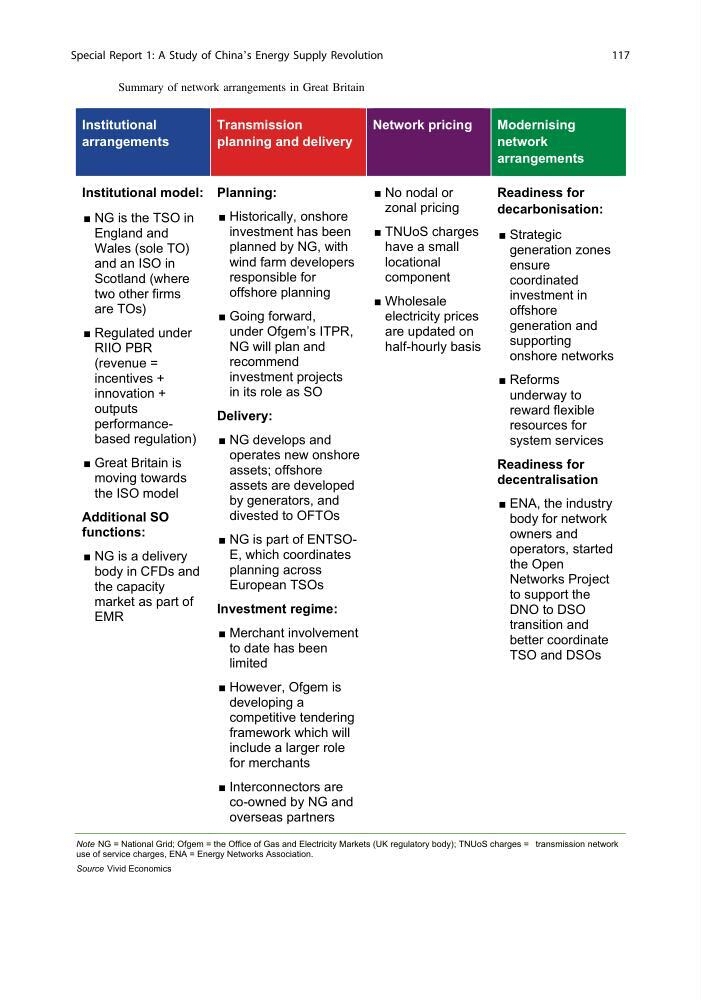
Table 6 Summary of network arrangements in Great Britain
Institutional
arrangements
Transmission
planning and delivery
Network pricing
Modernising
network
arrangements
Institutional model:
NG is the TSO in
England and
Wales (sole TO)
and an ISO in
Scotland (where
two other firms
are TOs)
Regulated under
RIIO PBR
(revenue =
incentives +
innovation +
outputs
performancebased regulation)
Great Britain is
moving towards
the ISO model
Additional SO
functions:
NG is a delivery
body in CFDs and
the capacity
market as part of
EMR
Planning:
Historically, onshore
investment has been
planned by NG, with
wind farm developers
responsible for
offshore planning
Going forward,
under Ofgem’s ITPR,
NG will plan and
recommend
investment projects
in its role as SO
Delivery:
NG develops and
operates new onshore
assets; offshore
assets are developed
by generators, and
divested to OFTOs
NG is part of ENTSOE, which coordinates
planning across
European TSOs
Investment regime:
Merchant involvement
to date has been
limited
However, Ofgem is
developing a
competitive tendering
framework which will
include a larger role
for merchants
Interconnectors are
co-owned by NG and
overseas partners
No nodal or
zonal pricing
TNUoS charges
have a small
locational
component
Wholesale
electricity prices
are updated on
half-hourly basis
Readiness for
decarbonisation:
Strategic
generation zones
ensure
coordinated
investment in
offshore
generation and
supporting
onshore networks
Reforms
underway to
reward flexible
resources for
system services
Readiness for
decentralisation
ENA, the industry
body for network
owners and
operators, started
the Open
Networks Project
to support the
DNO to DSO
transition and
better coordinate
TSO and DSOs
Note NG = National Grid; Ofgem = the Office of Gas and Electricity Markets (UK regulatory body); TNUoS charges = transmission network
use of service charges, ENA = Energy Networks Association.
Source Vivid Economics
Special Report 1: A Study of China’s Energy Supply Revolution
117
Institutional
arrangements
Transmission
planning and delivery
Network pricing
Modernising
network
arrangements
Institutional model:
NG is the TSO in
England and
Wales (sole TO)
and an ISO in
Scotland (where
two other firms
are TOs)
Regulated under
RIIO PBR
(revenue =
incentives +
innovation +
outputs
performancebased regulation)
Great Britain is
moving towards
the ISO model
Additional SO
functions:
NG is a delivery
body in CFDs and
the capacity
market as part of
EMR
Planning:
Historically, onshore
investment has been
planned by NG, with
wind farm developers
responsible for
offshore planning
Going forward,
under Ofgem’s ITPR,
NG will plan and
recommend
investment projects
in its role as SO
Delivery:
NG develops and
operates new onshore
assets; offshore
assets are developed
by generators, and
divested to OFTOs
NG is part of ENTSOE, which coordinates
planning across
European TSOs
Investment regime:
Merchant involvement
to date has been
limited
However, Ofgem is
developing a
competitive tendering
framework which will
include a larger role
for merchants
Interconnectors are
co-owned by NG and
overseas partners
No nodal or
zonal pricing
TNUoS charges
have a small
locational
component
Wholesale
electricity prices
are updated on
half-hourly basis
Readiness for
decarbonisation:
Strategic
generation zones
ensure
coordinated
investment in
offshore
generation and
supporting
onshore networks
Reforms
underway to
reward flexible
resources for
system services
Readiness for
decentralisation
ENA, the industry
body for network
owners and
operators, started
the Open
Networks Project
to support the
DNO to DSO
transition and
better coordinate
TSO and DSOs
Note NG = National Grid; Ofgem = the Office of Gas and Electricity Markets (UK regulatory body); TNUoS charges = transmission network
use of service charges, ENA = Energy Networks Association.
Source Vivid Economics
Special Report 1: A Study of China’s Energy Supply Revolution
117