

and National Grid confirmed the separation of
National Grid’s system operator business into a
legally separate company within National Grid
plc. This will take effect from 2019 onwards and
will bring the British power grid’s structure closer
to the ISO model. The case for separation is based
on a greater planning and delivery role for the SO,
as well as removing the risk of conflict of interest
between TO and SO functions going forward.
As an SO, National Grid is the delivery body
for electricity market reform. Under Ofgem’s
new integrated transmission planning and regulation (ITPR) framework, National Grid is
obliged to identify, plan and recommend transmission investment projects. The case is further
strengthened by the underlying trend of decentralisation, which increases the need for coordination of the planning and operation of
transmission and distribution systems by an SO.
(2) Transmission investment
Traditionally, planning, development and regulation of onshore transmission in the UK has
been implemented by regulated monopoly TOs.
In the future, transmission planning in Great
Britain will take place under Ofgem’s integrated
transmission planning and regulation (ITPR)
model. Under this framework, the SO has new
responsibilities to recommend transmission
investments through the network options
assessment (NOA) process. However, final
implementation decisions remain in the hands of
TOs.
National Grid currently owns all onshore
transmission assets in England and Wales, with
investment regulated through Ofgem’s price
control mechanism. It has traditionally held sole
responsibility for the planning and delivery of
investments in both countries, and occasionally
coordinated with Scottish transmission owners
on major projects with nationwide impact. This is
set to change, with Ofgem developing a framework for competitive tendering in onshore
transmission, although there has been no substantial non-incumbent transmission investment
to date. Historically, the regulatory asset value
(RAV) approach to TO revenue regulation has
tended to favour capital expenditure-based solutions, with little incentive for TOs to present
innovative, non-asset intensive solutions which
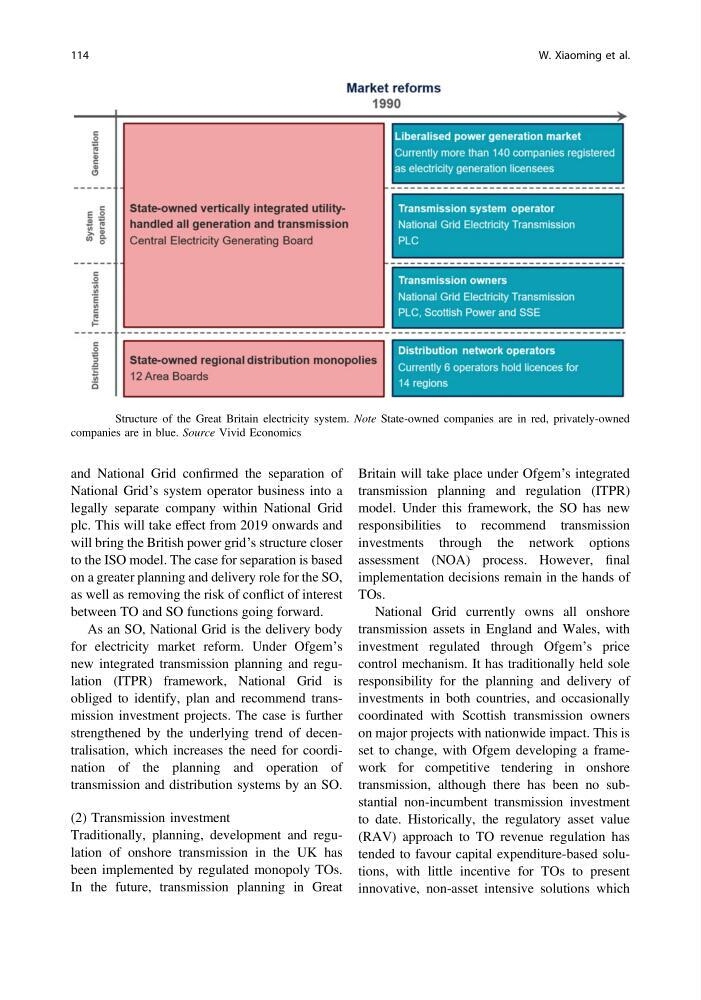
Fig. 41 Structure of the Great Britain electricity system. Note State-owned companies are in red, privately-owned
companies are in blue. Source Vivid Economics
114
W. Xiaoming et al.
National Grid’s system operator business into a
legally separate company within National Grid
plc. This will take effect from 2019 onwards and
will bring the British power grid’s structure closer
to the ISO model. The case for separation is based
on a greater planning and delivery role for the SO,
as well as removing the risk of conflict of interest
between TO and SO functions going forward.
As an SO, National Grid is the delivery body
for electricity market reform. Under Ofgem’s
new integrated transmission planning and regulation (ITPR) framework, National Grid is
obliged to identify, plan and recommend transmission investment projects. The case is further
strengthened by the underlying trend of decentralisation, which increases the need for coordination of the planning and operation of
transmission and distribution systems by an SO.
(2) Transmission investment
Traditionally, planning, development and regulation of onshore transmission in the UK has
been implemented by regulated monopoly TOs.
In the future, transmission planning in Great
Britain will take place under Ofgem’s integrated
transmission planning and regulation (ITPR)
model. Under this framework, the SO has new
responsibilities to recommend transmission
investments through the network options
assessment (NOA) process. However, final
implementation decisions remain in the hands of
TOs.
National Grid currently owns all onshore
transmission assets in England and Wales, with
investment regulated through Ofgem’s price
control mechanism. It has traditionally held sole
responsibility for the planning and delivery of
investments in both countries, and occasionally
coordinated with Scottish transmission owners
on major projects with nationwide impact. This is
set to change, with Ofgem developing a framework for competitive tendering in onshore
transmission, although there has been no substantial non-incumbent transmission investment
to date. Historically, the regulatory asset value
(RAV) approach to TO revenue regulation has
tended to favour capital expenditure-based solutions, with little incentive for TOs to present
innovative, non-asset intensive solutions which
Fig. 41 Structure of the Great Britain electricity system. Note State-owned companies are in red, privately-owned
companies are in blue. Source Vivid Economics
114
W. Xiaoming et al.