

(OFFER) and the Director General of Electricity
Supply (DGES). Their role was to regulate the
transmission network monopoly of National Grid
and the distribution network monopolies of the
regional electricity companies and set price caps
with periodic reviews. The act also established
competition in generation, with the requirement
that generators compete by selling power in a
wholesale market.
Today, National Grid is the transmission system operator (TSO) for Great Britain. There are
three onshore transmission owners (TOs) in Britain: National Grid Electricity Transmission for
England and Wales, and Scottish Power Transmission and Scottish Hydro Electric Transmission
for Scotland. Driven by European Commission
directives on unbundling, offshore transmission
assets are owned by offshore transmission owners
(OFTOs), with owner-operators chosen by competitive tender run by the power sector regulatory
body, the Office of Gas and Electricity Markets
(Ofgem). Figure 41 shows the structure of key
parts of the British power system before and after
liberalisation in 1990.
National Grid’s operations as transmission
owner (TO) and system operator (SO) are subject to
performance-based regulation by Ofgem. These
functions are subject to separate incentive regimes.
Transmission ownership is regulated through
periodic price reviews, currently occurring every
eight years. Following privatisation, this took the
form of the RPI-X (retail price index minus x)
framework, which has since been replaced by the
RIIO (revenues = incentives + innovation + outputs) framework as described in 2.2.6 above. System operator regulation is revised every two years
and is designed to incentivise efficient balancing,
data provision and modelling.
As well as core system operator functions,
National Grid also acts as the delivery body for
the UK government’s decarbonisation policies
through electricity market reform. As an SO, it is
required to contribute to the drive for competition
in onshore transmission and act as the delivery
body for new market arrangements, such as the
capacity mechanism and contracts for difference
schemes. The capacity mechanism is the UK’s
capacity market to ensure security of supply.
Contracts for difference are feed-in tariffs that
provide price support for newly contracted
low-carbon generation.
The institutional model for the transmission
network is moving closer to the independent system operator (ISO) model. In August 2017 Ofgem
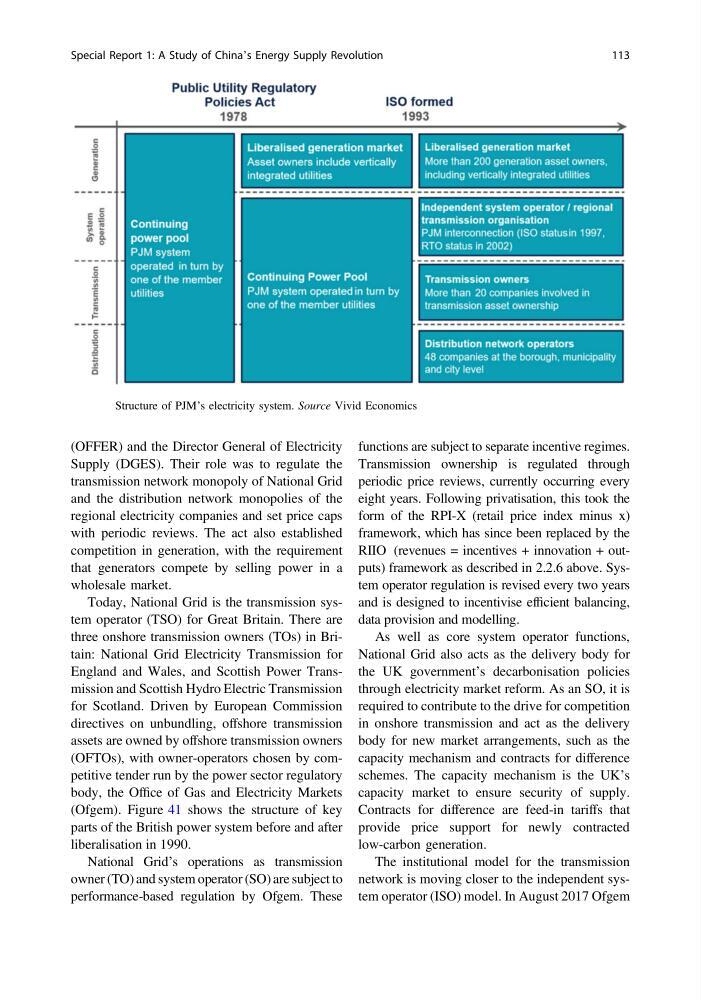
Fig. 40 Structure of PJM’s electricity system. Source Vivid Economics
Special Report 1: A Study of China’s Energy Supply Revolution
113
Supply (DGES). Their role was to regulate the
transmission network monopoly of National Grid
and the distribution network monopolies of the
regional electricity companies and set price caps
with periodic reviews. The act also established
competition in generation, with the requirement
that generators compete by selling power in a
wholesale market.
Today, National Grid is the transmission system operator (TSO) for Great Britain. There are
three onshore transmission owners (TOs) in Britain: National Grid Electricity Transmission for
England and Wales, and Scottish Power Transmission and Scottish Hydro Electric Transmission
for Scotland. Driven by European Commission
directives on unbundling, offshore transmission
assets are owned by offshore transmission owners
(OFTOs), with owner-operators chosen by competitive tender run by the power sector regulatory
body, the Office of Gas and Electricity Markets
(Ofgem). Figure 41 shows the structure of key
parts of the British power system before and after
liberalisation in 1990.
National Grid’s operations as transmission
owner (TO) and system operator (SO) are subject to
performance-based regulation by Ofgem. These
functions are subject to separate incentive regimes.
Transmission ownership is regulated through
periodic price reviews, currently occurring every
eight years. Following privatisation, this took the
form of the RPI-X (retail price index minus x)
framework, which has since been replaced by the
RIIO (revenues = incentives + innovation + outputs) framework as described in 2.2.6 above. System operator regulation is revised every two years
and is designed to incentivise efficient balancing,
data provision and modelling.
As well as core system operator functions,
National Grid also acts as the delivery body for
the UK government’s decarbonisation policies
through electricity market reform. As an SO, it is
required to contribute to the drive for competition
in onshore transmission and act as the delivery
body for new market arrangements, such as the
capacity mechanism and contracts for difference
schemes. The capacity mechanism is the UK’s
capacity market to ensure security of supply.
Contracts for difference are feed-in tariffs that
provide price support for newly contracted
low-carbon generation.
The institutional model for the transmission
network is moving closer to the independent system operator (ISO) model. In August 2017 Ofgem
Fig. 40 Structure of PJM’s electricity system. Source Vivid Economics
Special Report 1: A Study of China’s Energy Supply Revolution
113