

31 Lane Detection Using Image Processing for Driving Assistance
333
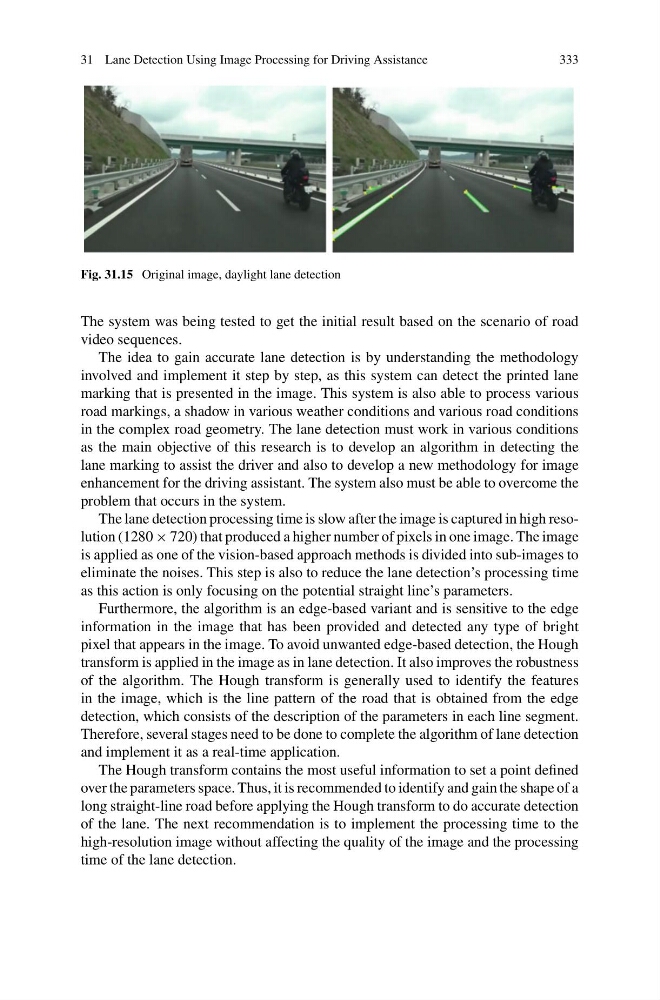
Fig. 31.15 Original image, daylight lane detection
The system was being tested to get the initial result based on the scenario of road
video sequences.
The idea to gain accurate lane detection is by understanding the methodology
involved and implement it step by step, as this system can detect the printed lane
marking that is presented in the image. This system is also able to process various
road markings, a shadow in various weather conditions and various road conditions
in the complex road geometry. The lane detection must work in various conditions
as the main objective of this research is to develop an algorithm in detecting the
lane marking to assist the driver and also to develop a new methodology for image
enhancement for the driving assistant. The system also must be able to overcome the
problem that occurs in the system.
The lane detection processing time is slow after the image is captured in high resolution (1280 × 720) that produced a higher number of pixels in one image. The image
is applied as one of the vision-based approach methods is divided into sub-images to
eliminate the noises. This step is also to reduce the lane detection’s processing time
as this action is only focusing on the potential straight line’s parameters.
Furthermore, the algorithm is an edge-based variant and is sensitive to the edge
information in the image that has been provided and detected any type of bright
pixel that appears in the image. To avoid unwanted edge-based detection, the Hough
transform is applied in the image as in lane detection. It also improves the robustness
of the algorithm. The Hough transform is generally used to identify the features
in the image, which is the line pattern of the road that is obtained from the edge
detection, which consists of the description of the parameters in each line segment.
Therefore, several stages need to be done to complete the algorithm of lane detection
and implement it as a real-time application.
The Hough transform contains the most useful information to set a point defined
over the parameters space. Thus, it is recommended to identify and gain the shape of a
long straight-line road before applying the Hough transform to do accurate detection
of the lane. The next recommendation is to implement the processing time to the
high-resolution image without affecting the quality of the image and the processing
time of the lane detection.
333
Fig. 31.15 Original image, daylight lane detection
The system was being tested to get the initial result based on the scenario of road
video sequences.
The idea to gain accurate lane detection is by understanding the methodology
involved and implement it step by step, as this system can detect the printed lane
marking that is presented in the image. This system is also able to process various
road markings, a shadow in various weather conditions and various road conditions
in the complex road geometry. The lane detection must work in various conditions
as the main objective of this research is to develop an algorithm in detecting the
lane marking to assist the driver and also to develop a new methodology for image
enhancement for the driving assistant. The system also must be able to overcome the
problem that occurs in the system.
The lane detection processing time is slow after the image is captured in high resolution (1280 × 720) that produced a higher number of pixels in one image. The image
is applied as one of the vision-based approach methods is divided into sub-images to
eliminate the noises. This step is also to reduce the lane detection’s processing time
as this action is only focusing on the potential straight line’s parameters.
Furthermore, the algorithm is an edge-based variant and is sensitive to the edge
information in the image that has been provided and detected any type of bright
pixel that appears in the image. To avoid unwanted edge-based detection, the Hough
transform is applied in the image as in lane detection. It also improves the robustness
of the algorithm. The Hough transform is generally used to identify the features
in the image, which is the line pattern of the road that is obtained from the edge
detection, which consists of the description of the parameters in each line segment.
Therefore, several stages need to be done to complete the algorithm of lane detection
and implement it as a real-time application.
The Hough transform contains the most useful information to set a point defined
over the parameters space. Thus, it is recommended to identify and gain the shape of a
long straight-line road before applying the Hough transform to do accurate detection
of the lane. The next recommendation is to implement the processing time to the
high-resolution image without affecting the quality of the image and the processing
time of the lane detection.