

290
M. A. M. Shuhaimi et al.
Fig. 26.2 Fibre laminates
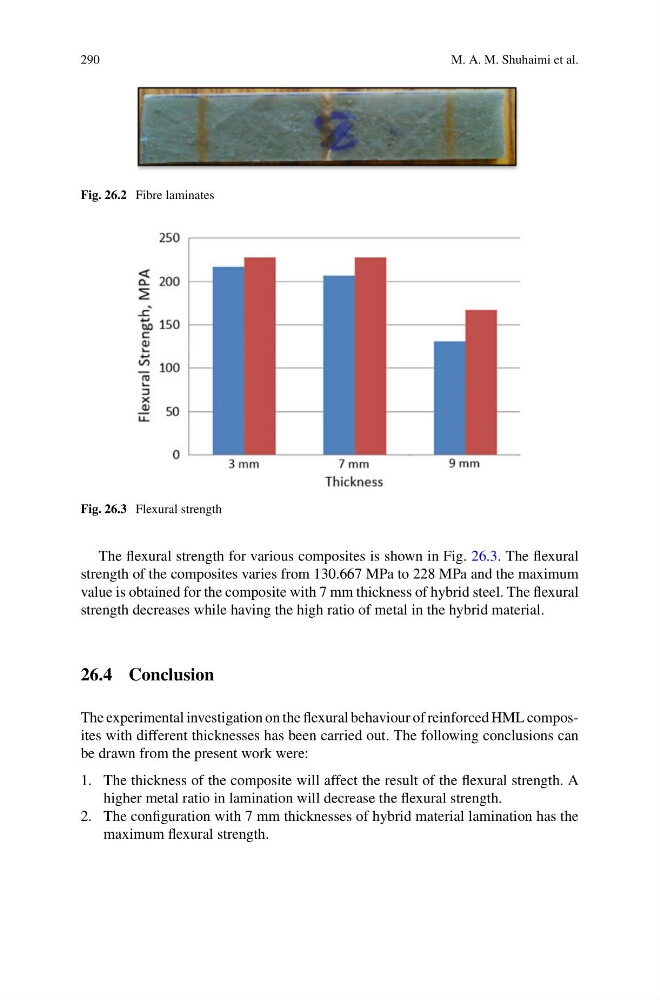
Fig. 26.3 Flexural strength
The flexural strength for various composites is shown in Fig. 26.3. The flexural
strength of the composites varies from 130.667 MPa to 228 MPa and the maximum
value is obtained for the composite with 7 mm thickness of hybrid steel. The flexural
strength decreases while having the high ratio of metal in the hybrid material.
26.4 Conclusion
The experimental investigation on the flexural behaviour of reinforced HML composites with different thicknesses has been carried out. The following conclusions can
be drawn from the present work were:
1. The thickness of the composite will affect the result of the flexural strength. A
higher metal ratio in lamination will decrease the flexural strength.
2. The configuration with 7 mm thicknesses of hybrid material lamination has the
maximum flexural strength.
M. A. M. Shuhaimi et al.
Fig. 26.2 Fibre laminates
Fig. 26.3 Flexural strength
The flexural strength for various composites is shown in Fig. 26.3. The flexural
strength of the composites varies from 130.667 MPa to 228 MPa and the maximum
value is obtained for the composite with 7 mm thickness of hybrid steel. The flexural
strength decreases while having the high ratio of metal in the hybrid material.
26.4 Conclusion
The experimental investigation on the flexural behaviour of reinforced HML composites with different thicknesses has been carried out. The following conclusions can
be drawn from the present work were:
1. The thickness of the composite will affect the result of the flexural strength. A
higher metal ratio in lamination will decrease the flexural strength.
2. The configuration with 7 mm thicknesses of hybrid material lamination has the
maximum flexural strength.