

20 Anti-fouling: Affection and Efficiency
233
75
83
90
98
105
0
1 5
3 0
4 5
6 0
O.P. (%)
Days
COPPER TYPE (JOTUN SEAFORCE 90)
COPPER TYPE (CHUGOKU SEA GRANDPRIX 220 HS)
ZINC TYPE (CHUGOKU SEAFLO NEO CF Z)
SILYL TYPE (INTERSMOOTH 7465Si)
SILYL TYPE (JOTUN SEAMATE M)
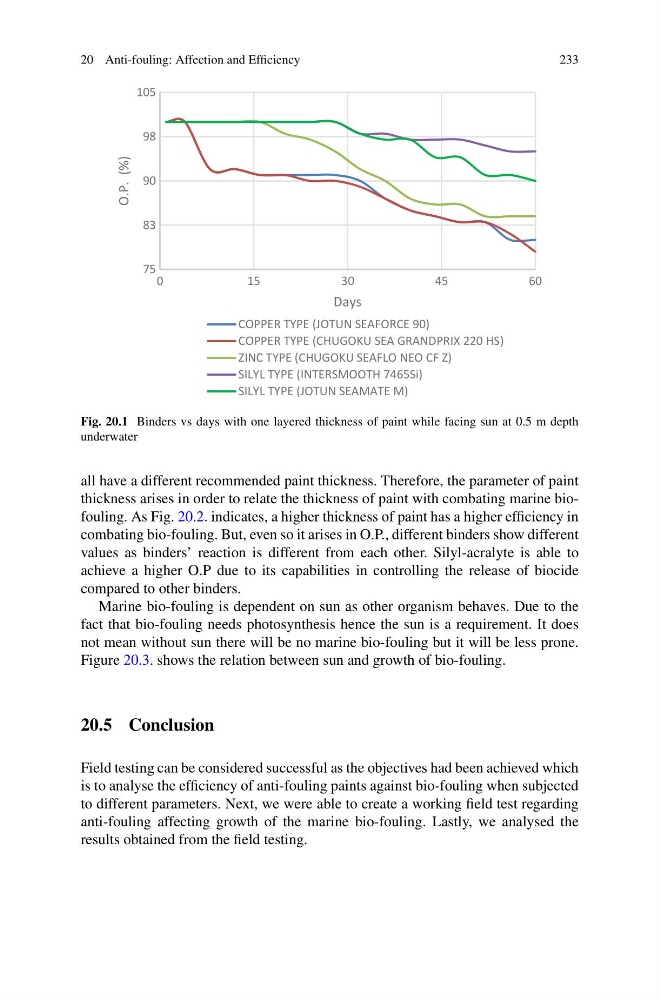
Fig. 20.1 Binders vs days with one layered thickness of paint while facing sun at 0.5 m depth
underwater
all have a different recommended paint thickness. Therefore, the parameter of paint
thickness arises in order to relate the thickness of paint with combating marine biofouling. As Fig. 20.2. indicates, a higher thickness of paint has a higher efficiency in
combating bio-fouling. But, even so it arises in O.P., different binders show different
values as binders’ reaction is different from each other. Silyl-acralyte is able to
achieve a higher O.P due to its capabilities in controlling the release of biocide
compared to other binders.
Marine bio-fouling is dependent on sun as other organism behaves. Due to the
fact that bio-fouling needs photosynthesis hence the sun is a requirement. It does
not mean without sun there will be no marine bio-fouling but it will be less prone.
Figure 20.3. shows the relation between sun and growth of bio-fouling.
20.5 Conclusion
Field testing can be considered successful as the objectives had been achieved which
is to analyse the efficiency of anti-fouling paints against bio-fouling when subjected
to different parameters. Next, we were able to create a working field test regarding
anti-fouling affecting growth of the marine bio-fouling. Lastly, we analysed the
results obtained from the field testing.
233
75
83
90
98
105
0
1 5
3 0
4 5
6 0
O.P. (%)
Days
COPPER TYPE (JOTUN SEAFORCE 90)
COPPER TYPE (CHUGOKU SEA GRANDPRIX 220 HS)
ZINC TYPE (CHUGOKU SEAFLO NEO CF Z)
SILYL TYPE (INTERSMOOTH 7465Si)
SILYL TYPE (JOTUN SEAMATE M)
Fig. 20.1 Binders vs days with one layered thickness of paint while facing sun at 0.5 m depth
underwater
all have a different recommended paint thickness. Therefore, the parameter of paint
thickness arises in order to relate the thickness of paint with combating marine biofouling. As Fig. 20.2. indicates, a higher thickness of paint has a higher efficiency in
combating bio-fouling. But, even so it arises in O.P., different binders show different
values as binders’ reaction is different from each other. Silyl-acralyte is able to
achieve a higher O.P due to its capabilities in controlling the release of biocide
compared to other binders.
Marine bio-fouling is dependent on sun as other organism behaves. Due to the
fact that bio-fouling needs photosynthesis hence the sun is a requirement. It does
not mean without sun there will be no marine bio-fouling but it will be less prone.
Figure 20.3. shows the relation between sun and growth of bio-fouling.
20.5 Conclusion
Field testing can be considered successful as the objectives had been achieved which
is to analyse the efficiency of anti-fouling paints against bio-fouling when subjected
to different parameters. Next, we were able to create a working field test regarding
anti-fouling affecting growth of the marine bio-fouling. Lastly, we analysed the
results obtained from the field testing.