

92
R. Sharma et al.
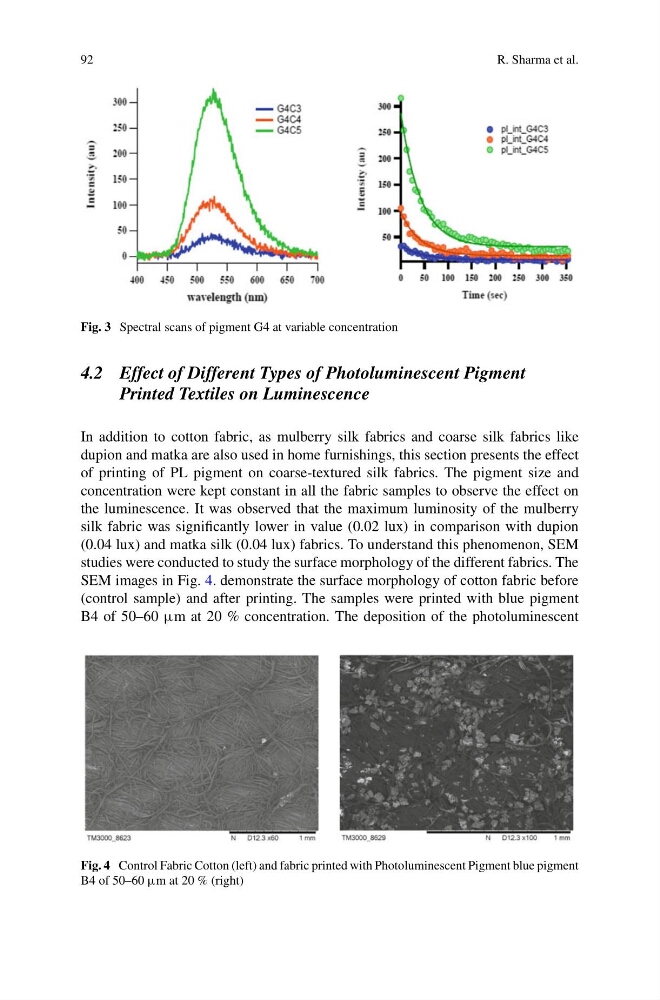
Fig. 3 Spectral scans of pigment G4 at variable concentration
4.2 Effect of Different Types of Photoluminescent Pigment
Printed Textiles on Luminescence
In addition to cotton fabric, as mulberry silk fabrics and coarse silk fabrics like
dupion and matka are also used in home furnishings, this section presents the effect
of printing of PL pigment on coarse-textured silk fabrics. The pigment size and
concentration were kept constant in all the fabric samples to observe the effect on
the luminescence. It was observed that the maximum luminosity of the mulberry
silk fabric was significantly lower in value (0.02 lux) in comparison with dupion
(0.04 lux) and matka silk (0.04 lux) fabrics. To understand this phenomenon, SEM
studies were conducted to study the surface morphology of the different fabrics. The
SEM images in Fig. 4. demonstrate the surface morphology of cotton fabric before
(control sample) and after printing. The samples were printed with blue pigment
B4 of 50–60 μm at 20 % concentration. The deposition of the photoluminescent
Fig. 4 Control Fabric Cotton (left) and fabric printed with Photoluminescent Pigment blue pigment
B4 of 50–60 μm at 20 % (right)
R. Sharma et al.
Fig. 3 Spectral scans of pigment G4 at variable concentration
4.2 Effect of Different Types of Photoluminescent Pigment
Printed Textiles on Luminescence
In addition to cotton fabric, as mulberry silk fabrics and coarse silk fabrics like
dupion and matka are also used in home furnishings, this section presents the effect
of printing of PL pigment on coarse-textured silk fabrics. The pigment size and
concentration were kept constant in all the fabric samples to observe the effect on
the luminescence. It was observed that the maximum luminosity of the mulberry
silk fabric was significantly lower in value (0.02 lux) in comparison with dupion
(0.04 lux) and matka silk (0.04 lux) fabrics. To understand this phenomenon, SEM
studies were conducted to study the surface morphology of the different fabrics. The
SEM images in Fig. 4. demonstrate the surface morphology of cotton fabric before
(control sample) and after printing. The samples were printed with blue pigment
B4 of 50–60 μm at 20 % concentration. The deposition of the photoluminescent
Fig. 4 Control Fabric Cotton (left) and fabric printed with Photoluminescent Pigment blue pigment
B4 of 50–60 μm at 20 % (right)