

Reuse of Cigarette Filters for Energy Applications
163
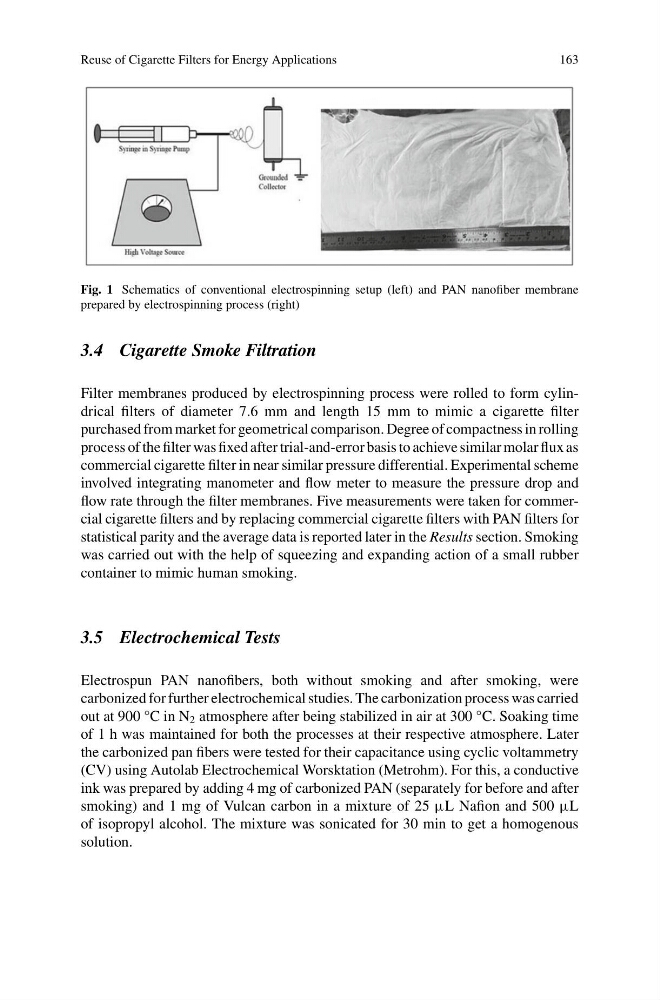
Fig. 1 Schematics of conventional electrospinning setup (left) and PAN nanofiber membrane
prepared by electrospinning process (right)
3.4 Cigarette Smoke Filtration
Filter membranes produced by electrospinning process were rolled to form cylindrical filters of diameter 7.6 mm and length 15 mm to mimic a cigarette filter
purchased from market for geometrical comparison. Degree of compactness in rolling
process of the filter was fixed after trial-and-error basis to achieve similar molar flux as
commercial cigarette filter in near similar pressure differential. Experimental scheme
involved integrating manometer and flow meter to measure the pressure drop and
flow rate through the filter membranes. Five measurements were taken for commercial cigarette filters and by replacing commercial cigarette filters with PAN filters for
statistical parity and the average data is reported later in the Results section. Smoking
was carried out with the help of squeezing and expanding action of a small rubber
container to mimic human smoking.
3.5 Electrochemical Tests
Electrospun PAN nanofibers, both without smoking and after smoking, were
carbonized for further electrochemical studies. The carbonization process was carried
out at 900 °C in N 2 atmosphere after being stabilized in air at 300 °C. Soaking time
of 1 h was maintained for both the processes at their respective atmosphere. Later
the carbonized pan fibers were tested for their capacitance using cyclic voltammetry
(CV) using Autolab Electrochemical Worsktation (Metrohm). For this, a conductive
ink was prepared by adding 4 mg of carbonized PAN (separately for before and after
smoking) and 1 mg of Vulcan carbon in a mixture of 25 µL Nafion and 500 µL
of isopropyl alcohol. The mixture was sonicated for 30 min to get a homogenous
solution.
163
Fig. 1 Schematics of conventional electrospinning setup (left) and PAN nanofiber membrane
prepared by electrospinning process (right)
3.4 Cigarette Smoke Filtration
Filter membranes produced by electrospinning process were rolled to form cylindrical filters of diameter 7.6 mm and length 15 mm to mimic a cigarette filter
purchased from market for geometrical comparison. Degree of compactness in rolling
process of the filter was fixed after trial-and-error basis to achieve similar molar flux as
commercial cigarette filter in near similar pressure differential. Experimental scheme
involved integrating manometer and flow meter to measure the pressure drop and
flow rate through the filter membranes. Five measurements were taken for commercial cigarette filters and by replacing commercial cigarette filters with PAN filters for
statistical parity and the average data is reported later in the Results section. Smoking
was carried out with the help of squeezing and expanding action of a small rubber
container to mimic human smoking.
3.5 Electrochemical Tests
Electrospun PAN nanofibers, both without smoking and after smoking, were
carbonized for further electrochemical studies. The carbonization process was carried
out at 900 °C in N 2 atmosphere after being stabilized in air at 300 °C. Soaking time
of 1 h was maintained for both the processes at their respective atmosphere. Later
the carbonized pan fibers were tested for their capacitance using cyclic voltammetry
(CV) using Autolab Electrochemical Worsktation (Metrohm). For this, a conductive
ink was prepared by adding 4 mg of carbonized PAN (separately for before and after
smoking) and 1 mg of Vulcan carbon in a mixture of 25 µL Nafion and 500 µL
of isopropyl alcohol. The mixture was sonicated for 30 min to get a homogenous
solution.