

106
A. K. Samanta et al.
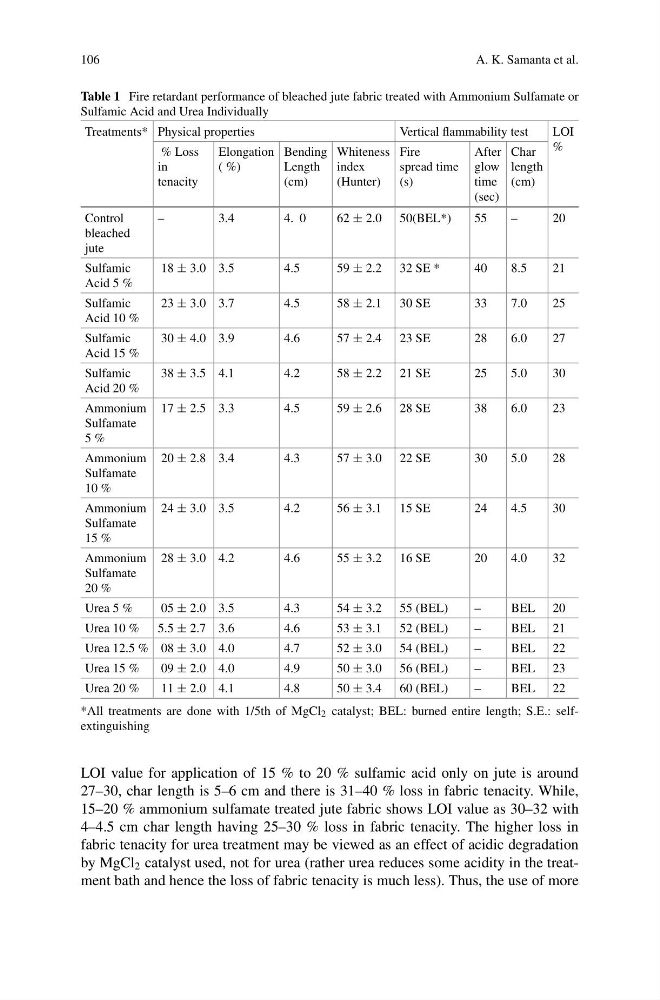
Table 1 Fire retardant performance of bleached jute fabric treated with Ammonium Sulfamate or
Sulfamic Acid and Urea Individually
Treatments* Physical properties
Vertical flammability test
LOI
%
% Loss
in
tenacity
Elongation
( %)
Bending
Length
(cm)
Whiteness
index
(Hunter)
Fire
spread time
(s)
After
glow
time
(sec)
Char
length
(cm)
Control
bleached
jute
–
3.4
4. 0
62 ± 2.0 50(BEL*)
55
–
20
Sulfamic
Acid 5 %
18 ± 3.0 3.5
4.5
59 ± 2.2 32 SE *
40
8.5
21
Sulfamic
Acid 10 %
23 ± 3.0 3.7
4.5
58 ± 2.1 30 SE
33
7.0
25
Sulfamic
Acid 15 %
30 ± 4.0 3.9
4.6
57 ± 2.4 23 SE
28
6.0
27
Sulfamic
Acid 20 %
38 ± 3.5 4.1
4.2
58 ± 2.2 21 SE
25
5.0
30
Ammonium
Sulfamate
5 %
17 ± 2.5 3.3
4.5
59 ± 2.6 28 SE
38
6.0
23
Ammonium
Sulfamate
10 %
20 ± 2.8 3.4
4.3
57 ± 3.0 22 SE
30
5.0
28
Ammonium
Sulfamate
15 %
24 ± 3.0 3.5
4.2
56 ± 3.1 15 SE
24
4.5
30
Ammonium
Sulfamate
20 %
28 ± 3.0 4.2
4.6
55 ± 3.2 16 SE
20
4.0
32
Urea 5 %
05 ± 2.0 3.5
4.3
54 ± 3.2 55 (BEL)
–
BEL 20
Urea 10 % 5.5 ± 2.7 3.6
4.6
53 ± 3.1 52 (BEL)
–
BEL 21
Urea 12.5 % 08 ± 3.0 4.0
4.7
52 ± 3.0 54 (BEL)
–
BEL 22
Urea 15 %
09 ± 2.0 4.0
4.9
50 ± 3.0 56 (BEL)
–
BEL 23
Urea 20 %
11 ± 2.0 4.1
4.8
50 ± 3.4 60 (BEL)
–
BEL 22
*All treatments are done with 1/5th of MgCl 2 catalyst; BEL: burned entire length; S.E.: selfextinguishing
LOI value for application of 15 % to 20 % sulfamic acid only on jute is around
27–30, char length is 5–6 cm and there is 31–40 % loss in fabric tenacity. While,
15–20 % ammonium sulfamate treated jute fabric shows LOI value as 30–32 with
4–4.5 cm char length having 25–30 % loss in fabric tenacity. The higher loss in
fabric tenacity for urea treatment may be viewed as an effect of acidic degradation
by MgCl 2 catalyst used, not for urea (rather urea reduces some acidity in the treatment bath and hence the loss of fabric tenacity is much less). Thus, the use of more
A. K. Samanta et al.
Table 1 Fire retardant performance of bleached jute fabric treated with Ammonium Sulfamate or
Sulfamic Acid and Urea Individually
Treatments* Physical properties
Vertical flammability test
LOI
%
% Loss
in
tenacity
Elongation
( %)
Bending
Length
(cm)
Whiteness
index
(Hunter)
Fire
spread time
(s)
After
glow
time
(sec)
Char
length
(cm)
Control
bleached
jute
–
3.4
4. 0
62 ± 2.0 50(BEL*)
55
–
20
Sulfamic
Acid 5 %
18 ± 3.0 3.5
4.5
59 ± 2.2 32 SE *
40
8.5
21
Sulfamic
Acid 10 %
23 ± 3.0 3.7
4.5
58 ± 2.1 30 SE
33
7.0
25
Sulfamic
Acid 15 %
30 ± 4.0 3.9
4.6
57 ± 2.4 23 SE
28
6.0
27
Sulfamic
Acid 20 %
38 ± 3.5 4.1
4.2
58 ± 2.2 21 SE
25
5.0
30
Ammonium
Sulfamate
5 %
17 ± 2.5 3.3
4.5
59 ± 2.6 28 SE
38
6.0
23
Ammonium
Sulfamate
10 %
20 ± 2.8 3.4
4.3
57 ± 3.0 22 SE
30
5.0
28
Ammonium
Sulfamate
15 %
24 ± 3.0 3.5
4.2
56 ± 3.1 15 SE
24
4.5
30
Ammonium
Sulfamate
20 %
28 ± 3.0 4.2
4.6
55 ± 3.2 16 SE
20
4.0
32
Urea 5 %
05 ± 2.0 3.5
4.3
54 ± 3.2 55 (BEL)
–
BEL 20
Urea 10 % 5.5 ± 2.7 3.6
4.6
53 ± 3.1 52 (BEL)
–
BEL 21
Urea 12.5 % 08 ± 3.0 4.0
4.7
52 ± 3.0 54 (BEL)
–
BEL 22
Urea 15 %
09 ± 2.0 4.0
4.9
50 ± 3.0 56 (BEL)
–
BEL 23
Urea 20 %
11 ± 2.0 4.1
4.8
50 ± 3.4 60 (BEL)
–
BEL 22
*All treatments are done with 1/5th of MgCl 2 catalyst; BEL: burned entire length; S.E.: selfextinguishing
LOI value for application of 15 % to 20 % sulfamic acid only on jute is around
27–30, char length is 5–6 cm and there is 31–40 % loss in fabric tenacity. While,
15–20 % ammonium sulfamate treated jute fabric shows LOI value as 30–32 with
4–4.5 cm char length having 25–30 % loss in fabric tenacity. The higher loss in
fabric tenacity for urea treatment may be viewed as an effect of acidic degradation
by MgCl 2 catalyst used, not for urea (rather urea reduces some acidity in the treatment bath and hence the loss of fabric tenacity is much less). Thus, the use of more