

136
V. Kirubakaran and D. S. Bhatt
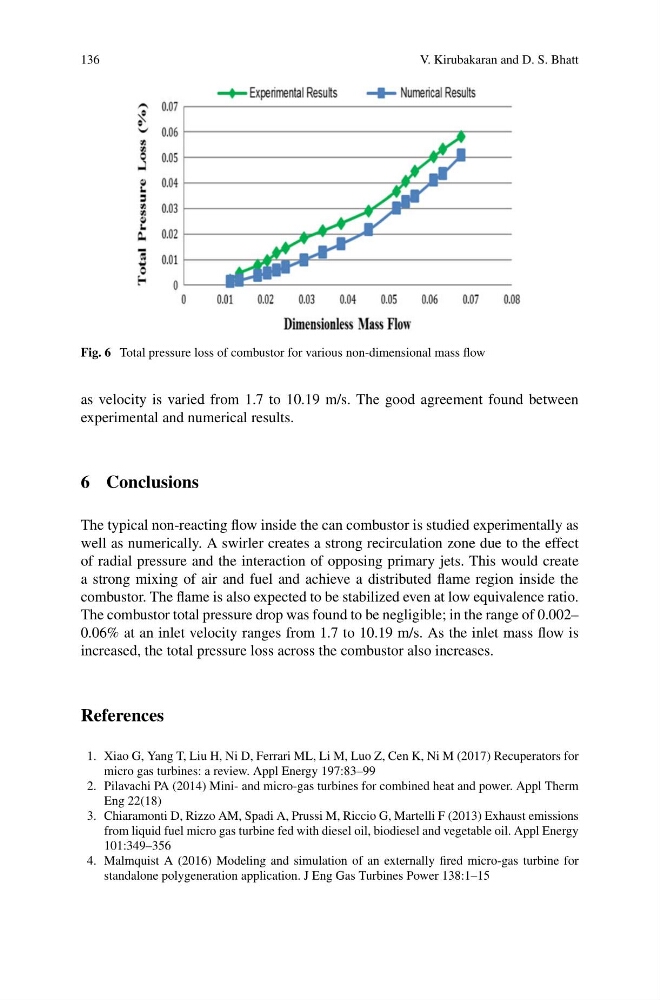
Fig. 6 Total pressure loss of combustor for various non-dimensional mass flow
as velocity is varied from 1.7 to 10.19 m/s. The good agreement found between
experimental and numerical results.
6 Conclusions
The typical non-reacting flow inside the can combustor is studied experimentally as
well as numerically. A swirler creates a strong recirculation zone due to the effect
of radial pressure and the interaction of opposing primary jets. This would create
a strong mixing of air and fuel and achieve a distributed flame region inside the
combustor. The flame is also expected to be stabilized even at low equivalence ratio.
The combustor total pressure drop was found to be negligible; in the range of 0.002–
0.06% at an inlet velocity ranges from 1.7 to 10.19 m/s. As the inlet mass flow is
increased, the total pressure loss across the combustor also increases.
References
1. Xiao G, Yang T, Liu H, Ni D, Ferrari ML, Li M, Luo Z, Cen K, Ni M (2017) Recuperators for
micro gas turbines: a review. Appl Energy 197:83–99
2. Pilavachi PA (2014) Mini- and micro-gas turbines for combined heat and power. Appl Therm
Eng 22(18)
3. Chiaramonti D, Rizzo AM, Spadi A, Prussi M, Riccio G, Martelli F (2013) Exhaust emissions
from liquid fuel micro gas turbine fed with diesel oil, biodiesel and vegetable oil. Appl Energy
101:349–356
4. Malmquist A (2016) Modeling and simulation of an externally fired micro-gas turbine for
standalone polygeneration application. J Eng Gas Turbines Power 138:1–15
V. Kirubakaran and D. S. Bhatt
Fig. 6 Total pressure loss of combustor for various non-dimensional mass flow
as velocity is varied from 1.7 to 10.19 m/s. The good agreement found between
experimental and numerical results.
6 Conclusions
The typical non-reacting flow inside the can combustor is studied experimentally as
well as numerically. A swirler creates a strong recirculation zone due to the effect
of radial pressure and the interaction of opposing primary jets. This would create
a strong mixing of air and fuel and achieve a distributed flame region inside the
combustor. The flame is also expected to be stabilized even at low equivalence ratio.
The combustor total pressure drop was found to be negligible; in the range of 0.002–
0.06% at an inlet velocity ranges from 1.7 to 10.19 m/s. As the inlet mass flow is
increased, the total pressure loss across the combustor also increases.
References
1. Xiao G, Yang T, Liu H, Ni D, Ferrari ML, Li M, Luo Z, Cen K, Ni M (2017) Recuperators for
micro gas turbines: a review. Appl Energy 197:83–99
2. Pilavachi PA (2014) Mini- and micro-gas turbines for combined heat and power. Appl Therm
Eng 22(18)
3. Chiaramonti D, Rizzo AM, Spadi A, Prussi M, Riccio G, Martelli F (2013) Exhaust emissions
from liquid fuel micro gas turbine fed with diesel oil, biodiesel and vegetable oil. Appl Energy
101:349–356
4. Malmquist A (2016) Modeling and simulation of an externally fired micro-gas turbine for
standalone polygeneration application. J Eng Gas Turbines Power 138:1–15