

108
P. L. Rupesh and Arulprakasajothi
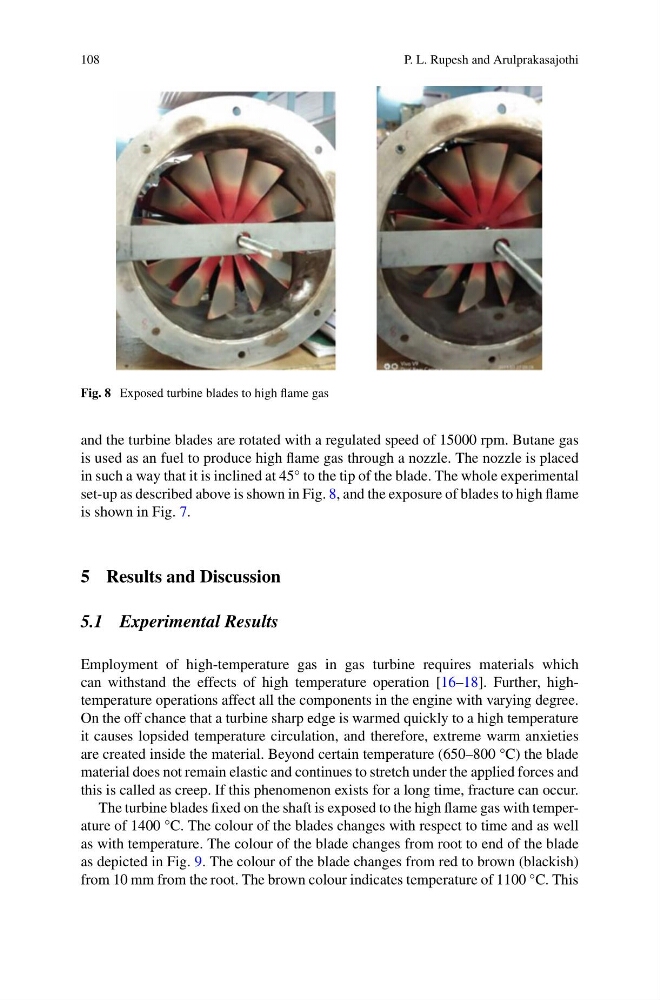
Fig. 8 Exposed turbine blades to high flame gas
and the turbine blades are rotated with a regulated speed of 15000 rpm. Butane gas
is used as an fuel to produce high flame gas through a nozzle. The nozzle is placed
in such a way that it is inclined at 45° to the tip of the blade. The whole experimental
set-up as described above is shown in Fig. 8, and the exposure of blades to high flame
is shown in Fig. 7.
5 Results and Discussion
5.1 Experimental Results
Employment of high-temperature gas in gas turbine requires materials which
can withstand the effects of high temperature operation [16–18]. Further, hightemperature operations affect all the components in the engine with varying degree.
On the off chance that a turbine sharp edge is warmed quickly to a high temperature
it causes lopsided temperature circulation, and therefore, extreme warm anxieties
are created inside the material. Beyond certain temperature (650–800 °C) the blade
material does not remain elastic and continues to stretch under the applied forces and
this is called as creep. If this phenomenon exists for a long time, fracture can occur.
The turbine blades fixed on the shaft is exposed to the high flame gas with temperature of 1400 °C. The colour of the blades changes with respect to time and as well
as with temperature. The colour of the blade changes from root to end of the blade
as depicted in Fig. 9. The colour of the blade changes from red to brown (blackish)
from 10 mm from the root. The brown colour indicates temperature of 1100 °C. This
P. L. Rupesh and Arulprakasajothi
Fig. 8 Exposed turbine blades to high flame gas
and the turbine blades are rotated with a regulated speed of 15000 rpm. Butane gas
is used as an fuel to produce high flame gas through a nozzle. The nozzle is placed
in such a way that it is inclined at 45° to the tip of the blade. The whole experimental
set-up as described above is shown in Fig. 8, and the exposure of blades to high flame
is shown in Fig. 7.
5 Results and Discussion
5.1 Experimental Results
Employment of high-temperature gas in gas turbine requires materials which
can withstand the effects of high temperature operation [16–18]. Further, hightemperature operations affect all the components in the engine with varying degree.
On the off chance that a turbine sharp edge is warmed quickly to a high temperature
it causes lopsided temperature circulation, and therefore, extreme warm anxieties
are created inside the material. Beyond certain temperature (650–800 °C) the blade
material does not remain elastic and continues to stretch under the applied forces and
this is called as creep. If this phenomenon exists for a long time, fracture can occur.
The turbine blades fixed on the shaft is exposed to the high flame gas with temperature of 1400 °C. The colour of the blades changes with respect to time and as well
as with temperature. The colour of the blade changes from root to end of the blade
as depicted in Fig. 9. The colour of the blade changes from red to brown (blackish)
from 10 mm from the root. The brown colour indicates temperature of 1100 °C. This