

72
3 Advanced Technologies (Biological and Thermochemical) …
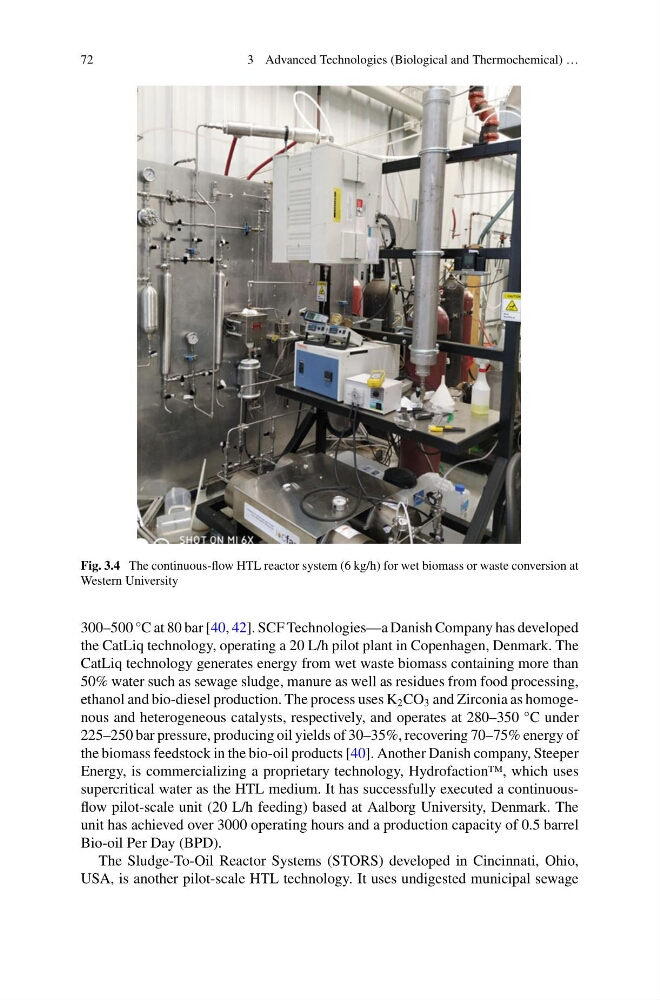
Fig. 3.4 The continuous-flow HTL reactor system (6 kg/h) for wet biomass or waste conversion at
Western University
300–500 °C at 80 bar [40, 42]. SCF Technologies—a Danish Company has developed
the CatLiq technology, operating a 20 L/h pilot plant in Copenhagen, Denmark. The
CatLiq technology generates energy from wet waste biomass containing more than
50% water such as sewage sludge, manure as well as residues from food processing,
ethanol and bio-diesel production. The process uses K 2 CO 3 and Zirconia as homogenous and heterogeneous catalysts, respectively, and operates at 280–350 °C under
225–250 bar pressure, producing oil yields of 30–35%, recovering 70–75% energy of
the biomass feedstock in the bio-oil products [40]. Another Danish company, Steeper
Energy, is commercializing a proprietary technology, Hydrofaction™, which uses
supercritical water as the HTL medium. It has successfully executed a continuousflow pilot-scale unit (20 L/h feeding) based at Aalborg University, Denmark. The
unit has achieved over 3000 operating hours and a production capacity of 0.5 barrel
Bio-oil Per Day (BPD).
The Sludge-To-Oil Reactor Systems (STORS) developed in Cincinnati, Ohio,
USA, is another pilot-scale HTL technology. It uses undigested municipal sewage
3 Advanced Technologies (Biological and Thermochemical) …
Fig. 3.4 The continuous-flow HTL reactor system (6 kg/h) for wet biomass or waste conversion at
Western University
300–500 °C at 80 bar [40, 42]. SCF Technologies—a Danish Company has developed
the CatLiq technology, operating a 20 L/h pilot plant in Copenhagen, Denmark. The
CatLiq technology generates energy from wet waste biomass containing more than
50% water such as sewage sludge, manure as well as residues from food processing,
ethanol and bio-diesel production. The process uses K 2 CO 3 and Zirconia as homogenous and heterogeneous catalysts, respectively, and operates at 280–350 °C under
225–250 bar pressure, producing oil yields of 30–35%, recovering 70–75% energy of
the biomass feedstock in the bio-oil products [40]. Another Danish company, Steeper
Energy, is commercializing a proprietary technology, Hydrofaction™, which uses
supercritical water as the HTL medium. It has successfully executed a continuousflow pilot-scale unit (20 L/h feeding) based at Aalborg University, Denmark. The
unit has achieved over 3000 operating hours and a production capacity of 0.5 barrel
Bio-oil Per Day (BPD).
The Sludge-To-Oil Reactor Systems (STORS) developed in Cincinnati, Ohio,
USA, is another pilot-scale HTL technology. It uses undigested municipal sewage