

2.2 Conventional Approaches for Non-hazardous Solid Waste Disposal
33
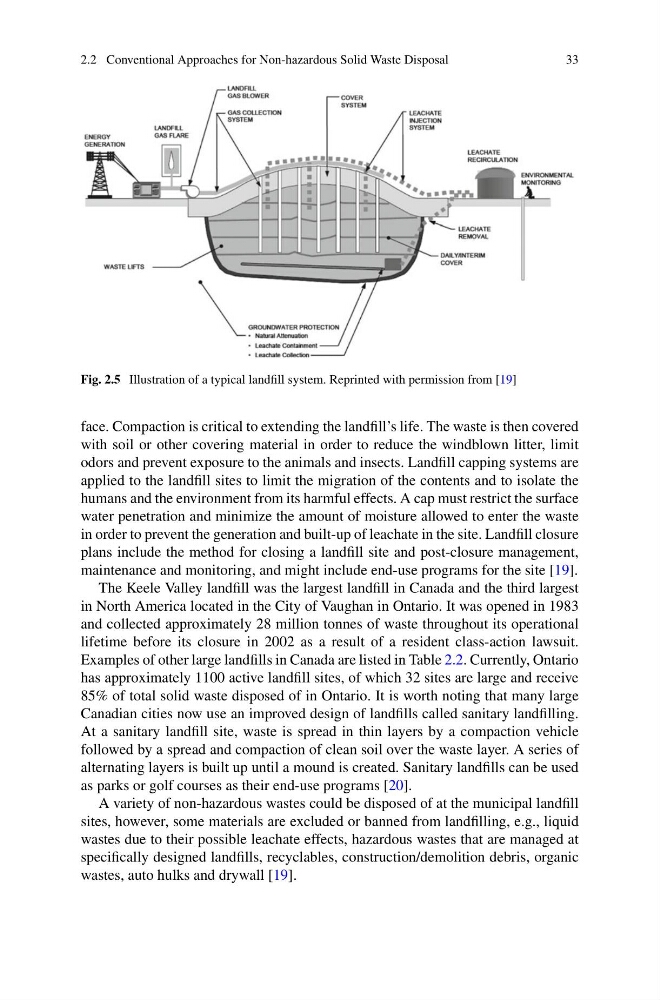
Fig. 2.5 Illustration of a typical landfill system. Reprinted with permission from [19]
face. Compaction is critical to extending the landfill’s life. The waste is then covered
with soil or other covering material in order to reduce the windblown litter, limit
odors and prevent exposure to the animals and insects. Landfill capping systems are
applied to the landfill sites to limit the migration of the contents and to isolate the
humans and the environment from its harmful effects. A cap must restrict the surface
water penetration and minimize the amount of moisture allowed to enter the waste
in order to prevent the generation and built-up of leachate in the site. Landfill closure
plans include the method for closing a landfill site and post-closure management,
maintenance and monitoring, and might include end-use programs for the site [19].
The Keele Valley landfill was the largest landfill in Canada and the third largest
in North America located in the City of Vaughan in Ontario. It was opened in 1983
and collected approximately 28 million tonnes of waste throughout its operational
lifetime before its closure in 2002 as a result of a resident class-action lawsuit.
Examples of other large landfills in Canada are listed in Table 2.2. Currently, Ontario
has approximately 1100 active landfill sites, of which 32 sites are large and receive
85% of total solid waste disposed of in Ontario. It is worth noting that many large
Canadian cities now use an improved design of landfills called sanitary landfilling.
At a sanitary landfill site, waste is spread in thin layers by a compaction vehicle
followed by a spread and compaction of clean soil over the waste layer. A series of
alternating layers is built up until a mound is created. Sanitary landfills can be used
as parks or golf courses as their end-use programs [20].
A variety of non-hazardous wastes could be disposed of at the municipal landfill
sites, however, some materials are excluded or banned from landfilling, e.g., liquid
wastes due to their possible leachate effects, hazardous wastes that are managed at
specifically designed landfills, recyclables, construction/demolition debris, organic
wastes, auto hulks and drywall [19].
33
Fig. 2.5 Illustration of a typical landfill system. Reprinted with permission from [19]
face. Compaction is critical to extending the landfill’s life. The waste is then covered
with soil or other covering material in order to reduce the windblown litter, limit
odors and prevent exposure to the animals and insects. Landfill capping systems are
applied to the landfill sites to limit the migration of the contents and to isolate the
humans and the environment from its harmful effects. A cap must restrict the surface
water penetration and minimize the amount of moisture allowed to enter the waste
in order to prevent the generation and built-up of leachate in the site. Landfill closure
plans include the method for closing a landfill site and post-closure management,
maintenance and monitoring, and might include end-use programs for the site [19].
The Keele Valley landfill was the largest landfill in Canada and the third largest
in North America located in the City of Vaughan in Ontario. It was opened in 1983
and collected approximately 28 million tonnes of waste throughout its operational
lifetime before its closure in 2002 as a result of a resident class-action lawsuit.
Examples of other large landfills in Canada are listed in Table 2.2. Currently, Ontario
has approximately 1100 active landfill sites, of which 32 sites are large and receive
85% of total solid waste disposed of in Ontario. It is worth noting that many large
Canadian cities now use an improved design of landfills called sanitary landfilling.
At a sanitary landfill site, waste is spread in thin layers by a compaction vehicle
followed by a spread and compaction of clean soil over the waste layer. A series of
alternating layers is built up until a mound is created. Sanitary landfills can be used
as parks or golf courses as their end-use programs [20].
A variety of non-hazardous wastes could be disposed of at the municipal landfill
sites, however, some materials are excluded or banned from landfilling, e.g., liquid
wastes due to their possible leachate effects, hazardous wastes that are managed at
specifically designed landfills, recyclables, construction/demolition debris, organic
wastes, auto hulks and drywall [19].