

192
7 Resource Utilization of Agricultural/Forestry Residues …
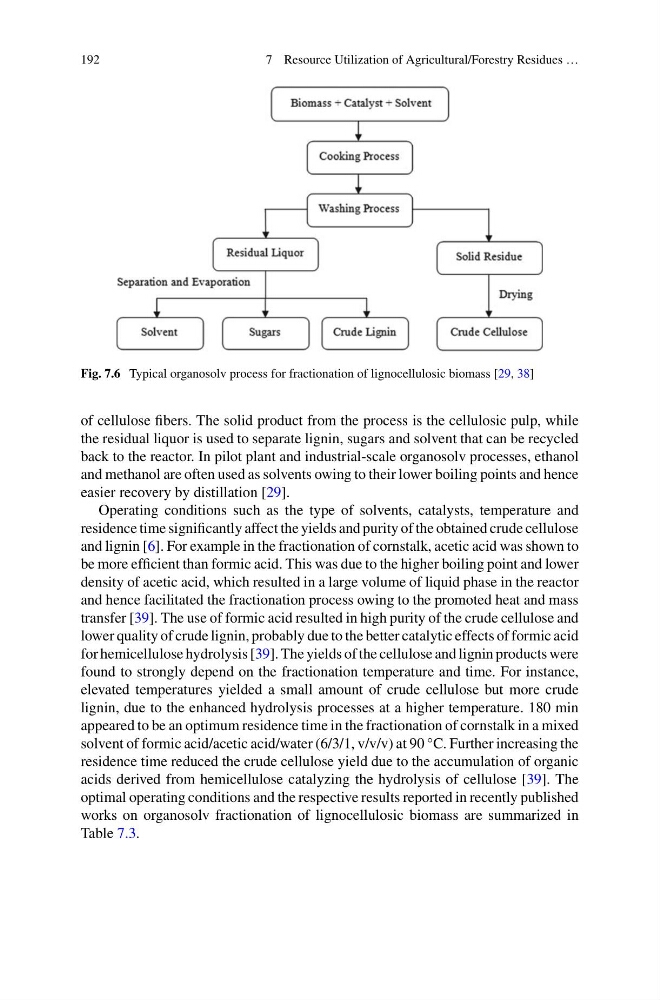
Fig. 7.6 Typical organosolv process for fractionation of lignocellulosic biomass [29, 38]
of cellulose fibers. The solid product from the process is the cellulosic pulp, while
the residual liquor is used to separate lignin, sugars and solvent that can be recycled
back to the reactor. In pilot plant and industrial-scale organosolv processes, ethanol
and methanol are often used as solvents owing to their lower boiling points and hence
easier recovery by distillation [29].
Operating conditions such as the type of solvents, catalysts, temperature and
residence time significantly affect the yields and purity of the obtained crude cellulose
and lignin [6]. For example in the fractionation of cornstalk, acetic acid was shown to
be more efficient than formic acid. This was due to the higher boiling point and lower
density of acetic acid, which resulted in a large volume of liquid phase in the reactor
and hence facilitated the fractionation process owing to the promoted heat and mass
transfer [39]. The use of formic acid resulted in high purity of the crude cellulose and
lower quality of crude lignin, probably due to the better catalytic effects of formic acid
for hemicellulose hydrolysis [39]. The yields of the cellulose and lignin products were
found to strongly depend on the fractionation temperature and time. For instance,
elevated temperatures yielded a small amount of crude cellulose but more crude
lignin, due to the enhanced hydrolysis processes at a higher temperature. 180 min
appeared to be an optimum residence time in the fractionation of cornstalk in a mixed
solvent of formic acid/acetic acid/water (6/3/1, v/v/v) at 90 °C. Further increasing the
residence time reduced the crude cellulose yield due to the accumulation of organic
acids derived from hemicellulose catalyzing the hydrolysis of cellulose [39]. The
optimal operating conditions and the respective results reported in recently published
works on organosolv fractionation of lignocellulosic biomass are summarized in
Table 7.3.
7 Resource Utilization of Agricultural/Forestry Residues …
Fig. 7.6 Typical organosolv process for fractionation of lignocellulosic biomass [29, 38]
of cellulose fibers. The solid product from the process is the cellulosic pulp, while
the residual liquor is used to separate lignin, sugars and solvent that can be recycled
back to the reactor. In pilot plant and industrial-scale organosolv processes, ethanol
and methanol are often used as solvents owing to their lower boiling points and hence
easier recovery by distillation [29].
Operating conditions such as the type of solvents, catalysts, temperature and
residence time significantly affect the yields and purity of the obtained crude cellulose
and lignin [6]. For example in the fractionation of cornstalk, acetic acid was shown to
be more efficient than formic acid. This was due to the higher boiling point and lower
density of acetic acid, which resulted in a large volume of liquid phase in the reactor
and hence facilitated the fractionation process owing to the promoted heat and mass
transfer [39]. The use of formic acid resulted in high purity of the crude cellulose and
lower quality of crude lignin, probably due to the better catalytic effects of formic acid
for hemicellulose hydrolysis [39]. The yields of the cellulose and lignin products were
found to strongly depend on the fractionation temperature and time. For instance,
elevated temperatures yielded a small amount of crude cellulose but more crude
lignin, due to the enhanced hydrolysis processes at a higher temperature. 180 min
appeared to be an optimum residence time in the fractionation of cornstalk in a mixed
solvent of formic acid/acetic acid/water (6/3/1, v/v/v) at 90 °C. Further increasing the
residence time reduced the crude cellulose yield due to the accumulation of organic
acids derived from hemicellulose catalyzing the hydrolysis of cellulose [39]. The
optimal operating conditions and the respective results reported in recently published
works on organosolv fractionation of lignocellulosic biomass are summarized in
Table 7.3.