

7.2 Pre-treatments of Lignocellulosic Biomass
183
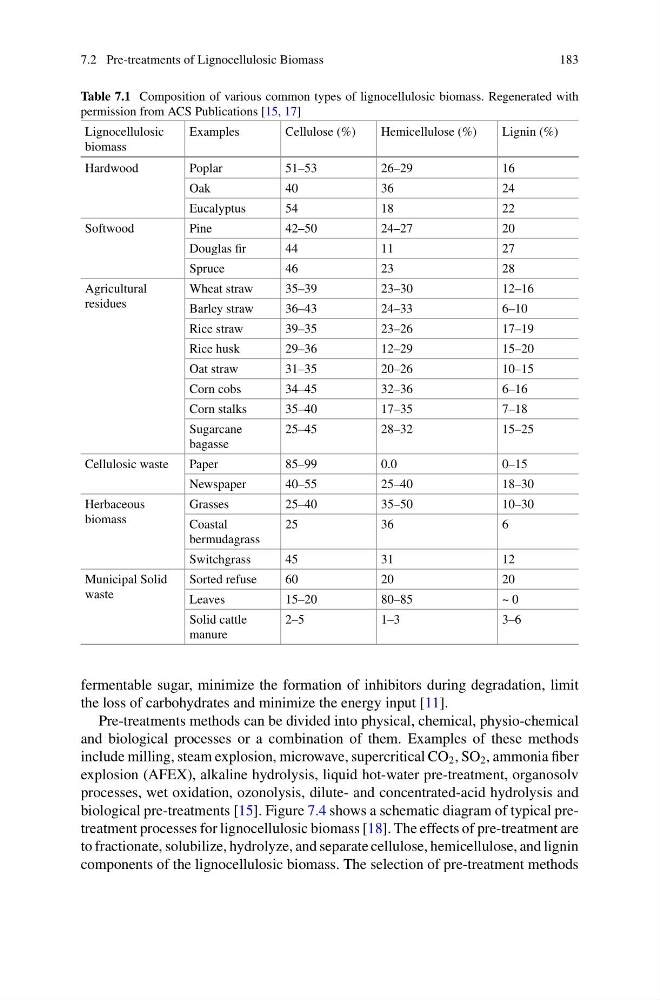
Table 7.1 Composition of various common types of lignocellulosic biomass. Regenerated with
permission from ACS Publications [15, 17]
Lignocellulosic
biomass
Examples
Cellulose (%)
Hemicellulose (%)
Lignin (%)
Hardwood
Poplar
51–53
26–29
16
Oak
40
36
24
Eucalyptus
54
18
22
Softwood
Pine
42–50
24–27
20
Douglas fir
44
11
27
Spruce
46
23
28
Agricultural
residues
Wheat straw
35–39
23–30
12–16
Barley straw
36–43
24–33
6–10
Rice straw
39–35
23–26
17–19
Rice husk
29–36
12–29
15–20
Oat straw
31–35
20–26
10–15
Corn cobs
34–45
32–36
6–16
Corn stalks
35–40
17–35
7–18
Sugarcane
bagasse
25–45
28–32
15–25
Cellulosic waste
Paper
85–99
0.0
0–15
Newspaper
40–55
25–40
18–30
Herbaceous
biomass
Grasses
25–40
35–50
10–30
Coastal
bermudagrass
25
36
6
Switchgrass
45
31
12
Municipal Solid
waste
Sorted refuse
60
20
20
Leaves
15–20
80–85
~ 0
Solid cattle
manure
2–5
1–3
3–6
fermentable sugar, minimize the formation of inhibitors during degradation, limit
the loss of carbohydrates and minimize the energy input [11].
Pre-treatments methods can be divided into physical, chemical, physio-chemical
and biological processes or a combination of them. Examples of these methods
include milling, steam explosion, microwave, supercritical CO 2 , SO 2 , ammonia fiber
explosion (AFEX), alkaline hydrolysis, liquid hot-water pre-treatment, organosolv
processes, wet oxidation, ozonolysis, dilute- and concentrated-acid hydrolysis and
biological pre-treatments [15]. Figure 7.4 shows a schematic diagram of typical pretreatment processes for lignocellulosic biomass [18]. The effects of pre-treatment are
to fractionate, solubilize, hydrolyze, and separate cellulose, hemicellulose, and lignin
components of the lignocellulosic biomass. The selection of pre-treatment methods
183
Table 7.1 Composition of various common types of lignocellulosic biomass. Regenerated with
permission from ACS Publications [15, 17]
Lignocellulosic
biomass
Examples
Cellulose (%)
Hemicellulose (%)
Lignin (%)
Hardwood
Poplar
51–53
26–29
16
Oak
40
36
24
Eucalyptus
54
18
22
Softwood
Pine
42–50
24–27
20
Douglas fir
44
11
27
Spruce
46
23
28
Agricultural
residues
Wheat straw
35–39
23–30
12–16
Barley straw
36–43
24–33
6–10
Rice straw
39–35
23–26
17–19
Rice husk
29–36
12–29
15–20
Oat straw
31–35
20–26
10–15
Corn cobs
34–45
32–36
6–16
Corn stalks
35–40
17–35
7–18
Sugarcane
bagasse
25–45
28–32
15–25
Cellulosic waste
Paper
85–99
0.0
0–15
Newspaper
40–55
25–40
18–30
Herbaceous
biomass
Grasses
25–40
35–50
10–30
Coastal
bermudagrass
25
36
6
Switchgrass
45
31
12
Municipal Solid
waste
Sorted refuse
60
20
20
Leaves
15–20
80–85
~ 0
Solid cattle
manure
2–5
1–3
3–6
fermentable sugar, minimize the formation of inhibitors during degradation, limit
the loss of carbohydrates and minimize the energy input [11].
Pre-treatments methods can be divided into physical, chemical, physio-chemical
and biological processes or a combination of them. Examples of these methods
include milling, steam explosion, microwave, supercritical CO 2 , SO 2 , ammonia fiber
explosion (AFEX), alkaline hydrolysis, liquid hot-water pre-treatment, organosolv
processes, wet oxidation, ozonolysis, dilute- and concentrated-acid hydrolysis and
biological pre-treatments [15]. Figure 7.4 shows a schematic diagram of typical pretreatment processes for lignocellulosic biomass [18]. The effects of pre-treatment are
to fractionate, solubilize, hydrolyze, and separate cellulose, hemicellulose, and lignin
components of the lignocellulosic biomass. The selection of pre-treatment methods