

5.8 Metallurgical Methods for Metals Recovery
151
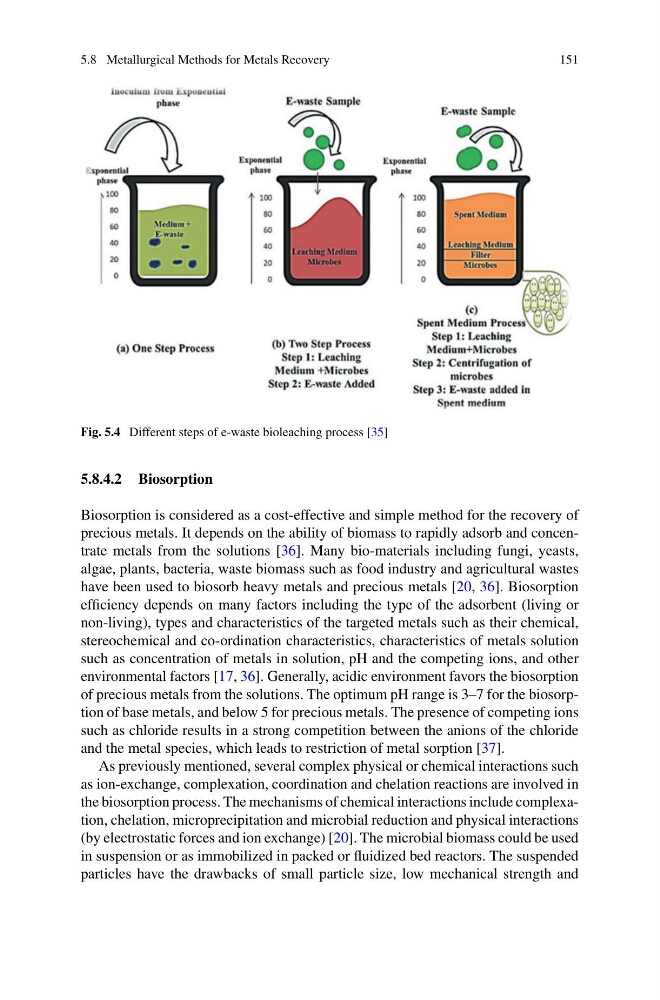
Fig. 5.4 Different steps of e-waste bioleaching process [35]
5.8.4.2 Biosorption
Biosorption is considered as a cost-effective and simple method for the recovery of
precious metals. It depends on the ability of biomass to rapidly adsorb and concentrate metals from the solutions [36]. Many bio-materials including fungi, yeasts,
algae, plants, bacteria, waste biomass such as food industry and agricultural wastes
have been used to biosorb heavy metals and precious metals [20, 36]. Biosorption
efficiency depends on many factors including the type of the adsorbent (living or
non-living), types and characteristics of the targeted metals such as their chemical,
stereochemical and co-ordination characteristics, characteristics of metals solution
such as concentration of metals in solution, pH and the competing ions, and other
environmental factors [17, 36]. Generally, acidic environment favors the biosorption
of precious metals from the solutions. The optimum pH range is 3–7 for the biosorption of base metals, and below 5 for precious metals. The presence of competing ions
such as chloride results in a strong competition between the anions of the chloride
and the metal species, which leads to restriction of metal sorption [37].
As previously mentioned, several complex physical or chemical interactions such
as ion-exchange, complexation, coordination and chelation reactions are involved in
the biosorption process. The mechanisms of chemical interactions include complexation, chelation, microprecipitation and microbial reduction and physical interactions
(by electrostatic forces and ion exchange) [20]. The microbial biomass could be used
in suspension or as immobilized in packed or fluidized bed reactors. The suspended
particles have the drawbacks of small particle size, low mechanical strength and
151
Fig. 5.4 Different steps of e-waste bioleaching process [35]
5.8.4.2 Biosorption
Biosorption is considered as a cost-effective and simple method for the recovery of
precious metals. It depends on the ability of biomass to rapidly adsorb and concentrate metals from the solutions [36]. Many bio-materials including fungi, yeasts,
algae, plants, bacteria, waste biomass such as food industry and agricultural wastes
have been used to biosorb heavy metals and precious metals [20, 36]. Biosorption
efficiency depends on many factors including the type of the adsorbent (living or
non-living), types and characteristics of the targeted metals such as their chemical,
stereochemical and co-ordination characteristics, characteristics of metals solution
such as concentration of metals in solution, pH and the competing ions, and other
environmental factors [17, 36]. Generally, acidic environment favors the biosorption
of precious metals from the solutions. The optimum pH range is 3–7 for the biosorption of base metals, and below 5 for precious metals. The presence of competing ions
such as chloride results in a strong competition between the anions of the chloride
and the metal species, which leads to restriction of metal sorption [37].
As previously mentioned, several complex physical or chemical interactions such
as ion-exchange, complexation, coordination and chelation reactions are involved in
the biosorption process. The mechanisms of chemical interactions include complexation, chelation, microprecipitation and microbial reduction and physical interactions
(by electrostatic forces and ion exchange) [20]. The microbial biomass could be used
in suspension or as immobilized in packed or fluidized bed reactors. The suspended
particles have the drawbacks of small particle size, low mechanical strength and