

4.3 Nutrient Removal/Recovery from Wastewater
115
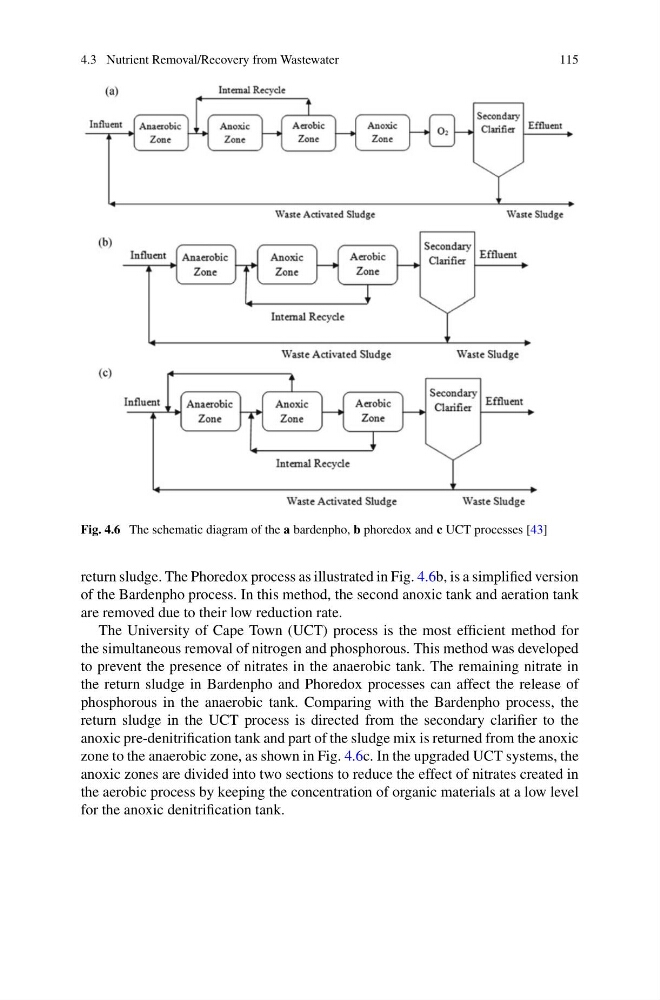
Fig. 4.6 The schematic diagram of the a bardenpho, b phoredox and c UCT processes [43]
return sludge. The Phoredox process as illustrated in Fig. 4.6b, is a simplified version
of the Bardenpho process. In this method, the second anoxic tank and aeration tank
are removed due to their low reduction rate.
The University of Cape Town (UCT) process is the most efficient method for
the simultaneous removal of nitrogen and phosphorous. This method was developed
to prevent the presence of nitrates in the anaerobic tank. The remaining nitrate in
the return sludge in Bardenpho and Phoredox processes can affect the release of
phosphorous in the anaerobic tank. Comparing with the Bardenpho process, the
return sludge in the UCT process is directed from the secondary clarifier to the
anoxic pre-denitrification tank and part of the sludge mix is returned from the anoxic
zone to the anaerobic zone, as shown in Fig. 4.6c. In the upgraded UCT systems, the
anoxic zones are divided into two sections to reduce the effect of nitrates created in
the aerobic process by keeping the concentration of organic materials at a low level
for the anoxic denitrification tank.
115
Fig. 4.6 The schematic diagram of the a bardenpho, b phoredox and c UCT processes [43]
return sludge. The Phoredox process as illustrated in Fig. 4.6b, is a simplified version
of the Bardenpho process. In this method, the second anoxic tank and aeration tank
are removed due to their low reduction rate.
The University of Cape Town (UCT) process is the most efficient method for
the simultaneous removal of nitrogen and phosphorous. This method was developed
to prevent the presence of nitrates in the anaerobic tank. The remaining nitrate in
the return sludge in Bardenpho and Phoredox processes can affect the release of
phosphorous in the anaerobic tank. Comparing with the Bardenpho process, the
return sludge in the UCT process is directed from the secondary clarifier to the
anoxic pre-denitrification tank and part of the sludge mix is returned from the anoxic
zone to the anaerobic zone, as shown in Fig. 4.6c. In the upgraded UCT systems, the
anoxic zones are divided into two sections to reduce the effect of nitrates created in
the aerobic process by keeping the concentration of organic materials at a low level
for the anoxic denitrification tank.