

(antioxidants) or other diseases such as cancer and cardiovascular and neurological
diseases—nutraceutical (Scalbert et al. 2005).
Figure 4.3 shows a wide range of antioxidants compounds of great industrial
interest that can be produced by microalgae.
There are a few studies reported on phycoremediation (wastewaters) and further
the use of its biomass for phenolic compounds production.
A very recent study, based on the biorefinery concept, applied the microalgae for
waste treatment and also for the production of high-added-value molecules, such as
phenolic compounds. Ferreira et al. (2019) used Scenedesmus obliquus for the
treatment of brewery effluent and the use of the biomass to produce phenolic
compounds. Through the subcritical water extraction of the biomass, they investigated the content of phenol and flavonoid, one subgroup of phenols. They found a
range of 0.249–1.016 of gallic acid equivalents/mL extract for phenol and
0.050–0.167 of catechin equivalents/mL extract for flavonoids.
4.5.4 Sterols
Sterols are molecules that contain 27–29 carbon atoms. Among sterols, phytosterol
is mainly found in the cell membranes of plants and also in microalgae. Phytosterols
are one of the most promising sterols, with potential application in functional food
and pharmaceutical industry, since it can be used in healthy diets, or as
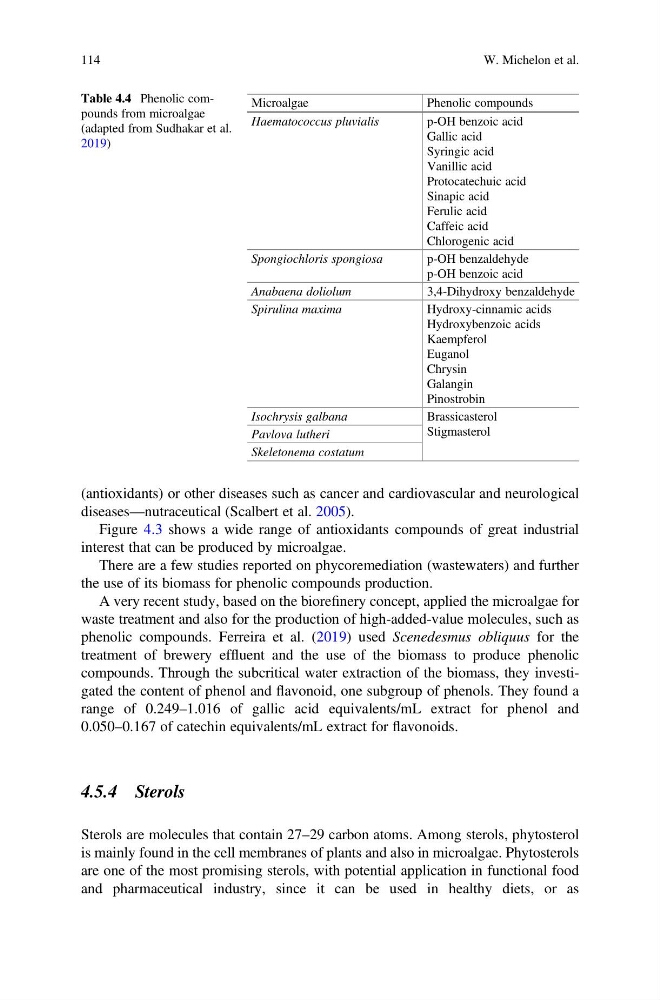
Table 4.4 Phenolic compounds from microalgae
(adapted from Sudhakar et al.
2019)
Microalgae
Phenolic compounds
Haematococcus pluvialis
p-OH benzoic acid
Gallic acid
Syringic acid
Vanillic acid
Protocatechuic acid
Sinapic acid
Ferulic acid
Caffeic acid
Chlorogenic acid
Spongiochloris spongiosa
p-OH benzaldehyde
p-OH benzoic acid
Anabaena doliolum
3,4-Dihydroxy benzaldehyde
Spirulina maxima
Hydroxy-cinnamic acids
Hydroxybenzoic acids
Kaempferol
Euganol
Chrysin
Galangin
Pinostrobin
Isochrysis galbana
Brassicasterol
Stigmasterol
Pavlova lutheri
Skeletonema costatum
114
W. Michelon et al.
diseases—nutraceutical (Scalbert et al. 2005).
Figure 4.3 shows a wide range of antioxidants compounds of great industrial
interest that can be produced by microalgae.
There are a few studies reported on phycoremediation (wastewaters) and further
the use of its biomass for phenolic compounds production.
A very recent study, based on the biorefinery concept, applied the microalgae for
waste treatment and also for the production of high-added-value molecules, such as
phenolic compounds. Ferreira et al. (2019) used Scenedesmus obliquus for the
treatment of brewery effluent and the use of the biomass to produce phenolic
compounds. Through the subcritical water extraction of the biomass, they investigated the content of phenol and flavonoid, one subgroup of phenols. They found a
range of 0.249–1.016 of gallic acid equivalents/mL extract for phenol and
0.050–0.167 of catechin equivalents/mL extract for flavonoids.
4.5.4 Sterols
Sterols are molecules that contain 27–29 carbon atoms. Among sterols, phytosterol
is mainly found in the cell membranes of plants and also in microalgae. Phytosterols
are one of the most promising sterols, with potential application in functional food
and pharmaceutical industry, since it can be used in healthy diets, or as
Table 4.4 Phenolic compounds from microalgae
(adapted from Sudhakar et al.
2019)
Microalgae
Phenolic compounds
Haematococcus pluvialis
p-OH benzoic acid
Gallic acid
Syringic acid
Vanillic acid
Protocatechuic acid
Sinapic acid
Ferulic acid
Caffeic acid
Chlorogenic acid
Spongiochloris spongiosa
p-OH benzaldehyde
p-OH benzoic acid
Anabaena doliolum
3,4-Dihydroxy benzaldehyde
Spirulina maxima
Hydroxy-cinnamic acids
Hydroxybenzoic acids
Kaempferol
Euganol
Chrysin
Galangin
Pinostrobin
Isochrysis galbana
Brassicasterol
Stigmasterol
Pavlova lutheri
Skeletonema costatum
114
W. Michelon et al.