

516
11 The Rates of Chemical Reactions
Light source
Monochromator
Reservoir
syringes
Light beam
Stop
syringe
Device for
driving
syringes
Trigger
switch
To oscilloscope
Mixing unit
Constant-temperature bath
Photomultiplier
Cuvette
Drain
valve
block
Mixing
jet
Drive
syringes
A
B
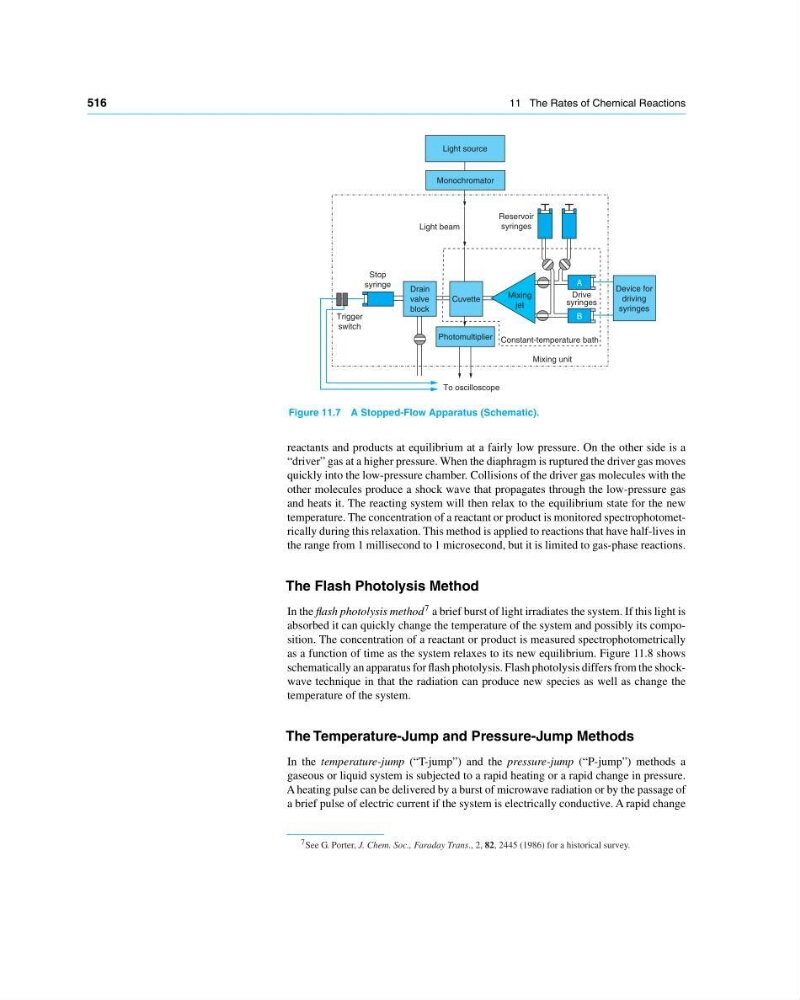
Figure 11.7 A Stopped-Flow Apparatus (Schematic).
reactants and products at equilibrium at a fairly low pressure. On the other side is a
“driver” gas at a higher pressure. When the diaphragm is ruptured the driver gas moves
quickly into the low-pressure chamber. Collisions of the driver gas molecules with the
other molecules produce a shock wave that propagates through the low-pressure gas
and heats it. The reacting system will then relax to the equilibrium state for the new
temperature. The concentration of a reactant or product is monitored spectrophotometrically during this relaxation. This method is applied to reactions that have half-lives in
the range from 1 millisecond to 1 microsecond, but it is limited to gas-phase reactions.
The Flash Photolysis Method
In the flash photolysis method 7 a brief burst of light irradiates the system. If this light is
absorbed it can quickly change the temperature of the system and possibly its composition. The concentration of a reactant or product is measured spectrophotometrically
as a function of time as the system relaxes to its new equilibrium. Figure 11.8 shows
schematically an apparatus for flash photolysis. Flash photolysis differs from the shockwave technique in that the radiation can produce new species as well as change the
temperature of the system.
The Temperature-Jump and Pressure-Jump Methods
In the temperature-jump (“T-jump”) and the pressure-jump (“P-jump”) methods a
gaseous or liquid system is subjected to a rapid heating or a rapid change in pressure.
A heating pulse can be delivered by a burst of microwave radiation or by the passage of
a brief pulse of electric current if the system is electrically conductive. A rapid change
7 See G. Porter, J. Chem. Soc., Faraday Trans., 2, 82, 2445 (1986) for a historical survey.