

mated to be equivalent to that in the rumen
(Davies et al. 1993; Theodorou et al. 1990).
However, despite many repeated attempts, it
has not been possible to isolate anaerobic
fungi from dried rumen digesta nor were they
found in the dried residues from laboratory
cultures. To account for these findings, Davies
et al. (1993) amended the generally accepted
life-cycle of the gut fungi to include an additional aero-tolerant survival cycle. In the proposed scheme, the survival cycle is activated
when conditions for vegetative growth become
less favorable. There have been several independent observations of a resistant structure
that may be involved in aerobic survival (Joblin
1981; Nielsen et al. 1995; Wubah et al. 1991).
These studies provide the most convincing evidence that zoosporangia in feces (rather than
zoospores) are aero-tolerant and responsible
for seeding the viable fungal cultures in the
laboratory. The fact that viable cultures of
anaerobic fungi cannot be isolated from dried
rumen contents, whereas they are readily
obtained from dried feces, suggests that these
structures in both environments, although similar in appearance, are physiologically different.
B. Culture Methodology
Traditional culture collections commonly do
not house anaerobic fungi, and most laboratories that work with them isolate their own
strains directly from source material (Haitjema
et al. 2014). Anaerobic fungi have been successfully enriched and isolated from herbivore feces
or gut content samples using lignocellulosic
substrates (Fig. 17.4a) or plant sugars
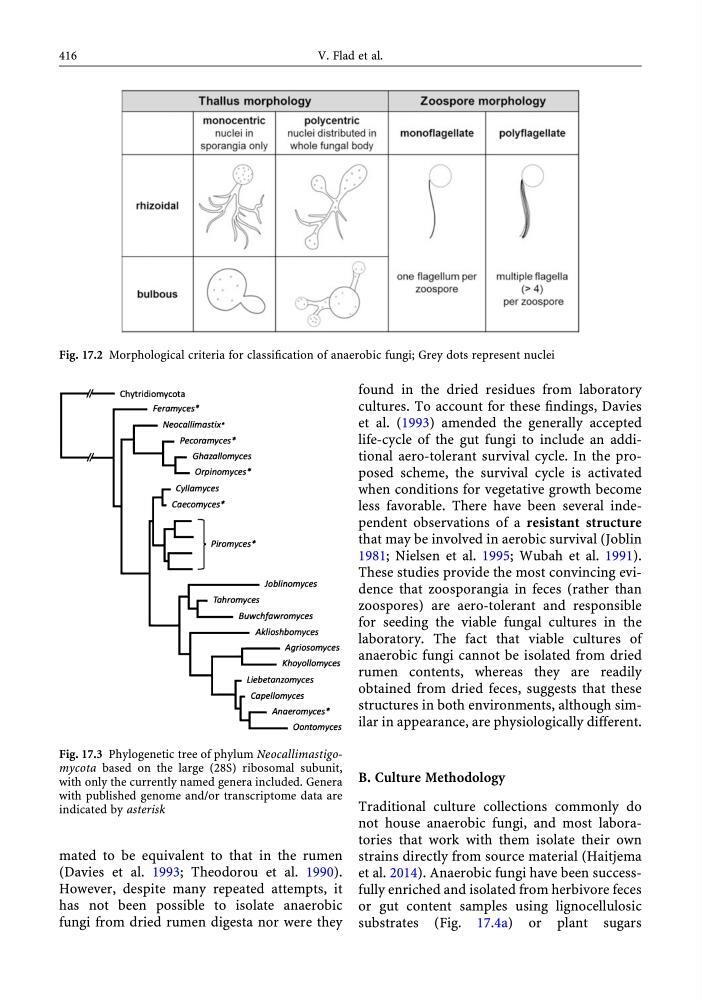
Fig. 17.2 Morphological criteria for classification of anaerobic fungi; Grey dots represent nuclei
Fig. 17.3 Phylogenetic tree of phylum Neocallimastigomycota based on the large (28S) ribosomal subunit,
with only the currently named genera included. Genera
with published genome and/or transcriptome data are
indicated by asterisk
416
V. Flad et al.
(Davies et al. 1993; Theodorou et al. 1990).
However, despite many repeated attempts, it
has not been possible to isolate anaerobic
fungi from dried rumen digesta nor were they
found in the dried residues from laboratory
cultures. To account for these findings, Davies
et al. (1993) amended the generally accepted
life-cycle of the gut fungi to include an additional aero-tolerant survival cycle. In the proposed scheme, the survival cycle is activated
when conditions for vegetative growth become
less favorable. There have been several independent observations of a resistant structure
that may be involved in aerobic survival (Joblin
1981; Nielsen et al. 1995; Wubah et al. 1991).
These studies provide the most convincing evidence that zoosporangia in feces (rather than
zoospores) are aero-tolerant and responsible
for seeding the viable fungal cultures in the
laboratory. The fact that viable cultures of
anaerobic fungi cannot be isolated from dried
rumen contents, whereas they are readily
obtained from dried feces, suggests that these
structures in both environments, although similar in appearance, are physiologically different.
B. Culture Methodology
Traditional culture collections commonly do
not house anaerobic fungi, and most laboratories that work with them isolate their own
strains directly from source material (Haitjema
et al. 2014). Anaerobic fungi have been successfully enriched and isolated from herbivore feces
or gut content samples using lignocellulosic
substrates (Fig. 17.4a) or plant sugars
Fig. 17.2 Morphological criteria for classification of anaerobic fungi; Grey dots represent nuclei
Fig. 17.3 Phylogenetic tree of phylum Neocallimastigomycota based on the large (28S) ribosomal subunit,
with only the currently named genera included. Genera
with published genome and/or transcriptome data are
indicated by asterisk
416
V. Flad et al.