

way genes to the intracellular MalCoA level
(David et al. 2016). Another bacterial regulation
system is based on the transcriptional repressor
FadR, which is repressed in the presence of FA/
fatty acyl-CoAs and cannot bind to specific
operator sites (Zhang et al. 2012). This property
was exploited to monitor FA levels in S. cerevisiae by coupling it to synthetic yeast promoters
and GFP expression (Teo et al. 2013). While
these MalCoA sensor-regulator systems represent a promising method to fine-tune intracellular precursor supply, systems that directly
sense the final, excreted FA, constitute another
valuable tool for metabolic engineering. However, reports about such biosensors are scarce
to date. The first short- and medium-chain FA
yeast biosensor was shown to respond to octanoic and decanoic acid via heterologous G-protein-coupled receptors that were linked to the
yeast mating pathway for signaling and GFP
expression as a concentration-dependent output (Mukherjee et al. 2015). Besides the rather
low linear and dynamic ranges of this biosensor, it was not proven to be functional in culture broth—an indispensable feature for an
applicable biosensor. Another biosensor,
which was developed for para-hydroxybenzoic
acid, was based on the weak acid-inducible
PDR12 promoter which is regulated by the
transcription factor War1 (Williams et al.
2017). Our group recently adapted this system
for the sensing of hexanoic, heptanoic, and
octanoic acid reaching high linear and dynamic
ranges (Baumann et al. 2018). This biosensor
can sense short- and medium-chain FA in S.
cerevisiae culture broth, which facilitates the
monitoring of end-product concentrations and
opens the path to high-throughput screenings
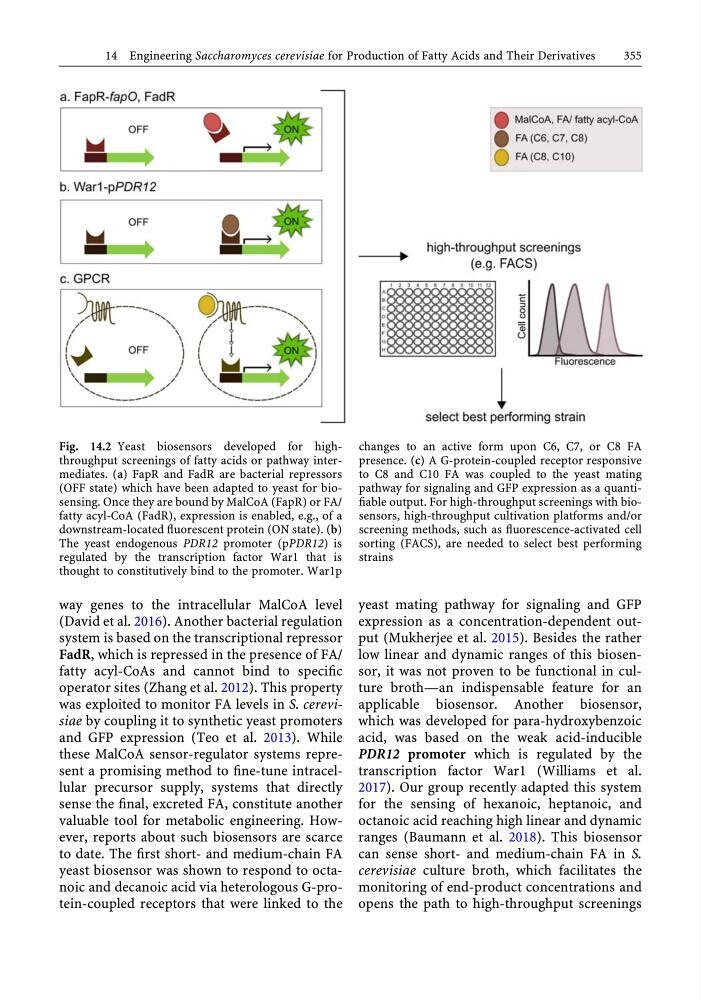
Fig. 14.2 Yeast biosensors developed for highthroughput screenings of fatty acids or pathway intermediates. (a) FapR and FadR are bacterial repressors
(OFF state) which have been adapted to yeast for biosensing. Once they are bound by MalCoA (FapR) or FA/
fatty acyl-CoA (FadR), expression is enabled, e.g., of a
downstream-located fluorescent protein (ON state). (b)
The yeast endogenous PDR12 promoter (pPDR12) is
regulated by the transcription factor War1 that is
thought to constitutively bind to the promoter. War1p
changes to an active form upon C6, C7, or C8 FA
presence. (c) A G-protein-coupled receptor responsive
to C8 and C10 FA was coupled to the yeast mating
pathway for signaling and GFP expression as a quantifiable output. For high-throughput screenings with biosensors, high-throughput cultivation platforms and/or
screening methods, such as fluorescence-activated cell
sorting (FACS), are needed to select best performing
strains
14 Engineering Saccharomyces cerevisiae for Production of Fatty Acids and Their Derivatives
355
(David et al. 2016). Another bacterial regulation
system is based on the transcriptional repressor
FadR, which is repressed in the presence of FA/
fatty acyl-CoAs and cannot bind to specific
operator sites (Zhang et al. 2012). This property
was exploited to monitor FA levels in S. cerevisiae by coupling it to synthetic yeast promoters
and GFP expression (Teo et al. 2013). While
these MalCoA sensor-regulator systems represent a promising method to fine-tune intracellular precursor supply, systems that directly
sense the final, excreted FA, constitute another
valuable tool for metabolic engineering. However, reports about such biosensors are scarce
to date. The first short- and medium-chain FA
yeast biosensor was shown to respond to octanoic and decanoic acid via heterologous G-protein-coupled receptors that were linked to the
yeast mating pathway for signaling and GFP
expression as a concentration-dependent output (Mukherjee et al. 2015). Besides the rather
low linear and dynamic ranges of this biosensor, it was not proven to be functional in culture broth—an indispensable feature for an
applicable biosensor. Another biosensor,
which was developed for para-hydroxybenzoic
acid, was based on the weak acid-inducible
PDR12 promoter which is regulated by the
transcription factor War1 (Williams et al.
2017). Our group recently adapted this system
for the sensing of hexanoic, heptanoic, and
octanoic acid reaching high linear and dynamic
ranges (Baumann et al. 2018). This biosensor
can sense short- and medium-chain FA in S.
cerevisiae culture broth, which facilitates the
monitoring of end-product concentrations and
opens the path to high-throughput screenings
Fig. 14.2 Yeast biosensors developed for highthroughput screenings of fatty acids or pathway intermediates. (a) FapR and FadR are bacterial repressors
(OFF state) which have been adapted to yeast for biosensing. Once they are bound by MalCoA (FapR) or FA/
fatty acyl-CoA (FadR), expression is enabled, e.g., of a
downstream-located fluorescent protein (ON state). (b)
The yeast endogenous PDR12 promoter (pPDR12) is
regulated by the transcription factor War1 that is
thought to constitutively bind to the promoter. War1p
changes to an active form upon C6, C7, or C8 FA
presence. (c) A G-protein-coupled receptor responsive
to C8 and C10 FA was coupled to the yeast mating
pathway for signaling and GFP expression as a quantifiable output. For high-throughput screenings with biosensors, high-throughput cultivation platforms and/or
screening methods, such as fluorescence-activated cell
sorting (FACS), are needed to select best performing
strains
14 Engineering Saccharomyces cerevisiae for Production of Fatty Acids and Their Derivatives
355