

Acknowledgments Research in our labs is funded by
iBio Iniciativa Cientifica Milenio-MINECON, CONICYT/FONDEQUIP EQM130158, CONICYT/FONDECYT 1171151, 11170158, and the International
Research Scholar program of the Howard Hughes Medical Institute.
References
An-Adirekkun JM, Stewart CJ, Geller SH et al (2019) A
yeast optogenetic toolkit (yOTK) for gene expression control in Saccharomyces cerevisiae. Biotechnol Bioeng 117(3):886–893. https://doi.org/10.1002/
bit.27234
Andrianantoandro E, Basu S, Karig DK, Weiss R (2006)
Synthetic biology: new engineering rules for an
emerging discipline. Mol Syst Biol 2:2006.0028
Banerjee R, Batschauer A (2004) Plant blue-light receptors. Planta 220:498–502. https://doi.org/10.1007/
s00425-004-1418-z
Bashor CJ, Horwitz AA, Peisajovich SG, Lim WA (2010)
Rewiring cells: synthetic biology as a tool to interrogate the organizational principles of living systems. Annu Rev Biophys 39:515–537
Baumschlager A, Aoki SK, Khammash M (2017)
Dynamic blue light-inducible T7 RNA polymerases
(Opto-T7RNAPs) for precise spatiotemporal gene
expression control. ACS Synth Biol 6:2157–2167
Bayram O, Krappmann S, Seiler S et al (2008) Neurospora crassa ve-1 affects asexual conidiation. Fungal
Genet Biol 45:127–138
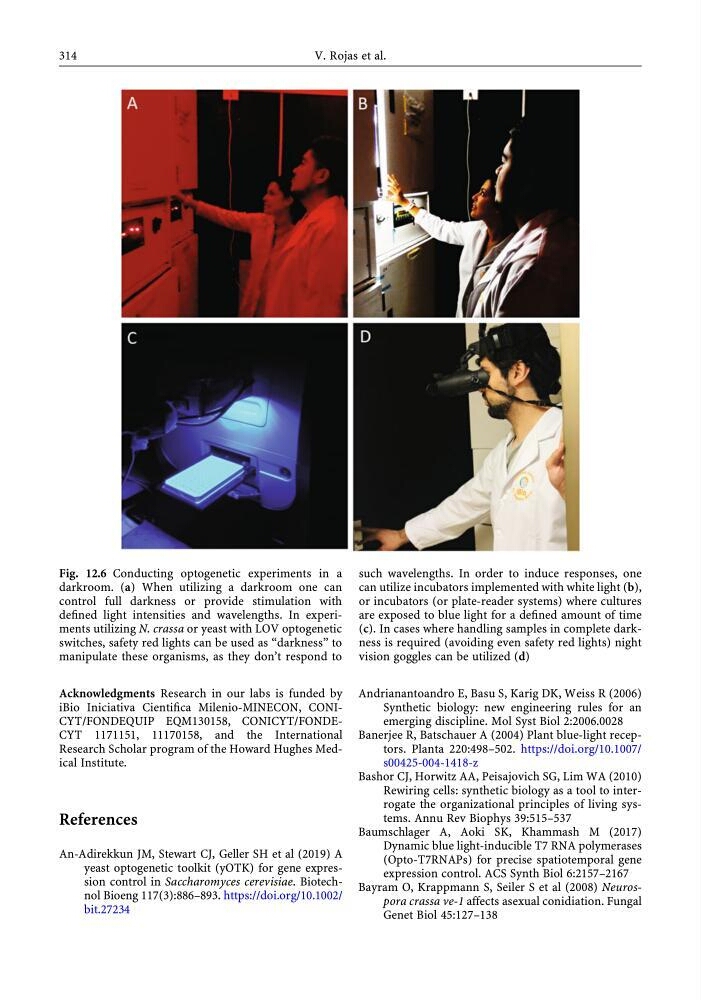
Fig. 12.6 Conducting optogenetic experiments in a
darkroom. (a) When utilizing a darkroom one can
control full darkness or provide stimulation with
defined light intensities and wavelengths. In experiments utilizing N. crassa or yeast with LOV optogenetic
switches, safety red lights can be used as “darkness” to
manipulate these organisms, as they don’t respond to
such wavelengths. In order to induce responses, one
can utilize incubators implemented with white light (b),
or incubators (or plate-reader systems) where cultures
are exposed to blue light for a defined amount of time
(c). In cases where handling samples in complete darkness is required (avoiding even safety red lights) night
vision goggles can be utilized (d)
314
V. Rojas et al.
iBio Iniciativa Cientifica Milenio-MINECON, CONICYT/FONDEQUIP EQM130158, CONICYT/FONDECYT 1171151, 11170158, and the International
Research Scholar program of the Howard Hughes Medical Institute.
References
An-Adirekkun JM, Stewart CJ, Geller SH et al (2019) A
yeast optogenetic toolkit (yOTK) for gene expression control in Saccharomyces cerevisiae. Biotechnol Bioeng 117(3):886–893. https://doi.org/10.1002/
bit.27234
Andrianantoandro E, Basu S, Karig DK, Weiss R (2006)
Synthetic biology: new engineering rules for an
emerging discipline. Mol Syst Biol 2:2006.0028
Banerjee R, Batschauer A (2004) Plant blue-light receptors. Planta 220:498–502. https://doi.org/10.1007/
s00425-004-1418-z
Bashor CJ, Horwitz AA, Peisajovich SG, Lim WA (2010)
Rewiring cells: synthetic biology as a tool to interrogate the organizational principles of living systems. Annu Rev Biophys 39:515–537
Baumschlager A, Aoki SK, Khammash M (2017)
Dynamic blue light-inducible T7 RNA polymerases
(Opto-T7RNAPs) for precise spatiotemporal gene
expression control. ACS Synth Biol 6:2157–2167
Bayram O, Krappmann S, Seiler S et al (2008) Neurospora crassa ve-1 affects asexual conidiation. Fungal
Genet Biol 45:127–138
Fig. 12.6 Conducting optogenetic experiments in a
darkroom. (a) When utilizing a darkroom one can
control full darkness or provide stimulation with
defined light intensities and wavelengths. In experiments utilizing N. crassa or yeast with LOV optogenetic
switches, safety red lights can be used as “darkness” to
manipulate these organisms, as they don’t respond to
such wavelengths. In order to induce responses, one
can utilize incubators implemented with white light (b),
or incubators (or plate-reader systems) where cultures
are exposed to blue light for a defined amount of time
(c). In cases where handling samples in complete darkness is required (avoiding even safety red lights) night
vision goggles can be utilized (d)
314
V. Rojas et al.